
Many small business owners believe safety enforcement is expensive, bureaucratic, or only necessary for large organisations. This misconception leaves UK SMEs vulnerable to preventable accidents, substantial fines, and reputational damage. The reality is far different: compliance is straightforward and achievable for most small businesses. Enforcing safety procedures protects your employees, safeguards your business from legal liability, and delivers measurable financial benefits. This guide clarifies why enforcement matters, what UK law requires, and how SMEs can implement effective safety measures without overwhelming resources or complexity.
Table of Contents
- Understanding Legal Requirements And Compliance For UK SMEs
- The Financial And Reputational Risks Of Not Enforcing Safety Procedures
- How Enforcement Reduces Workplace Accidents And Costs For SMEs
- Practical Steps For UK SMEs To Enforce Safety Procedures Effectively
- Enhance Your Safety Enforcement With Tailored Templates And Policies
- Frequently Asked Questions
Key takeaways
| Point | Details |
|---|---|
| Legal compliance protects businesses | UK law mandates safety procedures, and directors face personal liability for failures. |
| Prevention reduces costs significantly | Enforced safety measures cut accident rates by 30-60%, saving medical and compensation expenses. |
| Reputation depends on safety records | Poor safety enforcement damages client relationships and makes recruiting difficult. |
| Practical implementation is affordable | SMEs can enforce procedures using free resources and simple documentation. |
Understanding legal requirements and compliance for UK SMEs
UK businesses must comply with the Health and Safety at Work etc. Act 1974, which places clear duties on employers to protect workers and visitors. This legislation applies to all businesses regardless of size, and compliance is straightforward for most small operations. The law requires you to assess risks, implement control measures, provide training, and maintain proper documentation. These obligations are not optional, and ignorance provides no defence in legal proceedings.
Every UK business employing staff must hold Employers’ Liability Insurance, which covers compensation claims from workplace injuries or illnesses. This insurance requirement reinforces the legal expectation that businesses will actively manage safety risks. Beyond insurance, SMEs must conduct regular risk assessments, document safety procedures, and ensure employees understand and follow established protocols. The good news is that these tasks do not require expensive consultants or complex systems when approached systematically.
Company directors and business partners face serious personal consequences for safety failures. Personal liability extends to directors when negligence or deliberate breaches occur, meaning individuals can face prosecution, fines, and even imprisonment. This personal risk underscores why safety enforcement must be a boardroom priority, not an afterthought delegated to junior staff. Directors who actively engage with safety management protect themselves and their businesses.
Practical compliance starts with understanding what your business must do:
- Conduct comprehensive risk assessments for all work activities
- Document safety procedures and make them accessible to staff
- Provide appropriate training and supervision for employees
- Maintain equipment and facilities to safe standards
- Keep records of incidents, training, and safety reviews
For guidance on building a compliance framework, explore our legal compliance safety guide and small business safety compliance steps. These resources demonstrate that meeting legal obligations is achievable without overwhelming your operations or budget.
The financial and reputational risks of not enforcing safety procedures
UK prosecutions for safety breaches deliver harsh financial penalties that can cripple small businesses. In February 2026, a machine manufacturer faced £10,000 in fines after a lathe incident resulted in finger amputation. The company failed to enforce proper guarding procedures despite knowing the risks. Similarly, a plastics firm received substantial penalties following a fatal machinery accident where inadequate safety enforcement led to a worker’s death. These cases illustrate that courts show little sympathy when businesses neglect obvious hazards.
Financial consequences extend far beyond initial fines. Prosecuted businesses pay legal fees, compensation claims, increased insurance premiums, and victim surcharges. A single serious incident can cost an SME tens of thousands of pounds, and in severe cases, hundreds of thousands. Many small businesses cannot absorb these costs and face closure. Even when companies survive financially, the reputational damage affects client relationships, tender opportunities, and recruitment efforts for years.
“Regulators are increasing inspection frequency with high conviction rates in prosecutions, making it clear that enforcement failures will not be tolerated.”
The Health and Safety Executive (HSE) has intensified enforcement activity, conducting more inspections and pursuing prosecutions more aggressively. Conviction rates exceed 90% in cases that reach court, demonstrating that regulators build strong cases before prosecuting. This means that if your business receives enforcement action, the likelihood of conviction and penalty is extremely high. Waiting until an inspector arrives is too late.
Reputational harm compounds financial losses in ways that balance sheets cannot capture:
- Clients increasingly require evidence of safety compliance before awarding contracts
- Supply chain partners audit safety records and exclude non-compliant businesses
- Negative publicity from prosecutions damages brand perception and customer trust
- Talented employees avoid companies with poor safety reputations
Smart SMEs recognise that safety enforcement is risk management, not just compliance. By preventing accidents before they occur, businesses avoid the cascade of financial, legal, and reputational consequences that follow safety failures. For practical guidance on avoiding common compliance gaps, review our workplace safety tips.
How enforcement reduces workplace accidents and costs for SMEs
Businesses that actively enforce safety procedures experience 30-60% reductions in accident rates compared to organisations with weak safety cultures. This dramatic improvement stems from systematic risk identification, proper training, and consistent monitoring. When employees understand hazards and follow established procedures, preventable incidents simply do not occur. The financial benefits of this prevention are substantial and measurable.
Direct cost savings include avoided medical expenses, reduced compensation claims, and lower insurance premiums. Indirect benefits often exceed direct savings: maintained productivity, preserved employee morale, protected reputation, and uninterrupted operations. A single serious accident can halt production for days or weeks, costing far more than the injury itself. Prevention through enforcement eliminates these disruptions entirely.
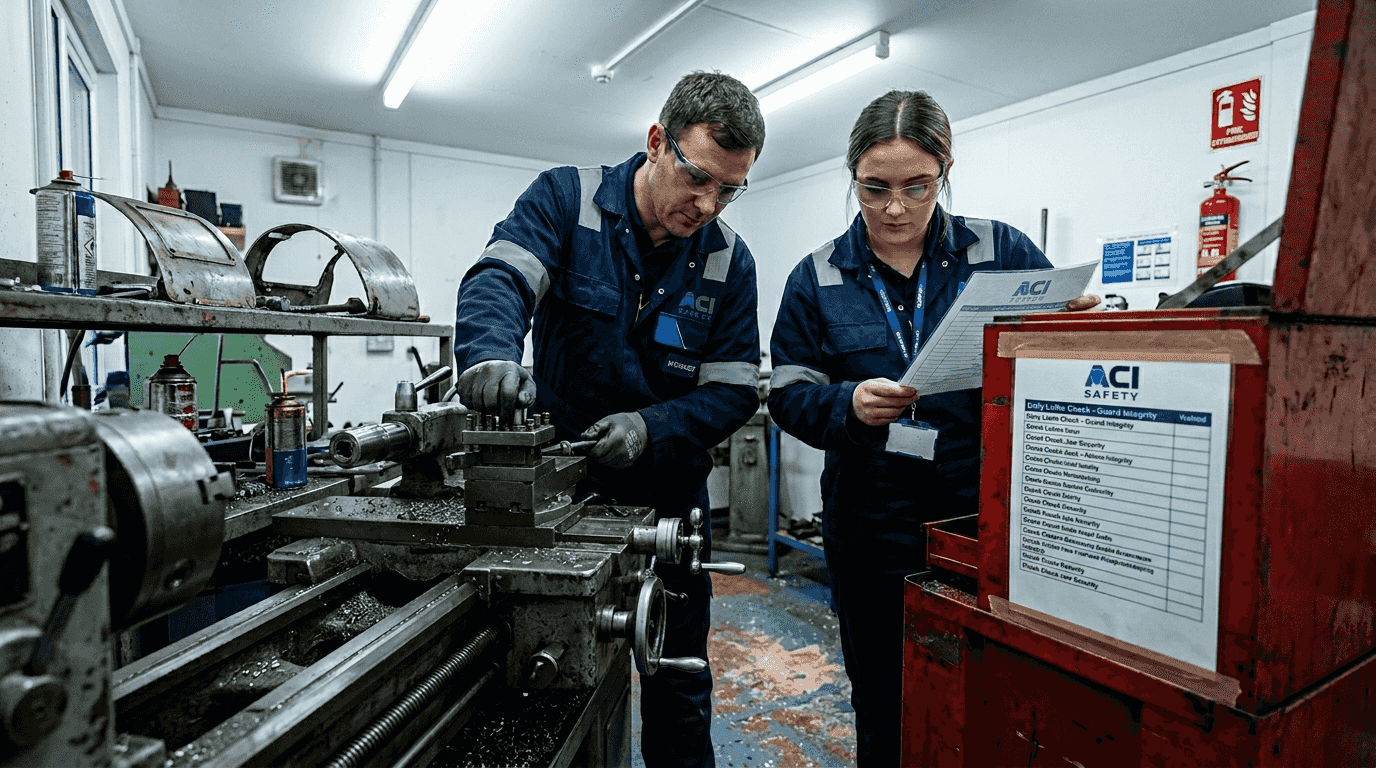
Consider lathe operations, where proper equipment guarding and safe practices prevent entanglement and amputation injuries. Enforcing simple procedures such as removing jewellery, securing loose clothing, and using appropriate tools eliminates the most common causes of machinery accidents. The cost of enforcement is minimal: training sessions, supervision, and occasional audits. The cost of failure is catastrophic: life-changing injuries, prosecution, and business closure.
| Safety measure | Implementation cost | Accident reduction | Annual saving (typical SME) |
|---|---|---|---|
| Staff training programme | £500-£1,500 | 40-50% | £8,000-£15,000 |
| Equipment maintenance schedule | £300-£800 | 25-35% | £5,000-£10,000 |
| Risk assessment reviews | £200-£600 | 20-30% | £4,000-£8,000 |
| Safety audits | £400-£1,000 | 30-40% | £6,000-£12,000 |
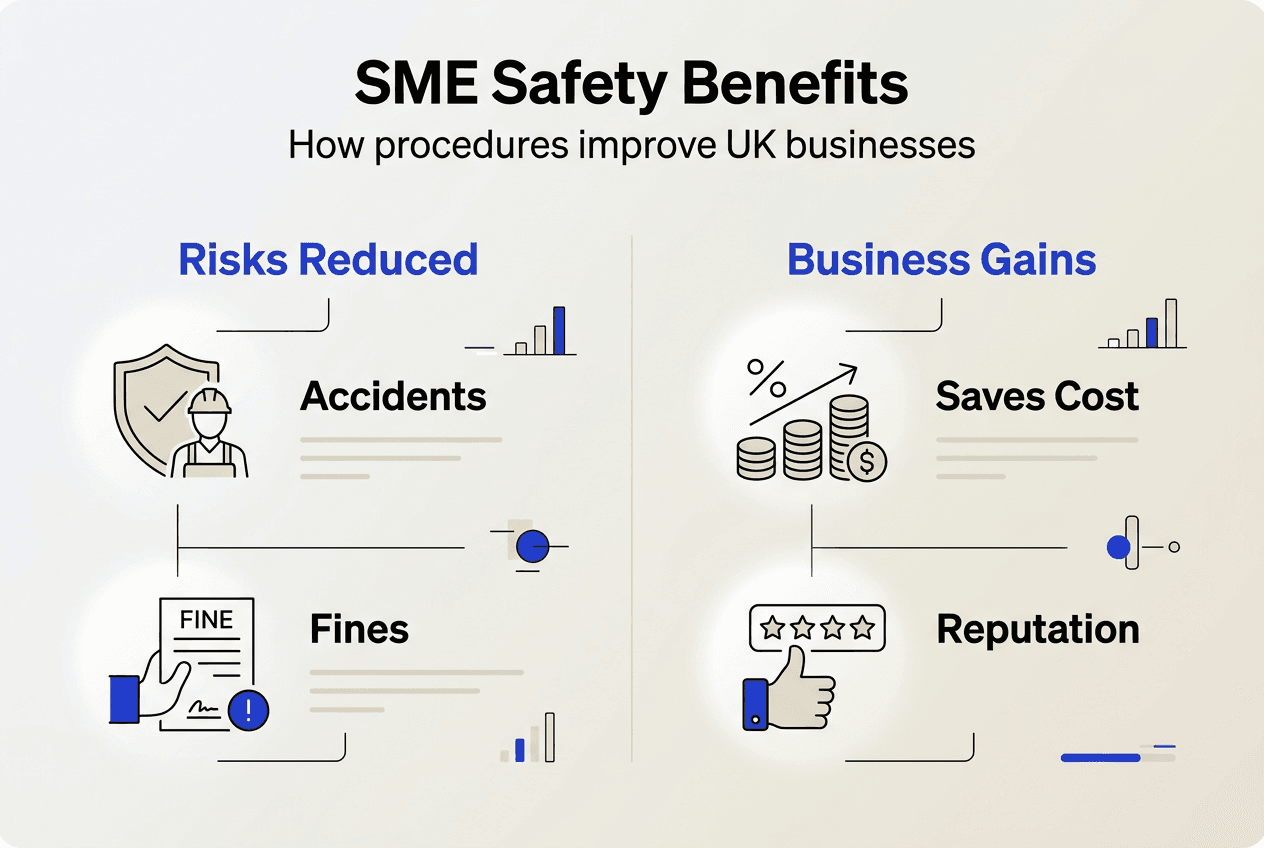
These figures demonstrate that enforcement delivers immediate return on investment. The relatively small upfront costs of training, equipment, and documentation generate substantial savings by preventing expensive incidents. SMEs that view safety as an investment rather than an expense consistently outperform competitors in profitability and stability.
Pro Tip: Create a culture where safety is everyone’s responsibility, not just management’s concern. When workers feel empowered to identify hazards and suggest improvements, enforcement becomes self-sustaining and accidents decrease further.
Effective enforcement requires proper equipment alongside training. Workers cannot follow safe procedures if tools are inadequate, damaged, or missing. Regular equipment inspections, prompt repairs, and appropriate personal protective equipment are non-negotiable components of enforcement. For comprehensive guidance on identifying and controlling risks, explore our risk assessment guide.
Practical steps for UK SMEs to enforce safety procedures effectively
Enforcing safety procedures does not require expensive consultants or complex systems. Most small businesses can achieve compliance through straightforward, systematic approaches. The key is establishing clear processes, documenting them properly, and maintaining consistency. Follow these steps to build effective enforcement:
- Conduct comprehensive risk assessments for all work activities, identifying hazards and evaluating controls.
- Document safety procedures in clear, accessible language that employees can understand and follow.
- Deliver targeted training to ensure workers understand hazards and know how to work safely.
- Implement regular monitoring and supervision to verify that procedures are followed consistently.
- Conduct periodic audits to identify gaps, update procedures, and reinforce the importance of compliance.
- Maintain accurate records of assessments, training, incidents, and corrective actions for legal protection.
Your Employers’ Liability Insurance must remain current and adequate for your workforce size. Insurers require evidence of active safety management, and claims can be denied if you fail to demonstrate reasonable enforcement efforts. Keep certificates accessible and review coverage annually as your business evolves.
Resource constraints challenge many SMEs, but prioritising safety proves cost-effective long term. Free resources from the HSE provide templates, guidance, and case studies tailored to small businesses. Industry associations often offer sector-specific advice at no cost. Digital tools and templates streamline documentation, reducing administrative burden significantly.
Leadership commitment drives successful enforcement. When directors and managers visibly prioritise safety, employees recognise its importance and comply willingly. Conversely, when leadership treats safety as a bureaucratic obligation, workers adopt the same attitude and enforcement fails. Regular safety discussions at management meetings, visible safety inspections, and prompt responses to concerns signal genuine commitment.
Building a positive safety culture transforms enforcement from a top-down mandate into shared responsibility:
- Encourage workers to report hazards without fear of blame or criticism
- Recognise and reward employees who demonstrate safe practices
- Involve staff in developing and reviewing safety procedures
- Communicate openly about incidents and lessons learned
- Provide resources and time for safety activities
Pro Tip: Avoid treating safety as a tick-box exercise where procedures exist on paper but are ignored in practice. Genuine enforcement requires consistent follow-through, visible leadership commitment, and integration into daily operations.
For practical tools to support your enforcement efforts, review our health safety checklist and safety audit guide. These resources provide structured approaches to implementing and maintaining effective safety management systems.
Enhance your safety enforcement with tailored templates and policies
ACI Safety provides professionally designed templates that simplify safety enforcement for UK SMEs. Our customisable health and safety policy templates are available as instant digital downloads in Word and PDF formats, allowing you to adapt them to your specific business needs quickly. These structured documents ensure you meet legal requirements without starting from scratch or paying consultant fees.
Standardised templates save significant time whilst improving consistency across your safety documentation. Rather than creating risk assessments, method statements, and policies individually, you can work from proven frameworks that incorporate UK compliance requirements. This approach reduces administrative burden and ensures nothing critical is overlooked.
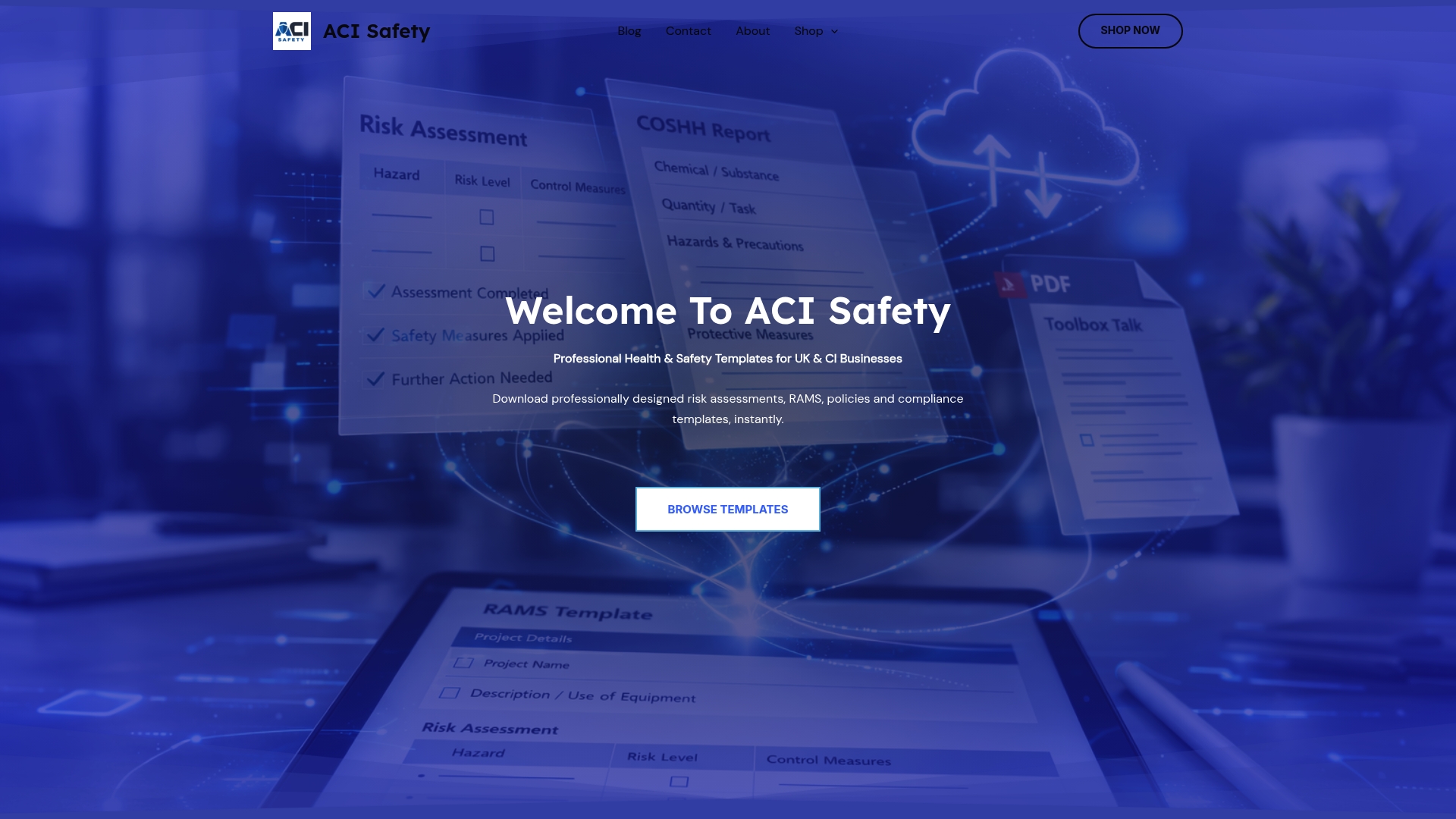
Our templates cover RAMS, COSHH assessments, toolbox talks, and comprehensive policy documents suitable for construction, trades, facilities management, and general business operations. Each template is designed for ease of use, enabling you to implement effective enforcement quickly. Discover how standardised documents save 40% of documentation time whilst improving quality and compliance. Explore our RAMS template collection to find resources that support your specific operational needs.
Frequently asked questions
Why are UK SMEs legally required to enforce safety procedures?
The Health and Safety at Work etc. Act 1974 mandates that all UK employers protect workers and visitors from harm. This legal duty applies regardless of business size and requires active enforcement of safety measures. Directors face personal liability for failures, making compliance both a legal obligation and a personal risk management priority.
What financial consequences do SMEs face for poor safety enforcement?
Businesses that fail to enforce safety procedures risk substantial fines, prosecution costs, compensation claims, and increased insurance premiums. Recent UK cases show fines ranging from £10,000 to hundreds of thousands of pounds. Beyond direct penalties, reputational damage leads to lost contracts, recruitment challenges, and reduced profitability that can threaten business survival.
How does enforcing safety procedures reduce costs for small businesses?
Active enforcement reduces workplace accidents by 30-60%, eliminating medical expenses, compensation claims, and productivity losses. The implementation costs of training, equipment maintenance, and documentation are minimal compared to the savings from prevented incidents. Businesses with strong safety records also benefit from lower insurance premiums and improved client relationships.
What practical steps can SMEs take to enforce safety effectively?
Start with comprehensive risk assessments to identify hazards, then document clear procedures and train staff thoroughly. Implement regular monitoring and audits to ensure consistent compliance. Maintain accurate records of all safety activities. Leadership commitment is essential, so directors and managers must visibly prioritise safety and provide necessary resources. Free HSE guidance and affordable templates make implementation straightforward.
How important is leadership commitment to successful safety enforcement?
Leadership commitment determines whether safety enforcement succeeds or fails. When directors and managers visibly prioritise safety, employees recognise its importance and comply willingly. Conversely, treating safety as a bureaucratic obligation creates a culture where procedures exist on paper but are ignored in practice. Genuine enforcement requires consistent follow-through and integration into daily operations, driven from the top.