
Many small business owners mistakenly believe risk assessments only apply to large corporations with dedicated safety teams. This misconception puts countless UK businesses at risk of non-compliance. Every employer in the UK, regardless of size, must conduct risk assessments to protect employees and meet legal obligations under health and safety law.
Table of Contents
- Understanding Risk Assessments: Definition And Legal Framework
- The Five-Step Process: How To Conduct A Risk Assessment
- Different Types Of Risk Assessments: Tailoring To Your Business Needs
- Common Misconceptions And Pitfalls In Risk Assessments
- Using Risk Assessment Templates For Compliance And Efficiency
- Legal Obligations And Enforcement: What Happens If You Don’t Comply?
- Best Practices: Reviewing And Updating Your Risk Assessments
- Take Control Of Your Health And Safety Compliance With ACI Safety Templates
Key takeaways
| Point | Details |
|---|---|
| Legal requirement | Risk assessments are mandatory for all UK employers under the Management of Health and Safety at Work Regulations 1999. |
| Five-step process | A systematic approach helps identify hazards, evaluate risks, and implement effective control measures. |
| Template benefits | Using compliant templates simplifies documentation and ensures thorough, legally sound assessments. |
| Regular reviews | Assessments must be updated when circumstances change to maintain compliance and workplace safety. |
| Serious penalties | Non-compliance can result in unlimited fines, enforcement notices, and prosecution. |
Understanding risk assessments: definition and legal framework
A risk assessment is a systematic examination of workplace hazards to determine if sufficient precautions exist or if additional measures are needed to prevent harm. The Health and Safety Executive (HSE) requires this process to protect people from potential injury or illness.
In the UK, risk assessment is a legal requirement under the Management of Health and Safety at Work Regulations 1999 for all employers to protect employees and others from harm by systematically identifying hazards and controlling risks. This obligation applies to every business, from sole traders to large corporations. Written records become mandatory once you employ five or more people, though maintaining documentation benefits businesses of any size.
The purpose extends beyond mere compliance. Understanding what a risk assessment is helps you create safer working environments, reduce accidents, and demonstrate due diligence. Key requirements include:
- Identifying all potential hazards in your workplace
- Evaluating who might be harmed and how
- Implementing appropriate control measures
- Recording findings and sharing them with employees
- Reviewing assessments regularly to maintain relevance
This legal framework ensures businesses take proactive steps to manage workplace safety rather than reacting to incidents after they occur. The HSE overview on risk assessments provides additional guidance for employers navigating these obligations.
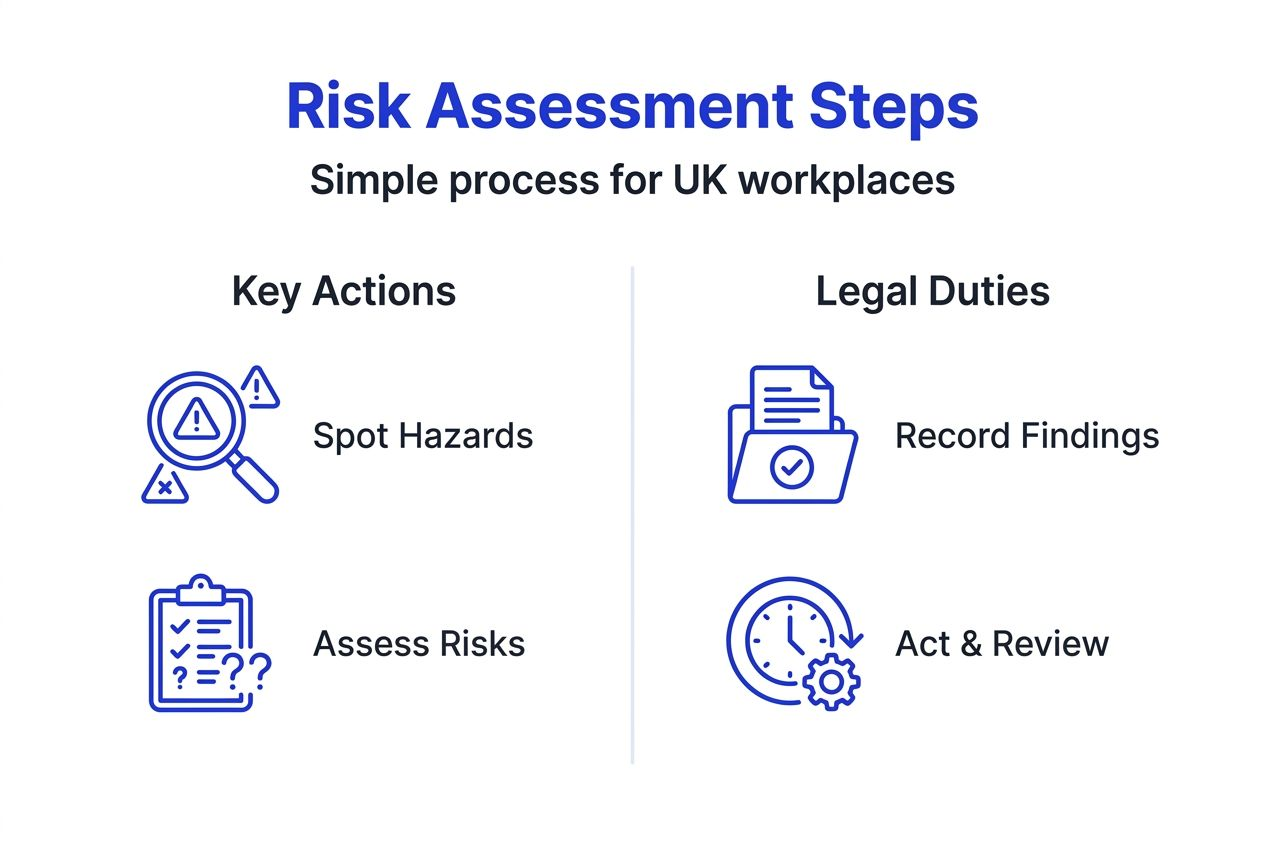
The five-step process: how to conduct a risk assessment
The Health and Safety Executive defines risk assessment as a careful examination of workplace hazards to decide if enough precautions have been taken or more action is needed to prevent harm. This structured approach breaks down into manageable steps:
-
Identify the hazards. Walk through your workplace looking for anything that could cause harm. Consider equipment, substances, work processes, and environmental factors. Talk to employees who often spot risks management might miss.
-
Determine who might be harmed and how. Think about employees, contractors, visitors, and the public. Consider vulnerable groups like new workers, young people, expectant mothers, or those with disabilities who may face greater risks.
-
Evaluate the risks and decide on precautions. Assess the likelihood and severity of harm from each hazard. Determine if existing controls are adequate or if additional measures are needed. Prioritise the most serious risks requiring immediate attention.
-
Record your significant findings. Document the hazards identified, who is at risk, and what controls you have in place. This creates an audit trail and helps communicate safety information to your team.
-
Review your assessment and update if necessary. Set regular review dates and update assessments when circumstances change. New equipment, altered processes, or incidents all trigger the need for reassessment.
Pro Tip: Involve employees in hazard identification. They work with the equipment and processes daily, so their insights often reveal risks that might otherwise be overlooked.
The five-step risk assessment approach provides a practical framework that works across industries. Safety Clarity on risk assessment steps offers additional implementation guidance.
Different types of risk assessments: tailoring to your business needs
Not all risk assessments follow the same format. Your industry, hazards, and legal obligations determine which type you need. Selecting the appropriate assessment ensures you address specific risks effectively.
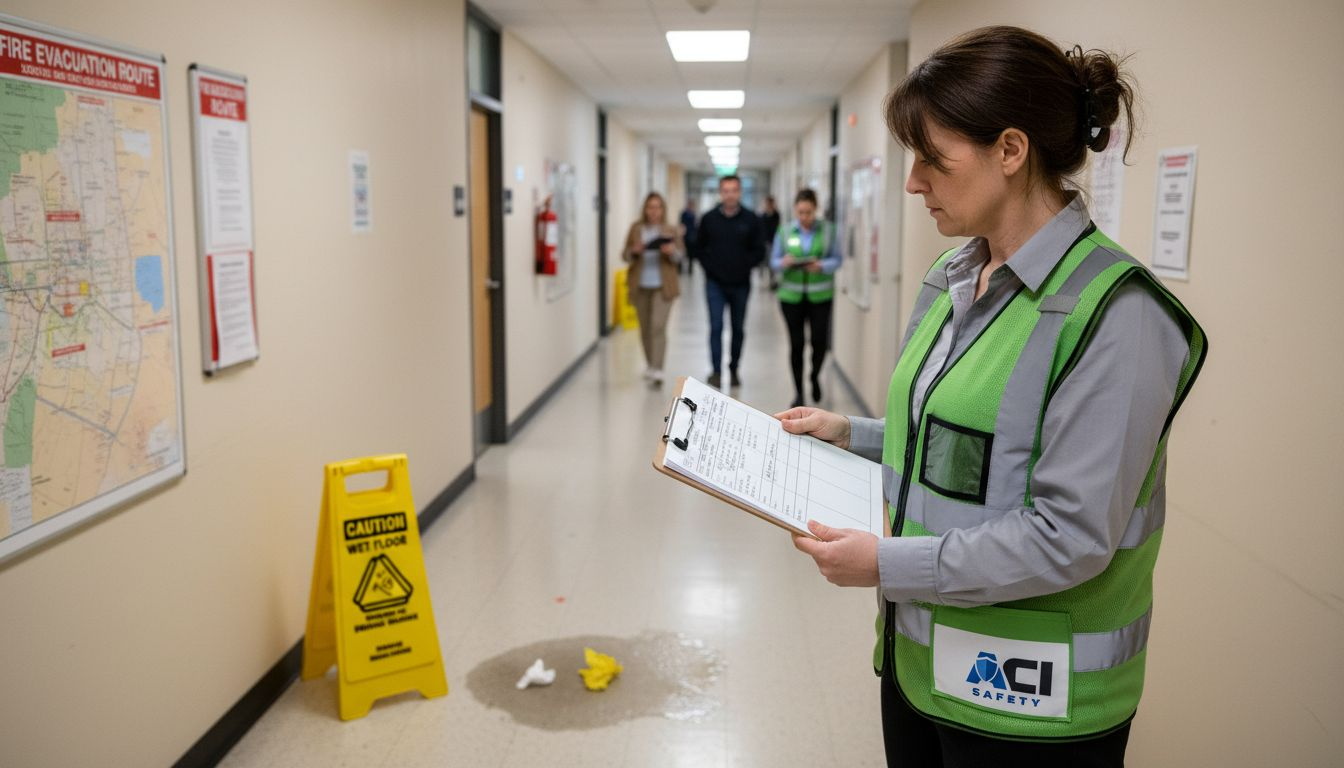
General risk assessments cover broad workplace hazards like slips, trips, falls, and manual handling. These suit most office-based businesses and provide a foundation for basic safety management. They identify common hazards affecting day-to-day operations.
COSHH assessments focus specifically on hazardous substances. Any business using chemicals, cleaning products, paints, or other potentially harmful materials must conduct these assessments. They evaluate exposure risks and establish proper handling, storage, and disposal procedures.
Fire risk assessments are legally required for all non-domestic premises. These evaluate fire hazards, identify people at risk, and establish prevention measures, detection systems, and evacuation procedures. Regular reviews ensure fire safety remains current.
RAMS templates combine risk assessments with method statements. Common in construction and trades, these documents detail how specific tasks will be completed safely. They’re essential for high-risk activities and often required by clients before work begins.
| Assessment Type | Primary Focus | Typical Users |
|---|---|---|
| General | Workplace hazards | All businesses |
| COSHH | Hazardous substances | Businesses using chemicals |
| Fire | Fire safety | All non-domestic premises |
| RAMS | Task-specific safety | Construction and trades |
Matching assessment types of risk assessments to your sector ensures comprehensive coverage and legal compliance. Most businesses need multiple assessment types to address all potential hazards adequately.
Common misconceptions and pitfalls in risk assessments
Several myths about risk assessments persist, leading businesses to overlook critical safety obligations. Clearing up these misunderstandings helps you approach risk management correctly.
The belief that risk assessments only apply to large companies is perhaps the most dangerous misconception. UK law requires all employers to assess risks, regardless of business size. A sole trader with one employee has the same fundamental obligation as a multinational corporation.
Many people confuse hazards with risks. A hazard is anything that could cause harm, like a wet floor or electrical equipment. Risk is the chance that the hazard will actually cause harm, considering likelihood and severity. This distinction matters when prioritising control measures.
Treating risk assessments as one-time paperwork exercises undermines their purpose. Assessments must be living documents that evolve with your business. Failing to review them regularly means outdated safety measures that no longer protect your workforce effectively.
Another common pitfall involves generic, copied assessments that don’t reflect actual workplace conditions. Each assessment must be specific to your premises, equipment, and work activities. Template assessments need tailoring to your unique circumstances.
Pro Tip: Train staff on the difference between hazard and risk. This improves their ability to spot dangers and understand why certain controls exist, making your whole safety system more effective.
Key mistakes to avoid:
- Assuming compliance doesn’t apply to small businesses
- Confusing hazards with risks in documentation
- Never reviewing or updating assessments
- Using generic templates without customisation
- Failing to involve employees in the process
Misconceptions about risk assessments often stem from poor understanding of health and safety law. Addressing these errors creates more robust safety management systems.
Using risk assessment templates for compliance and efficiency
Professionally designed templates streamline the risk assessment process whilst ensuring legal compliance. They provide structured frameworks that guide you through each required element without starting from scratch.
Templates deliver several practical advantages for small and medium-sized businesses:
- Pre-formatted documents that include all legally required sections
- Consistent structure across different assessment types
- Time savings by eliminating layout and formatting work
- Reduced risk of omitting critical information
- Professional presentation that demonstrates compliance commitment
Quality risk assessment templates come in editable formats like Word or PDF, allowing customisation to your specific workplace. You can add or remove hazards, adjust control measures, and tailor content to match your operations exactly.
Digital templates particularly benefit businesses conducting multiple assessments. Once you understand the format, completing additional assessments becomes faster. Templates covering general risks, COSHH, fire safety, and manual handling let you address various hazards using familiar structures.
The key is selecting templates aligned with UK health and safety regulations. Outdated or generic international templates may miss legal requirements specific to British businesses. Professional template providers ensure their documents reflect current HSE guidance and regulatory expectations.
Using templates doesn’t mean sacrificing quality for speed. They enhance assessment thoroughness by prompting consideration of all relevant factors. The structured approach reduces the chance of overlooking important hazards or control measures.
Many businesses find templates particularly valuable when training new managers in risk assessment responsibilities. The clear format serves as a learning tool, building competence in safety management whilst maintaining compliance standards.
Explore comprehensive risk assessment resources and time-saving templates to simplify your compliance processes.
Legal obligations and enforcement: what happens if you don’t comply?
The consequences of failing to conduct proper risk assessments extend well beyond paperwork concerns. UK enforcement authorities take health and safety breaches seriously, with penalties that can threaten business viability.
Failure to conduct risk assessments can lead to enforcement action including improvement notices, prohibition notices, and prosecution with unlimited fines under UK law. HSE inspectors and local authority officers have powers to enter premises, examine safety systems, and issue formal notices requiring compliance.
Improvement notices give businesses a specific timeframe to rectify safety failings. Prohibition notices immediately stop activities deemed dangerous until adequate controls are implemented. These notices become public record, damaging business reputation and client confidence.
Prosecution can result in unlimited fines in serious cases. Courts consider factors like the severity of the breach, potential harm, and whether the business showed blatant disregard for employee safety. Even unintentional failures attract penalties if they demonstrate inadequate safety management.
Failing your legal duty on risk assessments can carry unlimited fines and serious enforcement action that threatens both employee safety and business continuity.
Beyond financial penalties, non-compliance creates several business risks:
- Loss of insurance coverage if policies require compliant safety systems
- Difficulty securing contracts as many clients demand evidence of risk assessments
- Reputational damage affecting customer relationships and recruitment
- Personal liability for directors and business owners in serious cases
- Operational disruption from enforcement action or prohibition notices
Maintaining documented, current risk assessments provides crucial protection. They demonstrate your commitment to legal compliance and due diligence in protecting employees. Should incidents occur, proper assessments show you took reasonable precautions, potentially defending against prosecution.
The legal consequences of non-compliance underscore why risk assessments must be taken seriously, not treated as bureaucratic formalities.
Best practices: reviewing and updating your risk assessments
Completing an initial risk assessment is only the beginning. Maintaining effective safety management requires regular reviews to ensure assessments remain accurate and relevant as circumstances change.
Regular review and update of risk assessments is legally required and crucial to maintaining workplace safety; reviews should occur whenever there are significant changes in work activities, equipment, or premises. Annual reviews provide a minimum baseline, but certain triggers demand immediate reassessment.
Key situations requiring review include:
- Introduction of new equipment, machinery, or technology
- Changes to work processes or procedures
- After accidents, near misses, or safety incidents
- When new hazards emerge or existing ones change
- Following staff feedback about safety concerns
- When new employees join, particularly vulnerable workers
Set calendar reminders for annual reviews to prevent assessments becoming outdated. Assign specific responsibility for conducting reviews to ensure accountability. Many businesses incorporate risk assessment reviews into broader safety management system audits.
Documenting review dates and changes demonstrates ongoing compliance commitment. Note what was reviewed, what changed, and why. This creates an audit trail showing active safety management rather than static paperwork.
Employee involvement in reviews proves invaluable. Workers often notice emerging hazards or control measure failures before management. Regular safety meetings provide opportunities to gather this feedback and incorporate it into updated assessments.
Treat reviews as opportunities for continuous improvement, not just compliance exercises. Each review should ask whether current controls remain effective or if better solutions exist. Technology advances, industry best practices evolve, and your safety management should keep pace.
Keeping assessments current ensures they function as practical safety tools guiding daily operations. Outdated assessments become irrelevant documents that fail to protect workers or demonstrate legal compliance during inspections.
Consult review frequency and triggers guidance to establish appropriate review schedules for your business.
Take control of your health and safety compliance with ACI Safety templates
Conducting thorough, compliant risk assessments doesn’t have to consume excessive time or create administrative headaches. Professional templates provide the structure and guidance you need to meet legal obligations efficiently.
ACI Safety offers professionally designed health and safety documentation tailored specifically for UK businesses. Our templates cover general risk assessments, COSHH assessments, RAMS documents, and more, all structured to meet current regulatory requirements. Available as instant digital downloads in editable Word and PDF formats, they let you customise content to your exact workplace whilst maintaining compliance standards.
Small and medium-sized businesses particularly benefit from these ready-made solutions. Rather than building assessment frameworks from scratch, you can save time with standardised documents that reduce administrative burden by up to 40%. Templates ensure you don’t overlook critical elements whilst creating professional documentation that demonstrates compliance commitment.
Whether you need comprehensive risk assessment templates for general workplace hazards or specialised COSHH risk assessment templates for chemical safety, ACI Safety provides the tools to simplify your compliance processes and protect your workforce effectively.
Frequently asked questions
What is a risk assessment in simple terms?
A risk assessment is a systematic process of identifying workplace hazards and evaluating the risks they pose to people. It involves determining who might be harmed, how likely harm is, and what precautions are needed to prevent injury or illness.
Who is legally required to conduct risk assessments?
All UK employers must conduct risk assessments regardless of business size. This includes sole traders with employees, partnerships, limited companies, and organisations of any scale operating in the UK.
How often should risk assessments be reviewed?
Review risk assessments at least annually or whenever significant changes occur. Changes include new equipment, altered processes, after incidents, or when new hazards emerge that affect the original assessment.
What is the difference between a hazard and a risk?
A hazard is anything that could potentially cause harm, like a chemical or wet floor. Risk is the likelihood that the hazard will actually cause harm, considering factors like exposure frequency and severity of potential injury.
Do small businesses really need written risk assessments?
Businesses with five or more employees must maintain written risk assessments by law. Smaller businesses benefit from documentation too, as it demonstrates compliance and provides clear safety guidance even when not legally required to record findings.