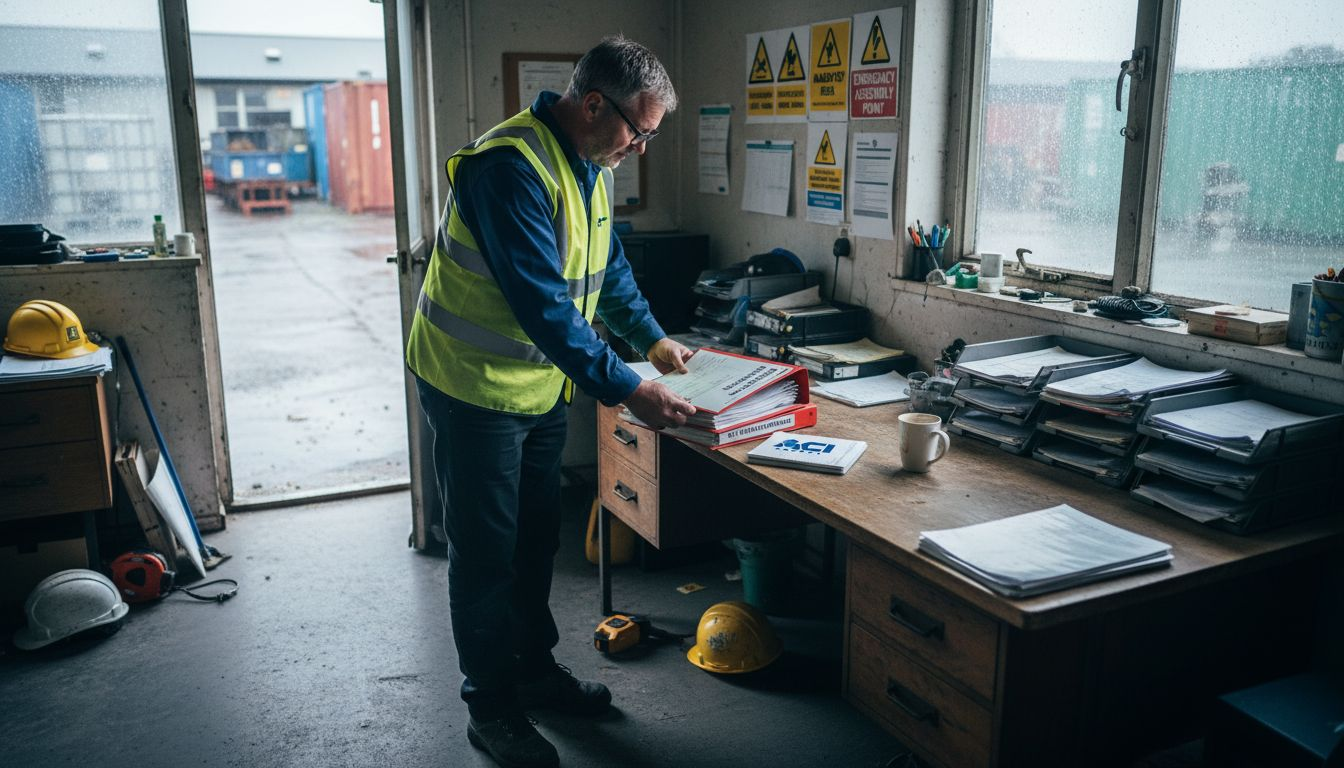
Running a small construction or trades business in the UK means juggling multiple responsibilities, and health and safety compliance often feels overwhelming. Complex paperwork requirements can drain hours from productive work, whilst non-compliance risks fines and project delays. This guide shows you how to meet UK legal obligations efficiently using digital templates, reducing administrative burden and protecting your business from enforcement action.
Table of Contents
- Understanding UK Legal Compliance Requirements
- Prerequisites: What You Need Before Starting Compliance
- Implementing Digital Template Solutions
- Choosing The Right Documentation And Avoiding Pitfalls
- Common Mistakes And Troubleshooting
Key takeaways
| Point | Details |
|---|---|
| Mandatory UK documentation | Risk assessments, RAMS, and COSHH assessments are legally required for construction and trades businesses. |
| Preparation essentials | Basic regulatory knowledge, digital tools like Microsoft Word, and assigned compliance responsibility streamline implementation. |
| Digital template implementation | UK-specific customisable templates cut paperwork time by up to 50% whilst ensuring legal compliance. |
| Common pitfalls to avoid | Generic forms, incomplete assessments, and unclear document ownership cause 40% of enforcement notices. |
| Timeline and savings | Achieve full compliance in 2 to 4 weeks, reducing administration time by 40 to 50% compared to traditional methods. |
Understanding UK legal compliance requirements
Small construction and trades businesses in the UK operate under strict health and safety regulations that require specific documentation. The Health and Safety at Work Act 1974 places primary responsibility on business owners to protect workers and visitors from harm. This legal framework mandates that you maintain current risk assessments, method statements, and hazard control documentation.
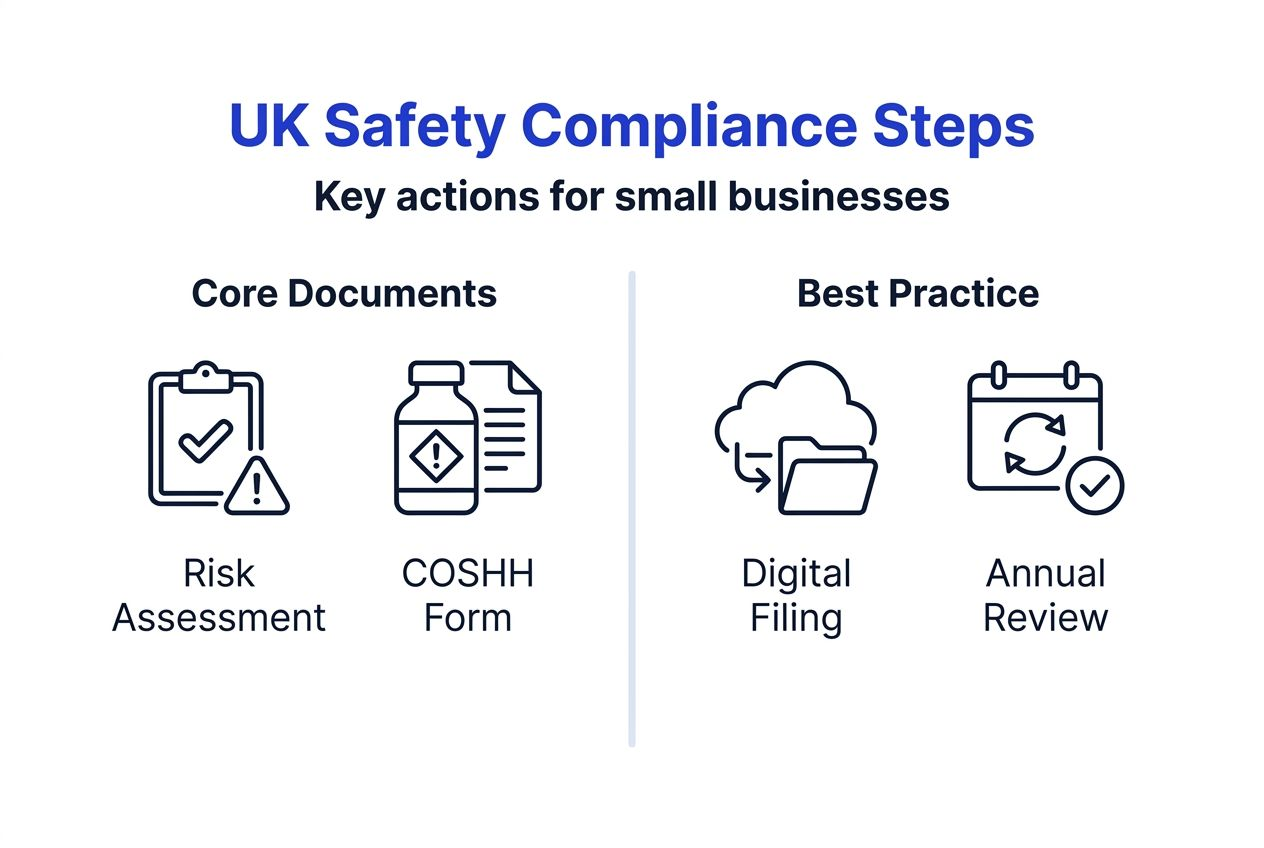
Your business must have three core document types. Risk assessments identify workplace hazards and evaluate their severity. RAMS combine risk assessments with detailed method statements explaining how tasks will be completed safely. COSHH assessments specifically address hazardous substances used onsite, from cleaning chemicals to construction materials.
The Health and Safety Executive (HSE) provides guidelines and conducts inspections to ensure compliance. Businesses failing to maintain proper documentation face improvement notices, prohibition notices stopping work immediately, and fines reaching thousands of pounds. A customisable health and safety policy template forms the foundation of your compliance system, outlining your safety commitments and procedures.
Key documentation requirements include:
- Written risk assessments for all work activities and locations
- Method statements detailing safe working procedures
- COSHH assessments for every hazardous substance
- Emergency procedures and accident reporting protocols
- Records of safety training and toolbox talks
Non-compliance doesn’t just risk legal penalties. Projects can be halted mid-flow, damaging client relationships and business reputation. Insurance coverage may be void if proper documentation isn’t maintained. The HSE’s health and safety construction guide clarifies these obligations for small businesses.
Prerequisites: what you need before starting compliance
Successful compliance implementation requires preparation before diving into documentation. You need a working understanding of UK health and safety regulations relevant to your specific trade, whether that’s electrical work, plumbing, groundwork, or general building. This knowledge helps you identify hazards accurately and apply appropriate controls.
Digital infrastructure is essential for modern compliance management. A computer with Microsoft Word allows you to edit and customise templates efficiently. PDF software enables you to create final versions for distribution and archiving. Cloud storage or organised file systems keep documents accessible for inspections and audits.

Selecting appropriate template packages saves significant time. Look for UK-specific digital resources covering RAMS, risk assessments, and COSHH tailored to your industry. A customisable UK sole trader health and safety template provides the right starting point for smaller operations. Generic templates from non-UK sources often miss critical legal requirements.
Assigning a compliance responsible person within your team ensures accountability. This individual coordinates document creation, maintains files, and schedules reviews. Even sole traders benefit from explicitly defining when they’ll handle compliance tasks rather than treating it as an afterthought.
Basic prerequisites checklist:
- Understanding of regulations specific to your trade
- Computer with Word and PDF capability
- UK-specific template packages for your industry
- Designated compliance coordinator
- Calendar system for scheduling reviews
Many small businesses overlook the importance of workplace safety planning, which creates preventable compliance gaps. Proper preparation prevents rushed, incomplete documentation that fails inspections.
Implementing digital template solutions
Digital templates transform compliance from a daunting administrative burden into a manageable process. Start by downloading UK-specific templates matched to your trade and typical projects. Professionally designed RAMS templates reduce paperwork time by up to 50% compared to creating documents from scratch.
Begin with your most common work activities. Open the RAMS template and systematically complete each section. Replace placeholder text with details specific to your business, including company information, project location, and involved personnel. The hazard identification section requires careful thought about what could go wrong during the work.
For each identified hazard, document existing control measures and additional precautions needed. Rate risks before and after controls using the template’s built-in matrix. This shows you’ve thought through safety comprehensively. Method statements should break work into clear steps, specifying equipment, materials, and safety procedures for each stage.
COSHH assessments follow a similar customisation process. List every hazardous substance used, from adhesives to solvents. Record health risks, exposure routes, and control measures like ventilation or protective equipment. Manufacturers’ safety data sheets provide the technical information you need.
Implementation steps:
- Download templates covering your typical work activities
- Customise company and project-specific details
- Identify hazards systematically for each activity
- Document control measures and risk ratings
- Complete method statements with step-by-step procedures
- Populate COSHH assessments for all substances
- Compile toolbox talks for team briefings
- Finalise your overarching health and safety policy
Organise completed documents in clearly labelled digital folders. Create a master index listing all assessments, when they were completed, and review dates. This structure makes audits straightforward and ensures nothing gets overlooked.
Pro Tip: Save customised templates for similar future projects to avoid repeating the same work. Maintain a library of your most-used assessments and update them annually rather than starting fresh each time.
Choosing the right documentation and avoiding pitfalls
The quality of your compliance documentation directly impacts both legal protection and practical safety outcomes. Free generic forms downloaded from random websites often lack UK-specific legal language and fail to address industry-specific hazards. These shortcuts create a false sense of security whilst leaving you vulnerable to enforcement action.
Professional UK-tailored templates incorporate current legislation, HSE guidance, and trade-specific risk factors. They include prompts and examples that guide you through comprehensive hazard identification. Structured formats ensure you don’t accidentally omit required information. The initial cost of quality templates is minimal compared to potential fines or consultant fees.
Common documentation errors undermine compliance efforts:
- Incomplete risk assessments missing significant hazards
- Vague control measures lacking specific details
- No assigned responsibility for implementing controls
- Outdated forms referencing superseded regulations
- Generic descriptions not reflecting actual work activities
| Feature | Free Generic Forms | Professional UK Templates |
|---|---|---|
| Legal compliance | Often incomplete or outdated | Current with UK regulations |
| Trade relevance | Generic hazards only | Industry-specific risks included |
| Guidance | Minimal instructions | Detailed prompts and examples |
| Updates | None | Regular revisions provided |
| Support | No assistance | Expert guidance available |
| Time required | High (trial and error) | Low (structured process) |
| Audit readiness | Questionable | Inspectors recognise quality |
The ACI Safety blog provides ongoing guidance on maintaining compliance standards. Regular updates keep you informed about regulatory changes affecting your documentation requirements.
Selecting the right customisable health and safety policy template establishes a solid foundation. Look for templates that come with clear instructions, update support, and examples relevant to your work. Avoid anything that looks too simple or doesn’t mention specific UK regulations.
Pro Tip: Choose template providers offering customer support and guidance. When questions arise during customisation, expert assistance ensures you complete documents correctly rather than guessing.
Common mistakes and troubleshooting
Incomplete risk assessments cause approximately 40% of enforcement notices issued to small construction and trades businesses. Rushing through hazard identification or using overly generic descriptions leaves gaps that inspectors quickly spot. Take time to consider all potential risks, including less obvious ones like manual handling strain or lone working scenarios.
Unclear assignment of responsibility creates confusion about who implements safety controls and maintains documentation. Every risk assessment and method statement should name specific individuals or roles accountable for each control measure. Without this clarity, safety procedures often aren’t followed consistently.
Neglecting annual reviews allows documentation to become outdated and irrelevant. Work methods change, new equipment gets introduced, and regulations evolve. Documents created two years ago may no longer reflect current practices or legal requirements. Schedule reviews systematically rather than waiting for an inspection to highlight problems.
Overreliance on generic forms increases compliance risk significantly. Forms designed for different industries or countries miss crucial details. A risk assessment template created for office work doesn’t address construction-specific hazards like working at height, excavations, or heavy machinery operation.
Troubleshooting common issues:
- Missing hazards: Walk through tasks step by step, considering what could go wrong at each stage
- Vague controls: Replace
Recommended
- Workplace safety tips UK SMEs 2026: 45% compliance gaps – ACI Safety
- What is a risk assessment: clear guide for UK businesses – ACI Safety
- COSHH Explained: A Simple Guide for Small Business Owners – ACI Safety
- Customisable UK Sole Trader Health and Safety Policy Template – Compliant and Easy-to-Use – ACI Safety