
Many UK business owners view health and safety compliance as a bureaucratic box-ticking exercise. This misconception can be costly. Legal compliance means actively managing risks to protect your workforce and the public whilst meeting statutory obligations. This guide explains what legal compliance in health and safety truly involves, which UK laws govern it, and practical steps your business must take to stay compliant in 2026.
Table of Contents
- Understanding The Legal Framework For Health And Safety In The UK
- Core Legal Requirements For SMEs: Risk Assessments, Training, And Reporting
- Common Challenges For SMEs And How To Overcome Them
- Updating And Maintaining Compliance In 2026 And Beyond
- Explore ACI Safety Solutions For Hassle-Free Compliance
- Frequently Asked Questions
Key takeaways
| Point | Details |
|---|---|
| Core legislation | The Health and Safety at Work etc. Act 1974 and Management Regulations 1999 establish employer duties for workplace safety. |
| Risk assessments mandatory | All UK businesses must conduct and regularly update risk assessments to identify hazards and control measures. |
| Incident reporting required | RIDDOR 2013 mandates prompt reporting of serious workplace incidents to the HSE. |
| Resource challenges common | 45% of SMEs cite lack of time and 38% lack expertise as main compliance barriers. |
| Ongoing maintenance essential | Regular policy reviews and staff training ensure sustainable compliance and adapt to legislative changes. |
Understanding the legal framework for health and safety in the UK
The Health and Safety at Work etc. Act 1974 forms the cornerstone of UK safety law. This legislation establishes clear duties under HSWA 1974 for everyone in the workplace. Employers must ensure, so far as is reasonably practicable, the health and safety of employees and anyone affected by their work activities.
What does “reasonably practicable” mean? It balances the level of risk against the measures needed to control that risk. If reducing a risk is technically possible and the cost isn’t grossly disproportionate to the risk level, you must implement controls.
The Act applies to all UK businesses regardless of size. Whether you employ one person or a hundred, your legal obligations remain the same. SMEs face identical duties to larger organisations, though enforcement approaches may consider available resources.
Key employer responsibilities include:
- Providing safe equipment, systems, and working environments
- Ensuring safe handling, storage, and transport of substances
- Providing information, instruction, training, and supervision
- Maintaining safe access and egress routes
- Consulting with employees on safety matters
Employees also have duties. They must take reasonable care of their own safety and that of others affected by their actions. They must cooperate with employers on safety matters and not interfere with safety equipment.
Supporting legislation specifies requirements for particular hazards and industries. The Management of Health and Safety at Work Regulations 1999, COSHH Regulations, and Display Screen Equipment Regulations fill gaps and provide detailed compliance frameworks. Understanding this hierarchy helps you prioritise compliance activities effectively.
Core legal requirements for SMEs: risk assessments, training, and reporting
The Management of Health and Safety at Work Regulations 1999 establish fundamental compliance requirements. These regulations operationalise the general duties in HSWA 1974 with specific, actionable steps.

Risk assessment sits at the heart of legal compliance. Your risk assessment guide must identify workplace hazards, evaluate who might be harmed and how, and implement control measures. This isn’t optional paperwork; it’s a legal requirement for all employers with five or more employees to record significant findings.
The risk assessment process follows five steps:
- Identify hazards present in your workplace activities
- Determine who might be harmed and how
- Evaluate risks and decide on control measures
- Record findings and implement controls
- Review and update assessments regularly
Training equips your team to work safely and understand hazards. You must provide induction training for new starters, role-specific training, and refresher sessions when processes change. Training records demonstrate compliance during inspections.
Appointing competent persons supports your compliance efforts. These individuals possess the necessary skills, knowledge, and experience to help you meet legal duties. For many SMEs, this means hiring external advisors or using professional templates to supplement internal capabilities.
RIDDOR 2013 governs incident reporting. You must report:
- Deaths and specified serious injuries immediately
- Injuries causing over seven days’ incapacitation within 15 days
- Diagnosed occupational diseases
- Dangerous occurrences with potential for serious harm
Failure to report breaches legal obligations and prevents HSE from identifying industry trends. Following UK SMEs safety tips and our small business compliance guide helps you navigate these requirements systematically.
Common challenges for SMEs and how to overcome them
SMEs face distinct compliance hurdles. 45% cite lack of time whilst 38% point to insufficient expertise as primary barriers. These aren’t excuses; they’re real constraints affecting compliance quality.
Common pitfalls include:
- Generic risk assessments copied from templates without workplace-specific adaptation
- Inadequate or absent training records
- Poor provision or maintenance of personal protective equipment
- Failure to consult employees on safety matters
- Incomplete or missing accident investigation records
Resource limitations needn’t prevent compliance. The HSE provides free guidance tailored to different industries and business sizes. Their website offers sector-specific templates, checklists, and practical advice. Appointing a competent advisor, even part-time, dramatically improves compliance outcomes.
Our health and safety checklist breaks complex requirements into manageable tasks. Start with high-risk activities specific to your industry. A construction firm prioritises working at height and manual handling; an office prioritises display screen equipment and stress management.
Substance handling requires particular attention. COSHH guidance for SMEs explains legal duties when storing or using hazardous materials. Many SMEs underestimate COSHH’s scope, which covers cleaning products, adhesives, and dusts alongside obvious chemicals.
Pro Tip: Focus your initial compliance efforts on activities with highest injury rates in your sector. This targeted approach delivers maximum risk reduction with limited resources, satisfying the “reasonably practicable” standard.
Document everything. Written policies, assessment records, and training logs prove compliance during inspections. Digital systems streamline record-keeping and ensure accessibility. Regular internal audits identify gaps before external inspectors do.
Updating and maintaining compliance in 2026 and beyond
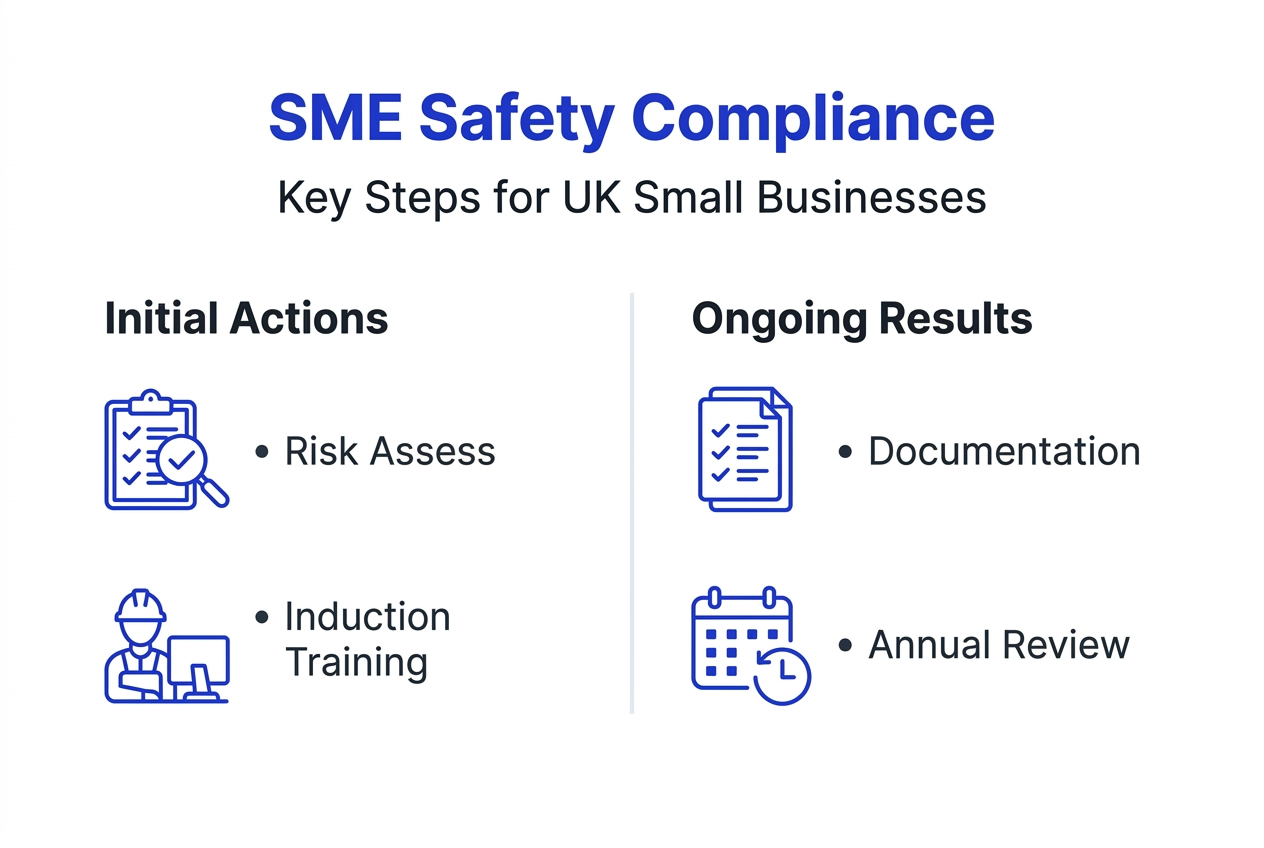
Compliance isn’t a one-time achievement. Risk assessments should be reviewed at least annually or whenever significant changes occur. New equipment, altered processes, different personnel, or incident investigations all trigger review requirements.
What constitutes a significant change? Installing new machinery, adopting different work methods, employing vulnerable workers, or receiving accident reports all qualify. Legislative updates also necessitate policy reviews. SMEs need to stay informed on Approved Codes of Practice and guidance changes.
The difference between initial and ongoing compliance:
| Aspect | Initial compliance | Ongoing compliance |
|---|---|---|
| Risk assessments | Create baseline assessments for all activities | Review annually and after changes, update controls |
| Training | Induction for all current staff | Refresher training, new starter inductions, role changes |
| Documentation | Establish policies and procedures | Update to reflect legislative changes and lessons learned |
| Monitoring | Baseline safety performance metrics | Track trends, investigate incidents, implement improvements |
| Costs | Higher upfront investment in setup | Lower maintenance costs but consistent commitment |
Regular staff engagement maintains compliance culture. Brief toolbox talks, safety notice boards, and consultation meetings keep safety visible. Employees closest to work activities often identify risks management overlooks.
Our risk assessment hierarchy helps prioritise control measures effectively. Elimination beats risk reduction, which beats PPE provision. This hierarchy aligns with legal expectations and delivers better protection.
Technology supports compliance maintenance. Digital templates allow quick updates when legislation changes. Cloud storage ensures accessibility and version control. Automated reminders prompt timely reviews and training renewals.
Pro Tip: Subscribe to HSE email updates and follow our health and safety updates blog to receive timely notifications of legislative changes affecting your industry. Staying informed prevents compliance gaps.
Work-related ill health often develops gradually. Monitoring sickness absence patterns, conducting health surveillance where required, and addressing ergonomic issues proactively reduces long-term liabilities. Prevention costs less than compensation claims and lost productivity.
Explore ACI Safety solutions for hassle-free compliance
Navigating UK health and safety legislation consumes valuable time better spent growing your business. ACI Safety simplifies this challenge with professionally designed, instantly downloadable templates.
Our customisable health safety policy template provides the foundation every UK business needs.
Each template arrives in editable Word and PDF formats, structured to meet current legal requirements. Simply customise sections with your business details, activities, and control measures. This approach eliminates guesswork whilst ensuring compliance.
Our RAMS template collection covers construction, trades, and facilities management activities comprehensively. Risk assessments and method statements integrate seamlessly, presenting clear documentation for clients and inspectors. Follow our small business safety compliance guide to implement these resources effectively and build sustainable compliance systems without extensive safety expertise.
Frequently asked questions
What is legal compliance in health and safety?
Legal compliance means meeting statutory obligations under UK health and safety legislation, primarily the Health and Safety at Work etc. Act 1974 and supporting regulations. It requires conducting risk assessments, providing training, maintaining safe equipment and workplaces, consulting employees, and reporting specified incidents. Compliance protects workers whilst satisfying legal duties enforceable by the HSE.
Why is risk assessment crucial for small businesses?
Risk assessment identifies hazards before they cause harm, fulfilling a fundamental legal requirement under the Management of Health and Safety at Work Regulations 1999. It provides the foundation for all other compliance activities by determining necessary controls, training needs, and monitoring requirements. Businesses with five or more employees must record significant findings, creating documentation that demonstrates due diligence during inspections or following incidents.
How often should SMEs update their safety policies?
Review policies at least annually and immediately following significant changes such as new equipment, altered processes, serious incidents, or legislative updates. Annual reviews ensure policies reflect current work activities and legal requirements. Documenting review dates and changes made demonstrates ongoing compliance commitment and helps identify improvement opportunities before problems arise.
What are the consequences of non-compliance?
Non-compliance risks HSE enforcement action ranging from improvement notices requiring specific changes within deadlines to prohibition notices halting dangerous activities immediately. Serious breaches lead to prosecution with unlimited fines and potential imprisonment for directors. Beyond legal penalties, non-compliance increases accident rates, damages reputation, raises insurance premiums, and may result in civil compensation claims from injured workers.
Where can SMEs get help with their legal health and safety obligations?
The HSE website offers free industry-specific guidance, templates, and toolkits. Trade associations often provide member support services. Professional bodies like IOSH connect businesses with qualified advisors. Digital providers like ACI Safety supply professionally designed templates enabling efficient compliance without extensive expertise. Local authority environmental health departments also advise smaller businesses on basic requirements.