Managing health and safety hazards effectively starts with knowing which risks to prioritise. For UK SMEs in construction and trades, the challenge isn’t just identifying hazards but focusing resources on those that pose the greatest threat to your workers. Falls from height alone cause over 50% of construction fatalities, making hazard recognition a critical business priority. This article guides you through proven frameworks for identifying common hazards, explains the top three risks facing construction SMEs, and provides practical control strategies to enhance workplace safety and compliance.
Table of Contents
- Key takeaways
- Criteria for recognising common health and safety hazards
- Common hazard 1: falls from height – leading cause of fatalities
- Common hazard 2: manual handling and musculoskeletal disorders
- Common hazard 3: hazardous substances and exposure risks
- Comparing hazards and controls: prioritising your focus
- Enhance your health and safety compliance with ACI Safety
- Frequently asked questions
Key Takeaways
| Point | Details |
|---|---|
| Prioritise high risk hazards | Concentrate resources on hazards with the highest likelihood and severity, notably falls from height which account for a majority of construction fatalities. |
| HSE five step framework | Follow the five step risk assessment approach by identifying hazards, evaluating who might be harmed, implementing controls, recording findings and reviewing regularly. |
| Hierarchy of controls | Apply elimination and substitution first, then engineering and administrative controls, with PPE as a last resort rather than the sole protection. |
| Worker involvement in risk assessment | Involve workers directly in hazard identification and risk assessment to improve accuracy and buy in. |
| Regular reviews and updates | Treat risk assessments as living documents and schedule reviews at least annually or after significant changes or incidents. |
Criteria for recognising common health and safety hazards
Recognising workplace hazards requires a systematic approach rather than reactive firefighting. The HSE’s five-step risk assessment framework provides the foundation: identify hazards, evaluate who might be harmed, implement controls, record findings, and review regularly. This structured method ensures you capture genuine risks rather than overlooking critical exposures.
For construction SMEs, prioritisation matters enormously. You cannot address every conceivable risk simultaneously, so focus on hazards with the highest likelihood and severity combination. A fall from scaffolding presents far greater immediate danger than a minor trip hazard, demanding proportionate attention and resources. This risk-based thinking aligns your safety efforts with actual workplace threats.
The hierarchy of controls shapes effective hazard management. Elimination removes the hazard entirely, substitution replaces it with something safer, engineering controls physically separate workers from danger, administrative controls change work practices, and PPE provides the last line of defence. Relying solely on PPE represents the weakest approach because it depends entirely on correct usage by individual workers.
Human factors profoundly influence workplace safety outcomes. Workers make mistakes when tired, rushed, or inadequately trained. Systems that ignore these realities create conditions for incidents. Rather than blaming individuals after accidents, examine organisational weaknesses such as unclear procedures, insufficient supervision, or unrealistic time pressures that set workers up to fail.
Regular review keeps risk assessments relevant to actual conditions. Work practices evolve, new equipment arrives, and lessons emerge from near misses. Treating risk assessment as a living document rather than a compliance exercise ensures your controls remain effective. Schedule reviews at least annually, after significant changes, or following incidents.
Pro tip: Involve workers directly in hazard identification and risk assessment. They understand practical realities better than anyone and their input improves both accuracy and buy-in for safety measures.
Common hazard 1: falls from height – leading cause of fatalities
Falls from height dominate UK construction fatalities with brutal consistency. Over half of construction worker deaths involve falls, with an average of 21 fatalities annually over the past five years. For SMEs, this statistic demands immediate attention because falls represent the single most likely cause of a workplace death on your sites.
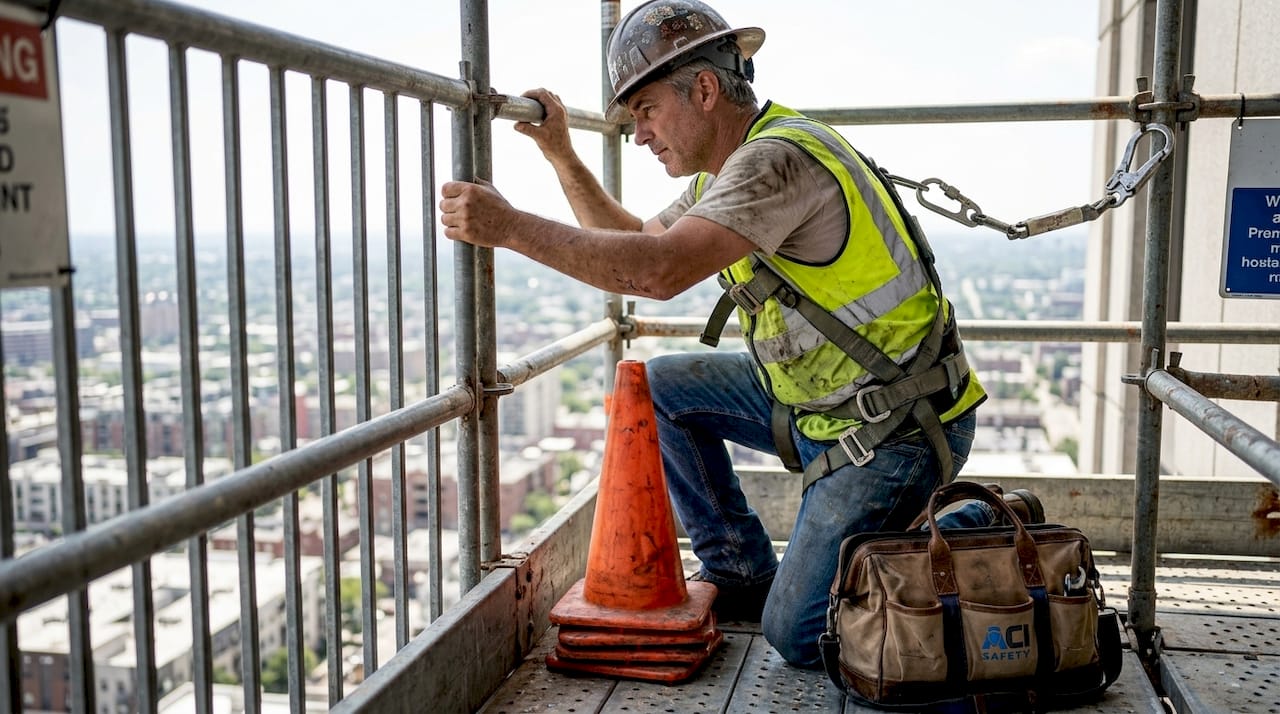
Typical scenarios include workers falling through fragile roofs, from unprotected edges, off ladders used incorrectly, or through gaps in scaffolding. Each incident shares common threads: inadequate edge protection, improper equipment selection, rushed work, or missing fall arrest systems. The consequences extend beyond the injured worker to devastate families, traumatise colleagues, and potentially destroy your business through legal penalties and reputational damage.
Effective controls follow the hierarchy rigorously. Eliminate work at height entirely where possible by assembling components at ground level. When elevation is unavoidable, use properly designed work platforms with guardrails rather than ladders. Mobile elevated work platforms (MEWPs) and scaffolding with full edge protection provide far superior safety compared to makeshift arrangements.
Fall arrest equipment such as harnesses and lanyards serves as a last resort, not a primary control. This equipment only works if correctly fitted, properly anchored, and worn consistently. Many workers dislike harnesses due to discomfort, and incorrect use provides false security. Engineering controls that prevent falls altogether always outperform equipment designed to arrest falls already happening.
Training and supervision maintain safety standards daily. Workers need practical instruction on equipment use, hazard recognition, and emergency procedures. Supervisors must enforce standards consistently, challenging unsafe practices immediately rather than hoping for the best. A strong safety culture where workers feel empowered to stop dangerous work prevents incidents more effectively than paperwork alone.
Pro tip: Inspect all fall protection equipment before each use and maintain detailed records. Worn harnesses, damaged guardrails, or compromised anchor points can fail catastrophically when needed most.
Statistic spotlight: In 2024/25, falls from height caused 21 of the 35 fatal injuries in UK construction, representing 60% of sector fatalities.
Common hazard 2: manual handling and musculoskeletal disorders
Manual handling creates a slower but equally serious health crisis for construction workers. Unlike dramatic falls, musculoskeletal disorders develop gradually through repeated strain, poor posture, and cumulative damage. These conditions destroy quality of life, force early retirement, and represent a growing proportion of work-related ill health in UK construction.
Typical causes include lifting heavy materials without mechanical assistance, working in awkward positions for extended periods, repetitive motions such as drilling or hammering, and vibration exposure from power tools. Back injuries, shoulder problems, and hand-arm vibration syndrome (HAVS) commonly result. Workers often normalise discomfort until serious damage occurs, making prevention essential.
Mechanical aids dramatically reduce manual handling risks. Hoists, trolleys, pallet trucks, and lifting equipment eliminate the need for workers to carry heavy loads. Task redesign can position materials at convenient heights, reducing bending and reaching. These engineering solutions protect workers far more reliably than training alone because they remove physical strain rather than expecting perfect technique under pressure.
Training remains important for unavoidable manual handling. Workers need practical instruction in body mechanics, load assessment, and team lifting techniques. However, training never compensates for poor job design. If a task regularly causes strain despite proper technique, the task itself needs redesigning rather than blaming workers for inadequate strength or skill.
Health surveillance detects early warning signs before permanent damage occurs. Regular assessments for workers exposed to vibration or repetitive strain identify problems when interventions can still help. This proactive approach demonstrates duty of care and provides valuable data for improving controls. Explore broader health and safety essentials to build comprehensive protection.
“Effective risk controls and worker involvement reduce musculoskeletal disorders and improve wellbeing.” — HSE expert commentary
Common hazard 3: hazardous substances and exposure risks
Invisible hazards often receive insufficient attention despite causing serious long-term harm. Respirable crystalline silica (RCS) from cutting concrete or stone, solvent fumes from paints and adhesives, and asbestos in older buildings create exposures that damage health gradually. Unlike immediate injuries, substance-related diseases may not appear for years, making prevention the only realistic protection.
The hierarchy of controls applies powerfully to substance hazards. Substitution replaces dangerous materials with safer alternatives where possible. Water-based paints eliminate solvent exposure, and wet cutting methods suppress silica dust. Engineering controls such as local exhaust ventilation capture contaminants at source before workers breathe them. These approaches provide reliable protection independent of worker behaviour.
COSHH (Control of Substances Hazardous to Health) regulations require systematic management:
- Identify all hazardous substances used or created by work activities
- Assess risks to workers from exposure under actual working conditions
- Implement appropriate controls following the hierarchy of effectiveness
- Monitor exposure levels and control effectiveness regularly
- Consult workers on risks and control measures to ensure practical effectiveness
Health surveillance forms a critical component for high-risk exposures. Regular monitoring for vibration and RCS exposure identifies problems early when interventions can prevent permanent damage. This proactive approach protects workers and demonstrates regulatory compliance. Our COSHH assessment guide provides practical implementation steps.
| Substance | Health risks | Effective controls |
|---|---|---|
| Respirable crystalline silica (RCS) | Silicosis, lung cancer, chronic respiratory disease | Wet cutting methods, on-tool extraction, enclosed processes |
| Solvent vapours | Neurological damage, respiratory irritation, skin sensitisation | Water-based substitutes, adequate ventilation, enclosed mixing |
| Wood dust | Asthma, nasal cancer, skin irritation | On-tool extraction, enclosed cutting, regular cleaning |
Comparing hazards and controls: prioritising your focus
Understanding relative risks helps allocate limited resources effectively. Not all hazards demand equal attention, and spreading efforts too thinly dilutes impact. This comparison framework guides prioritisation decisions based on likelihood and severity rather than guesswork or reactive responses to recent incidents.
| Hazard type | Frequency | Severity | Primary controls | Secondary controls |
|---|---|---|---|---|
| Falls from height | Moderate | Fatal | Guardrails, work platforms, eliminate height work | Fall arrest systems, training, supervision |
| Manual handling | High | Chronic injury | Mechanical aids, task redesign, reduced loads | Proper technique training, team lifting |
| Hazardous substances | High | Long-term disease | Substitution, ventilation, wet methods | RPE, health surveillance, exposure monitoring |
Quick prioritisation tips help focus your efforts:
- Address fatal risks first regardless of frequency because consequences are irreversible
- Invest in engineering controls that protect automatically rather than relying on worker compliance
- Target high-frequency hazards with chronic effects to prevent cumulative workforce damage
- Review incident and ill health data regularly to identify emerging patterns requiring attention
- Engage workers in identifying practical control improvements based on daily experience
A systems approach recognises that incidents result from organisational weaknesses rather than individual failures. When accidents occur, examine underlying factors such as inadequate training, time pressures, unclear procedures, or missing equipment rather than simply blaming the worker involved. This perspective drives sustainable improvements by addressing root causes.
Continuous improvement maintains safety standards as work evolves. Regular risk assessment reviews, worker consultation, and monitoring of control effectiveness ensure your approach remains relevant. Safety management is never complete because conditions change, new hazards emerge, and lessons from incidents provide opportunities to strengthen protections. Explore our risk assessment workflow guidance for systematic improvement methods.
Pro tip: Update risk assessments immediately after incidents or near misses rather than waiting for scheduled reviews. Fresh insights from recent events drive the most effective improvements.
Enhance your health and safety compliance with ACI Safety
Managing health and safety hazards effectively requires robust documentation and systematic processes. ACI Safety provides UK construction and trade SMEs with professionally designed templates that simplify compliance whilst meeting regulatory requirements. Our editable risk assessment templates, RAMS documents, and method statements save significant time compared to creating documentation from scratch.
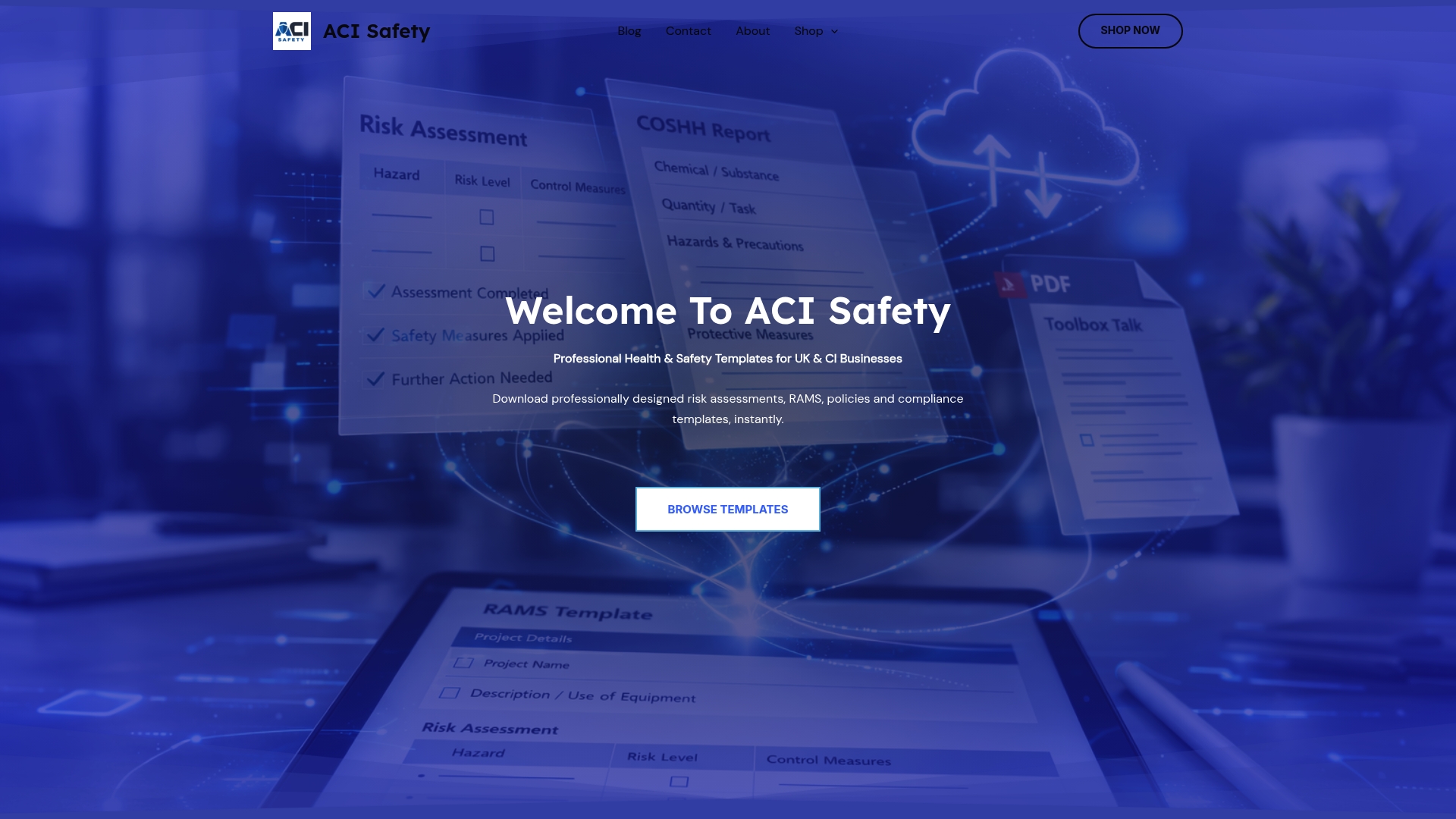
Our comprehensive health and safety essentials include COSHH assessments, toolbox talks, and policy documents tailored specifically for UK SMEs. Every template is available as an instant digital download in Word and PDF formats, allowing immediate implementation without waiting for consultants or lengthy development processes. This practical approach reduces administrative burden whilst ensuring you meet legal obligations efficiently.
Explore our essential health and safety documentation list to identify exactly what your business needs for comprehensive compliance coverage. Our modern, digital-first platform delivers professional compliance documents through a streamlined online experience designed for busy business owners who need effective solutions quickly.
Frequently asked questions
What are the most common health and safety hazards in UK construction?
Falls from height, manual handling injuries, and hazardous substance exposures represent the three most significant hazards for UK construction SMEs. Falls cause over half of construction fatalities annually, whilst manual handling and substance exposures create chronic health problems that develop gradually. Prioritising these three areas provides the greatest safety impact for limited resources.
How often should risk assessments be reviewed?
Review risk assessments at least annually, immediately after incidents or near misses, when work activities change significantly, or when new equipment or materials are introduced. Regular reviews ensure controls remain effective as conditions evolve. Worker feedback often identifies practical issues requiring assessment updates between scheduled reviews.
Why is worker consultation important for hazard management?
Workers understand practical realities better than anyone because they experience daily conditions firsthand. Their insights identify hazards managers might miss and reveal whether controls work effectively in practice. Consultation also improves compliance because workers support measures they helped develop rather than resisting imposed rules.
What is the hierarchy of controls and why does it matter?
The hierarchy ranks control measures by effectiveness: elimination, substitution, engineering controls, administrative controls, and PPE. Higher-level controls provide more reliable protection because they remove hazards or separate workers physically rather than depending on correct behaviour. Prioritising engineering solutions over PPE dramatically improves safety outcomes.
What legal responsibilities do UK SMEs have for managing hazards?
The Health and Safety at Work Act 1974 requires employers to ensure worker safety so far as reasonably practicable. This includes conducting risk assessments, implementing appropriate controls, providing training, maintaining equipment, and consulting workers on safety matters. Specific regulations such as Work at Height Regulations 2005 and COSHH impose additional detailed requirements for particular hazards.