
Managing health and safety essentials in UK construction presents significant challenges for small and medium businesses. Legal duties, documentation requirements, and evolving regulations create substantial administrative burdens, particularly for firms with limited resources. This article establishes clear evaluation criteria, outlines core compliance essentials, and presents streamlined digital solutions that reduce overhead whilst maintaining robust legal protection. You’ll discover practical frameworks for selecting documentation proportionate to your business size and risk profile, enabling you to meet statutory obligations efficiently without compromising worker safety or operational continuity.
Table of Contents
- Key takeaways
- How to evaluate health and safety essentials for your SME
- Core health and safety documentation essentials for UK SMEs
- Streamlined options to manage health and safety documentation
- Comparing key health and safety essentials for SME decision-making
- Simplify your health and safety compliance with ACI Safety
- FAQ
Key Takeaways
| Point | Details |
|---|---|
| Proportionate documentation | Documentation should be proportionate to business size and risk profile to avoid unnecessary paperwork while meeting legal obligations. |
| High risk focus areas | Prioritise records for the highest hazards such as working at height and vehicle operations to secure practical compliance. |
| Size based duties | Businesses with five or more employees must have a written health and safety policy and recorded risk assessments, while smaller firms can manage documentation more informally. |
| Regular reviews and training | Regular reviews, consultation with workers and training should be scheduled and aligned with incident reviews and insurance renewal to maintain ongoing safety. |
How to evaluate health and safety essentials for your SME
Identifying the right health and safety essentials begins with understanding your legal position. Core health and safety essentials depend on business size and risk levels, with specific thresholds triggering additional documentation requirements. If you employ five or more people, you must produce a written health and safety policy and maintain recorded risk assessments. Smaller businesses face the same duty of care but can manage documentation more informally.
Prioritise activities that present the highest risks to your workforce. Working at heights, vehicle operations, and manual handling dominate construction incidents, so your documentation should reflect proportionate attention to these hazards. Understanding HSE’s role for construction SMEs helps you align your approach with regulatory expectations and industry standards.
Proportional risk management means tailoring your documentation to actual hazards rather than creating paperwork for its own sake. A small groundworks contractor faces different risks than a multi-storey fit-out specialist, and your essentials should reflect that reality. Include worker consultation mechanisms, designate a competent person for health and safety advice, and ensure welfare facilities and first aid provisions meet legal minimums.
Review your requirements regularly and after any incident, near miss, or significant operational change. New equipment, different work methods, or additional employees can alter your risk profile and trigger fresh documentation needs. This ongoing evaluation ensures your health and safety essentials remain fit for purpose and legally compliant.
Pro Tip: Create a simple annual review calendar that links documentation updates to your insurance renewal date. This synchronises compliance checks with existing business processes and reduces the chance of overlooked reviews.
Core health and safety documentation essentials for UK SMEs
Your health and safety policy outlines your organisation’s approach to managing workplace risks and fulfilling legal duties. Health and safety policy required for businesses with 5+ employees must include your general policy statement, organisational responsibilities, and arrangements for implementing the policy. Even if you employ fewer than five people, documenting your approach provides clarity and demonstrates commitment to worker protection.
Risk assessments identify hazards, evaluate who might be harmed, and determine control measures to eliminate or reduce risks. These assessments must be suitable and sufficient, meaning they reflect actual site conditions and work activities. Record your significant findings if you have five or more employees, but the assessment process itself applies universally. Focus on high-consequence hazards first, then address lower-level risks systematically.
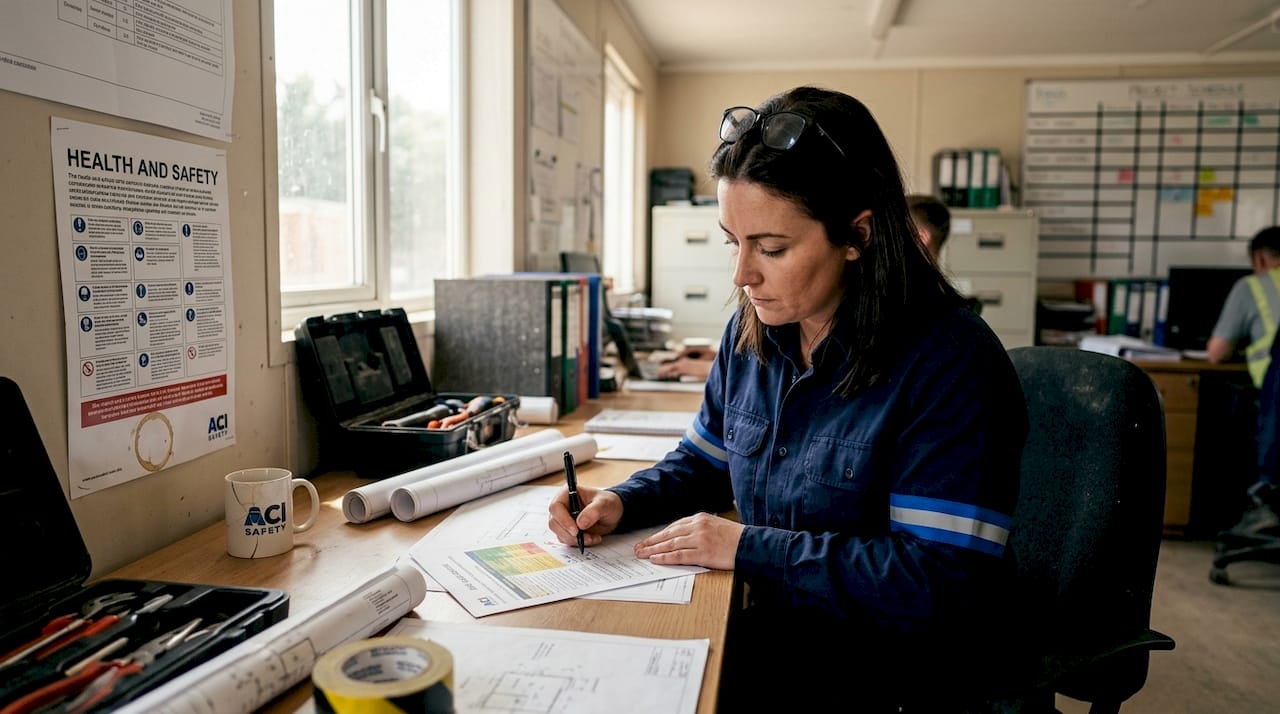
Method statements describe safe work procedures for specific tasks, particularly high-risk activities like working at height or operating plant machinery. Whilst not always legally mandated, method statements advised for high-risk tasks form part of recognised good practice and demonstrate due diligence. They provide clear instructions for workers and subcontractors, reducing ambiguity about safe working methods.
Accident reporting under RIDDOR requires you to notify HSE of fatal injuries, specified serious injuries, occupational diseases, and dangerous occurrences. Maintain an accident book for all workplace incidents, regardless of severity, to identify patterns and inform future risk assessments. This documentation proves essential during insurance claims and regulatory investigations.
Welfare facilities, first aid provisions, and the health and safety law poster complete your basic compliance package. Adequate toilets, washing facilities, drinking water, and rest areas are legal requirements, not optional extras. Display the approved poster or provide the equivalent leaflet to every worker, and ensure first aid arrangements match your risk assessment findings. Consulting your essential documentation list helps verify you’ve covered all statutory requirements.
Streamlined options to manage health and safety documentation
Paper-based methods offer low initial costs and familiar processes but create significant ongoing burdens. Physical documents require manual updates across multiple copies, version control becomes problematic, and retrieval during audits or inspections proves time-consuming. Documents stored in site cabins face damage from weather and theft, whilst centralised filing systems limit field access when workers need immediate reference.
Digital platforms transform documentation management through centralised storage, automatic reminders, and instant policy updates. Digital solutions reduce administrative workload by 50 to 80% whilst providing real-time monitoring and comprehensive audit trails. Cloud-based systems enable multi-site access, ensuring every worker views current procedures regardless of location. Mobile compatibility allows site managers to complete risk assessments and incident reports without returning to the office.
HSE provides free RAMS templates and checklists to support compliance, offering a middle ground between fully manual systems and commercial software. These resources suit businesses taking their first steps towards structured documentation, though they lack the automation and integration features of dedicated platforms.
| Solution Type | Key Features | Pros | Cons | Typical Cost |
|---|---|---|---|---|
| Paper-based | Manual forms, physical filing | Low initial cost, familiar | Version control issues, time-intensive | £50-200 annually |
| Digital templates | Editable Word/PDF documents | Affordable, customisable | Manual distribution required | £200-500 annually |
| Cloud platforms | Automated workflows, mobile access | Real-time updates, audit trails | Subscription costs, learning curve | £500-2000 annually |
| Integrated software | Links to payroll, training records | Comprehensive management | Higher cost, implementation time | £2000+ annually |
Choose systems that scale with your business growth and accommodate multiple sites without proportional cost increases. Benefits of standardising safety documents extend beyond immediate compliance, creating consistency across projects and simplifying subcontractor inductions. Evaluate whether solutions integrate with your existing business systems, particularly if you already use project management or accounting software.
Pro Tip: Test any digital solution with a single project or site before rolling out company-wide. This pilot approach identifies usability issues and training needs without disrupting your entire operation.
Comparing key health and safety essentials for SME decision-making
Comparing management approaches reveals trade-offs between cost, compliance ease, and administrative efficiency. Paper systems suit micro-businesses with stable operations and single sites, where document volumes remain manageable and regulatory changes occur infrequently. Digital solutions become cost-effective as employee numbers exceed ten or when managing multiple concurrent projects, where version control and distribution challenges multiply.
Key documents require different update frequencies based on legal requirements and operational changes. Your health and safety policy needs annual review as a minimum, with interim updates following significant organisational changes. Risk assessments demand review before starting new work activities, after incidents, or when introducing new equipment. Method statements should be task-specific and reviewed whenever work methods change.
Risk of falls, struck by vehicles, and electrical incidents dominate construction fatalities and should guide priority in your health and safety management. Falls from height account for approximately 45% of fatal injuries in construction, whilst being struck by moving vehicles or objects contributes another 26%. Structure your risk assessments and training programmes to address these high-consequence hazards first, ensuring control measures remain effective and workers understand critical safety procedures.
| Business Size | Risk Profile | Essential Documents | Management Method | Review Frequency |
|---|---|---|---|---|
| 1-4 employees | Low risk | Basic risk assessments, accident records | Paper or simple templates | Annual |
| 5-9 employees | Medium risk | Written policy, recorded assessments, method statements | Digital templates | Quarterly |
| 10-49 employees | Medium-high risk | Full policy suite, site-specific RAMS, training records | Cloud platform | Monthly |
| 50+ employees | High risk | Comprehensive management system, audits, competent person | Integrated software | Continuous |
Regular stakeholder engagement sustains safety culture beyond documentation compliance. Consult workers when conducting risk assessments, invite feedback on method statements, and involve site teams in incident investigations. This collaborative approach identifies practical control measures that workers will actually follow, rather than theoretical solutions that look good on paper but fail in practice. Understanding how to meet UK health and safety laws requires balancing legal obligations with operational realities, creating systems that protect workers without creating unnecessary bureaucracy.
Simplify your health and safety compliance with ACI Safety
Managing health and safety essentials shouldn’t consume disproportionate time or resources when practical solutions exist. ACI Safety offers customisable policies, risk assessments, and method statement templates specifically designed for UK construction SMEs, enabling you to meet legal duties efficiently whilst maintaining operational focus.
Our templates simplify compliance by providing professionally structured documents in editable Word formats, allowing you to adapt content to your specific operations without starting from scratch. This standardised approach can save SMEs up to 40% administrative time compared to creating bespoke documentation for every project. Digital formats ease document updates and sharing across sites, ensuring every team member accesses current procedures.
Trusted by numerous UK construction SMEs, our essential documentation list covers statutory requirements and industry best practice, whilst our RAMS templates for UK construction address common high-risk activities. Whether you’re establishing your first formal health and safety system or streamlining existing processes, our templates provide the foundation for robust, legally compliant documentation that scales with your business growth.
FAQ
What health and safety documents are mandatory for SMEs in construction?
Businesses with 5 or more employees must have a written health and safety policy and risk assessments. Smaller firms still need risk assessments but can keep them informal. Method statements aren’t legally mandated but represent best practice for high-risk tasks. All businesses must report specified injuries under RIDDOR and maintain accident records. Review your essential documentation list to verify compliance with your specific circumstances.
How can digital solutions reduce health and safety administration?
Digital health and safety software reduces administrative workload by 50 to 80% through automated document storage and version control. Systems send reminders for reviews and training renewals, preventing lapses in compliance. Comprehensive audit trails demonstrate due diligence during inspections, whilst real-time access ensures workers view current procedures regardless of location. These benefits of standardising safety documents extend beyond time savings to improved compliance quality.
What are the highest risks SMEs should focus on in construction?
Top construction risks causing fatalities include falls (45%) and being struck by objects or vehicles (26%). Falls from height remain the leading cause of fatal injuries, demanding robust control measures and regular equipment inspections. Vehicle-related incidents and struck-by hazards also require specific risk assessments and method statements. Focus your documentation and training on these high-consequence scenarios, as covered in our practical site safety guide.
How often should health and safety documents be reviewed?
Health and safety documents must be reviewed regularly and after incidents or changes in process or personnel. Annual reviews suit stable operations, but trigger additional reviews when introducing new equipment, changing work methods, or following accidents and near misses. Legal updates may also necessitate policy revisions. Establish a review schedule that aligns with your project cycles and business planning processes. Our practical safety law guide explains regulatory expectations for maintaining current documentation.