
Managing health and safety documentation can feel overwhelming for small businesses across the UK. Between risk assessments, policy documents, training records, and compliance checks, the paperwork quickly becomes a burden that drains time and resources. Yet proper health and safety management is not optional. It protects your team, satisfies legal obligations, and shields your business from costly penalties. This guide shows you how to streamline your health and safety processes for 2026, cutting administrative workload while maintaining full compliance with UK regulations.
Table of Contents
- What You Need To Prepare Before Simplifying Health And Safety
- Step-By-Step Guide To Streamlining Health And Safety Documentation
- Tools And Techniques To Cut Administrative Workload
- Common Mistakes And Legal Risks To Avoid When Simplifying Health And Safety
- Simplify Your Health And Safety With ACI Safety
- Frequently Asked Questions
Key takeaways
| Point | Details |
|---|---|
| Focus on core legal requirements | Prioritise essential documents required under HSWA 1974 and MHSWR 1999 to avoid unnecessary paperwork. |
| Use templates and digital tools | Standardised templates and digital solutions reduce documentation time by 40 to 60 percent. |
| Avoid common compliance pitfalls | Incomplete risk assessments and poor record keeping lead to enforcement action and fines. |
| Maintain regular review cycles | Schedule annual reviews and updates to keep health and safety documentation current and compliant. |
What you need to prepare before simplifying health and safety
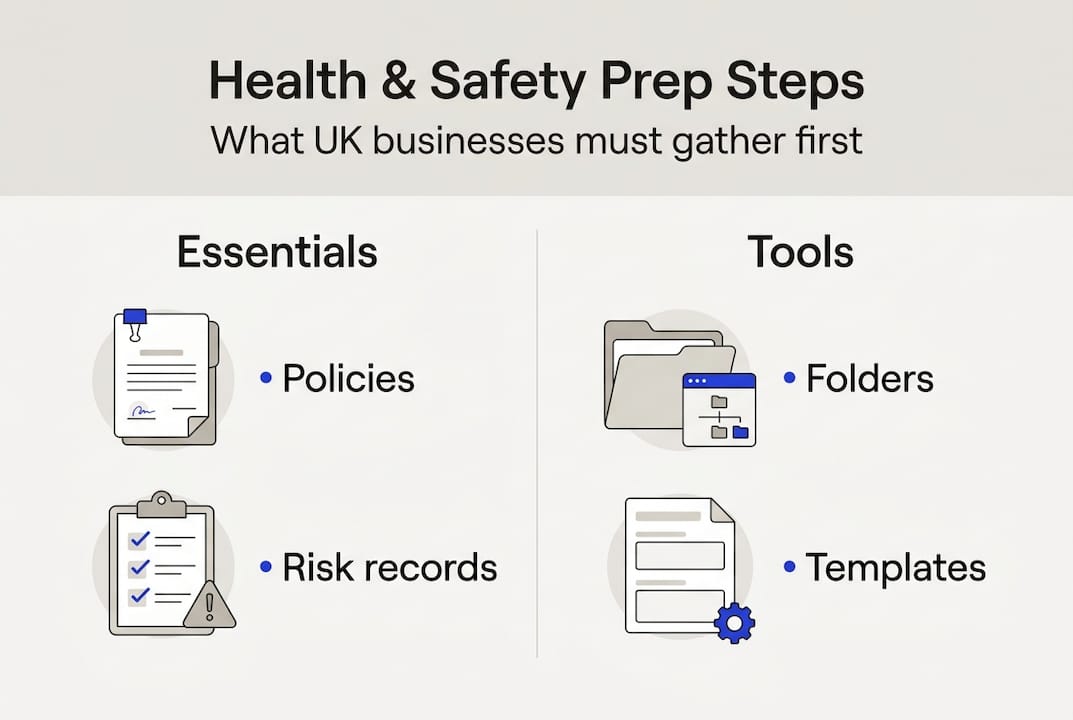
Before you streamline your health and safety documentation, you need a clear understanding of what the law requires and what resources you already have. The Health and Safety at Work Act 1974 and Management of Health and Safety at Work Regulations 1999 set out core duties for all employers, regardless of size. These include conducting risk assessments, implementing control measures, providing training, and maintaining records. Knowing these baseline requirements helps you focus on what truly matters and avoid creating unnecessary paperwork.
Start by gathering all existing health and safety documents. Collect your current policies, risk assessments, accident records, training logs, and inspection reports. This audit reveals gaps, duplications, and outdated information. You might discover multiple versions of the same document or assessments that have not been reviewed in years. Understanding your starting point makes the simplification process far more effective.
Next, consider the practical tools you will need. For paper-based systems, compliance folders and filing cabinets keep documents organised and accessible. Digital approaches require software or cloud storage with version control and search functionality. HSE provides simple 10-step basics for small low-risk businesses including policy, risk assessment, reporting, and review. Your choice depends on your team size, technical comfort, and budget.
Assess your business’s risk level honestly. A small office faces different hazards than a construction site or manufacturing facility. Higher risk operations demand more detailed documentation and may require specialist input. Lower risk businesses can adopt simpler approaches without compromising safety or compliance. Tailoring your documentation to actual risk ensures you invest time where it matters most.
Finally, recognise when to seek expert advice. If your business involves complex hazards, machinery, chemicals, or high-risk activities, consulting a competent person is essential. This might be an internal safety officer with proper training or an external consultant. Expert input ensures your simplified system remains legally sound and protects your workforce effectively. Explore essential health and safety documentation to understand what your business truly needs.
With these essentials in place, let’s move on to the step-by-step process to simplify your documentation effectively.
Step-by-step guide to streamlining health and safety documentation
The foundation of efficient health and safety management is the 5-step risk assessment method: identify hazards, decide who might be harmed, evaluate risks and controls, record findings, and review regularly. This systematic approach prevents both over-complication and dangerous gaps. Walk through your workplace methodically, noting physical hazards like machinery or slippery floors, as well as less obvious risks such as stress or lone working. Involve your team in this process because they often spot hazards management overlooks.
Once you have identified hazards, assess the likelihood and severity of harm. Focus your efforts on high-risk areas first. For each significant hazard, document existing control measures and determine whether additional action is needed. Keep your language simple and specific. Instead of vague statements like “take care near machinery,” write “use machine guards and emergency stop buttons on all lathes.” Clear, actionable controls make implementation and monitoring straightforward.
Standardised templates transform this process from a daunting task into a repeatable workflow. Rather than creating documents from scratch each time, templates provide structure and ensure consistency. They prompt you to cover all necessary points without reinventing the wheel. Health and safety templates save hours of drafting time and reduce the risk of omissions. Choose templates designed for UK compliance that match your industry and risk profile.
Training documentation often becomes unnecessarily complex. Instead of elaborate training matrices, maintain simple records showing who received what training and when. Use sign-in sheets for toolbox talks and inductions. Schedule refresher training based on job role changes, new equipment, or incidents rather than arbitrary timelines. This targeted approach keeps competence high without generating mountains of paperwork.
Establish a review cycle that matches your business needs. Annual reviews work for most low-risk operations, but higher risk activities may need quarterly checks. Calendar these reviews so they become routine rather than forgotten. During reviews, check whether risk assessments remain accurate, control measures still work, and documents reflect current operations. Update immediately if you introduce new equipment, change processes, or experience incidents.
Pro tip: Create a simple one-page summary of your health and safety system showing key documents, review dates, and responsible persons. This overview helps everyone understand the system at a glance and ensures nothing falls through the cracks during staff changes or busy periods.
| Document Type | Review Frequency | Trigger for Update |
|---|---|---|
| Risk assessments | Annually | New equipment, incidents, process changes |
| Health and safety policy | Annually | Regulatory changes, business growth |
| Training records | Ongoing | New starters, role changes, refresher due |
| Accident logs | Ongoing | Each incident, quarterly review |
Maintain all documentation in an accessible location that employees and inspectors can reach easily. Whether you use a physical compliance folder or digital system, clear organisation and labelling are essential. Group related documents together and use consistent naming conventions. This accessibility demonstrates your commitment to health and safety and makes inspections far less stressful.
Having gathered your essentials, apply this clear sequence of steps to simplify and streamline your health and safety processes.
Tools and techniques to cut administrative workload
Choosing between paper and digital documentation significantly impacts your administrative burden. Paper systems offer simplicity and no technical barriers, making them suitable for very small teams or those uncomfortable with technology. However, paper documents are harder to search, update, and duplicate. Version control becomes a nightmare when multiple copies exist across different locations. Digital systems require initial setup and training but deliver substantial long-term benefits through searchability, automated reminders, and easy updates.
Digital tools can cut health and safety administration by 40 to 60 percent compared to paper-based methods. Cloud-based platforms allow multiple users to access documents simultaneously, eliminate filing cabinets, and provide automatic backup. Mobile apps enable site workers to complete risk assessments or report hazards in real time without returning to the office. These efficiency gains free up time for proactive safety management rather than paperwork shuffling.

Ready-made compliance kits and folders provide a middle ground. Physical compliance folder guidance shows how organised binders with tabbed sections and pre-printed templates simplify document management. These kits typically include policy templates, blank risk assessment forms, accident report books, and training logs. Everything you need arrives in one package with clear instructions, making implementation straightforward even without specialist knowledge.
For businesses wanting digital efficiency without complex software, downloadable health and safety document templates in Word or PDF format offer flexibility. Edit templates to match your specific operations, save versions for different sites or activities, and print when needed. This hybrid approach combines the structure of templates with the accessibility of digital files.
Roles and responsibilities often create confusion that generates unnecessary administration. A simple RACI table clarifies who is Responsible, Accountable, Consulted, and Informed for each health and safety task. This clarity prevents duplication, ensures accountability, and stops tasks falling between the gaps. For example, a site supervisor might be Responsible for daily safety checks, the operations manager Accountable for overall compliance, the safety advisor Consulted on risk assessments, and all staff Informed of new procedures.
Pro tip: Automate reminder emails for document reviews, training renewals, and equipment inspections. Calendar applications or simple project management tools can send notifications weeks in advance, preventing last-minute scrambles and ensuring nothing expires unnoticed.
| Approach | Advantages | Disadvantages |
|---|---|---|
| Paper systems | Simple, no technical barriers, tangible records | Hard to search, update, duplicate; poor version control |
| Digital platforms | Searchable, automated reminders, easy updates, remote access | Initial setup cost, requires training, technical issues |
| Compliance kits | Structured, comprehensive, easy to implement | May include unnecessary documents, physical storage needed |
| Template downloads | Flexible, cost-effective, customisable | Requires manual updates, no automation |
Consider retaining an external advisor for periodic reviews rather than full-time employment. Many consultants offer quarterly or annual retainer services that provide expert input without the overhead of a permanent role. They can audit your system, update documents for regulatory changes, and provide training. This arrangement gives you professional support tailored to your actual needs. Understanding site safety guide principles helps you implement practical systems that work in real-world conditions.
To maximise your streamlining efforts, consider these tools and techniques that can dramatically reduce your administrative burden.
Common mistakes and legal risks to avoid when simplifying health and safety
The most frequent compliance failure is incomplete or missing risk assessments. Businesses often conduct initial assessments but fail to review them when operations change or new hazards emerge. Outdated assessments provide false security while leaving workers exposed to uncontrolled risks. Regulators view this as serious negligence because it demonstrates a lack of ongoing commitment to safety. Every significant change in your workplace, from new equipment to different work patterns, should trigger a risk assessment review.
Poor documentation practices create legal vulnerability even when actual safety management is sound. If you cannot produce records during an inspection, regulators assume the work was not done. Keep training records, risk assessments, inspection reports, and incident logs organised and accessible. Missing paperwork can transform a minor issue into a prosecution because you cannot demonstrate due diligence. The law requires certain records to be kept for specific periods, typically three years for most health and safety documents.
Many businesses attempt to simplify by cutting corners rather than improving efficiency. Skipping consultation with employees, using generic risk assessments without customisation, or ignoring low-probability hazards are dangerous shortcuts. True simplification means removing unnecessary duplication and bureaucracy while maintaining rigorous coverage of actual risks. If you cannot justify why a document or process exists, remove it. If it addresses a real hazard or legal requirement, keep it regardless of convenience.
Failing to consult competent persons leads to systems that look compliant but contain fundamental flaws. A competent person has the training, experience, and knowledge to advise on health and safety matters. For simple, low-risk operations, this might be a manager who has completed appropriate training. Complex or high-risk businesses need qualified safety professionals. Attempting to manage health and safety without adequate competence is like doing your own legal work in a serious court case. The stakes are too high for guesswork.
A food firm faced £13k fine for missing risk assessments and machine guards, illustrating prosecution risks. This case shows how documentation failures and physical hazards combine to create serious liability. The company had not conducted proper risk assessments for machinery, leading to inadequate guarding. When HSE inspected, the missing documentation proved the company had not taken reasonable steps to identify and control risks. The fine, legal costs, and reputational damage far exceeded any time saved by poor health and safety management.
Early guilty pleas and demonstrated efforts to improve can reduce fines, but they do not eliminate consequences. Courts consider cooperation and remedial action as mitigating factors, but the fundamental breach remains. Prevention is infinitely preferable to mitigation. Investing time in proper systems now protects your business, your employees, and your peace of mind. Understanding meeting UK health and safety laws helps you build compliant systems from the start.
Key mistakes to avoid include:
- Conducting risk assessments once and never reviewing them despite operational changes
- Using generic templates without customising them to your specific hazards and controls
- Failing to involve employees in risk assessment and safety planning processes
- Keeping poor or incomplete records that cannot demonstrate compliance during inspections
- Attempting to manage health and safety without adequate competence or expert advice
- Prioritising paperwork reduction over actual risk control and employee protection
Understanding potential pitfalls ensures your simplified approach remains lawful and effective.
Simplify your health and safety with ACI Safety
Implementing the strategies in this guide becomes far easier with the right tools and support. ACI Safety provides professionally designed health and safety templates tailored specifically for UK small and medium-sized businesses. Our editable templates in Word and PDF formats give you the structure and compliance assurance you need without starting from scratch.
Businesses using standardised documentation systems save up to 40 percent of their health and safety administration time. Our templates cover risk assessments, method statements, COSHH assessments, toolbox talks, and policy documents. Everything is designed to meet current UK regulations while remaining practical and easy to complete. Whether you need a comprehensive essential documentation list or specific templates for your industry, ACI Safety delivers instant digital downloads that you can start using immediately. Focus on protecting your team and growing your business while we handle the documentation framework.
Frequently asked questions
How often should I review my health and safety documents?
Review risk assessments and policies at least annually for low-risk businesses. Higher risk operations need quarterly reviews. Always update immediately after incidents, equipment changes, or process modifications. Regular reviews ensure your documentation reflects current operations and maintains legal compliance.
Do I need to keep paper copies of risk assessments?
No legal requirement mandates paper copies if you maintain secure digital records. Digital storage is acceptable provided documents remain accessible to employees and inspectors. Keep backups and ensure staff know how to access files. Some businesses maintain paper copies in site offices for convenience during inspections.
Can digital tools really cut my health and safety admin time?
Yes, digital platforms reduce administration by 40 to 60 percent compared to paper systems. Automated reminders, searchable databases, and easy updates eliminate much manual work. Initial setup requires time investment, but ongoing efficiency gains are substantial. Choose tools that match your technical capability and business size.
What health and safety documents do very small businesses actually need?
All businesses need a health and safety policy, risk assessments for significant hazards, accident records, and training logs. Businesses with five or more employees must write down their policy and risk assessments. Very small, low-risk operations can use simplified approaches but cannot skip fundamental requirements. Focus on documents that address your actual hazards.
How do I know if my staff training records are sufficient?
Adequate training records show who received training, what topics were covered, when it occurred, and who delivered it. Include sign-in sheets, certificates, or competency assessments. Records must demonstrate employees have the knowledge and skills for their roles. Update records when job duties change or after incidents reveal knowledge gaps.
What happens if I cannot produce health and safety documents during an inspection?
Missing documentation can result in improvement or prohibition notices, even if your actual safety practices are sound. Inspectors cannot verify compliance without evidence. Serious or repeated failures may lead to prosecution and fines. Maintain organised, accessible records that demonstrate your ongoing commitment to health and safety management.