
Many small business owners see health and safety as mere paperwork burden, another box to tick in an endless list of regulatory demands. However, proper health and safety management protects staff, customers, and business reputation whilst reducing costly accidents and legal exposure. This guide explains why health and safety matters for UK SMEs and demonstrates how accessible templates simplify compliance. You’ll discover the essential documentation your business needs, practical implementation steps, and how to choose the right approach for your operations. Whether you’re starting from scratch or improving existing procedures, you’ll learn how streamlined systems protect both people and profits.
Table of Contents
- Why Health And Safety Matters For Small UK Businesses
- Core Health And Safety Documentation Every Business Needs
- How To Implement Effective Health And Safety Procedures In Your Business
- Comparing Health And Safety Documentation Options For UK SMEs
- Explore Health And Safety Documentation Solutions At ACI Safety
- Frequently Asked Questions
Key takeaways
| Point | Details |
|---|---|
| Legal compliance | Health and safety compliance reduces workplace accidents and protects against prosecution by the HSE |
| Essential documentation | Effective policies, risk assessments and method statements support regulatory compliance and staff training |
| Template benefits | Pre-made templates simplify document creation whilst ensuring UK regulatory alignment |
| Business protection | Streamlined safety management systems safeguard reputation, reduce downtime and improve employee morale |
Why health and safety matters for small UK businesses
Workplace injuries cause substantial financial losses through downtime, compensation claims, and damaged reputation. Robust health and safety reduces workplace injuries and associated costs that can cripple small businesses operating on tight margins. When accidents occur, the immediate impact includes lost productivity, temporary staff costs, and potential legal fees. The longer term consequences often prove even more damaging, affecting your ability to win contracts and retain skilled workers.
Health and safety laws in the UK are mandatory and enforced by the HSE, which conducts inspections and investigates serious incidents. The role of HSE in UK workplaces extends beyond simple enforcement to providing guidance and setting standards. Businesses that fail to meet minimum requirements face improvement notices, prohibition notices, or prosecution. The penalties can include unlimited fines for serious breaches, alongside the reputational damage that follows public court proceedings.
Good safety culture improves employee morale and customer trust, creating competitive advantages that extend far beyond compliance. Staff who feel protected and valued demonstrate higher engagement, lower absence rates, and increased loyalty. Customers increasingly scrutinise suppliers’ safety records before awarding contracts, particularly in construction and facilities management sectors.
Ignoring safety can lead to catastrophic outcomes:
- Prosecution and unlimited fines for serious breaches
- Personal liability for directors and business owners
- Increased insurance premiums following claims
- Difficulty recruiting and retaining quality staff
- Lost contracts due to poor safety reputation
- Permanent closure in extreme cases
“Effective health and safety management isn’t just about avoiding prosecution. It’s about creating workplaces where people thrive, productivity increases, and businesses grow sustainably.”
The investment in proper safety management delivers returns through reduced incidents, improved efficiency, and enhanced business reputation. Small businesses that prioritise safety from the outset build stronger foundations for growth.
Core health and safety documentation every business needs
Health and safety policy, risk assessments, and method statements form the foundational documents that demonstrate your commitment to workplace safety. These aren’t optional extras but legal requirements that structure your entire approach to managing hazards. Your policy sets out your intentions and responsibilities, whilst risk assessments identify specific dangers and method statements detail safe working procedures.

Proper documentation assists in regulatory compliance and audit readiness, providing evidence that you’ve considered risks and implemented controls. When inspectors visit or incidents occur, comprehensive documentation proves you’ve taken reasonable steps to protect workers. This evidence can be the difference between a minor improvement notice and serious prosecution.
Templates provide ready-to-use formats tailored to UK regulations, eliminating the guesswork from document creation. Rather than starting with blank pages and uncertain about legal requirements, health and safety templates that save time offer structured frameworks you can customise for your specific operations. They include all mandatory sections, use appropriate legal language, and reflect current HSE guidance.
Consistent documentation streamlines training and inspections by creating standardised approaches across your organisation. New employees can be inducted using the same clear procedures, and supervisors can reference consistent guidelines when planning work. This uniformity reduces confusion, improves compliance, and makes audits more straightforward.
Essential documents include:
- Health and safety policy statement
- General workplace risk assessments
- Task-specific method statements
- COSHH assessments for hazardous substances
- Accident and incident records
- Training and competency records
| Document Type | Primary Purpose | Update Frequency |
|---|---|---|
| Health and safety policy | Sets overall approach and responsibilities | Annually or after significant changes |
| Risk assessments | Identifies hazards and control measures | Annually or when work changes |
| Method statements | Details safe procedures for specific tasks | Before each new project or task type |
| COSHH assessments | Manages chemical and substance risks | When new substances introduced |
Pro Tip: Start with a comprehensive health and safety policy as your foundation document, then build specific risk assessments and method statements that reference and support it. This hierarchical approach creates logical documentation that’s easier to maintain and update.
Templates save time and reduce errors compared to creating documents from scratch, particularly for businesses without dedicated safety professionals. The typical SME owner lacks the technical knowledge to write compliant documentation confidently, making templates invaluable for ensuring nothing critical gets overlooked.
How to implement effective health and safety procedures in your business
Identify hazards and perform risk assessments regularly by walking through your premises and operations with fresh eyes. Look for obvious dangers like trailing cables, unguarded machinery, or poor lighting, then consider less visible risks such as manual handling injuries, stress, or long-term exposure to substances. Document everything you find, even minor issues, because patterns often emerge that reveal systemic problems.
Use clear, customised policies aligned with UK health and safety law that reflect your actual operations rather than generic statements. Stepwise adoption of safety procedures enhances compliance and worker engagement by making expectations explicit and achievable. Your policy should name responsible individuals, explain reporting procedures, and outline how you’ll monitor and review safety performance.
Implement your procedures using this structured approach:
- Conduct initial hazard identification across all work areas and activities
- Prioritise risks based on likelihood and severity of potential harm
- Develop or customise control measures using the hierarchy of controls
- Document everything in appropriate templates and formats
- Communicate procedures to all affected staff through training sessions
- Monitor compliance through regular inspections and safety conversations
- Review and update based on incidents, near misses, or operational changes
Train staff on procedures and document all actions to create evidence of competency and compliance. Training shouldn’t be a one-off induction exercise but an ongoing process that reinforces safe behaviours and updates workers on new risks. Keep records of who attended which sessions, what topics were covered, and any assessments completed. This documentation proves you’ve fulfilled your duty to inform, instruct, and train employees.
Review and update safety documents periodically for ongoing compliance, treating them as living documents rather than static paperwork. The small business safety compliance guide UK 2026 recommends annual reviews as a minimum, with additional updates whenever you introduce new equipment, processes, or work locations. Legislation changes periodically, and HSE guidance evolves, so staying current protects you from unknowingly falling behind requirements.
Pro Tip: Involve your team in risk assessments and procedure development. Workers doing the jobs daily often spot hazards managers miss and can suggest practical control measures that actually work in real conditions. This participation also increases buy-in and compliance.
“The best health and safety systems are simple, practical, and owned by everyone in the business, not just imposed from above. When workers understand why procedures exist and helped create them, compliance becomes natural rather than forced.”
Effective implementation transforms documentation from paperwork burden into practical tools that genuinely improve workplace safety. The key is making procedures accessible, relevant, and integrated into daily operations rather than separate compliance exercises.
Comparing health and safety documentation options for UK SMEs
Customisable templates provide flexibility and time savings by offering structured starting points you can adapt to your specific circumstances. Rather than spending hours researching requirements and formatting documents, you begin with professionally designed templates that include all mandatory elements. The editing process focuses on inserting your business details and customising controls, not figuring out what sections you need.
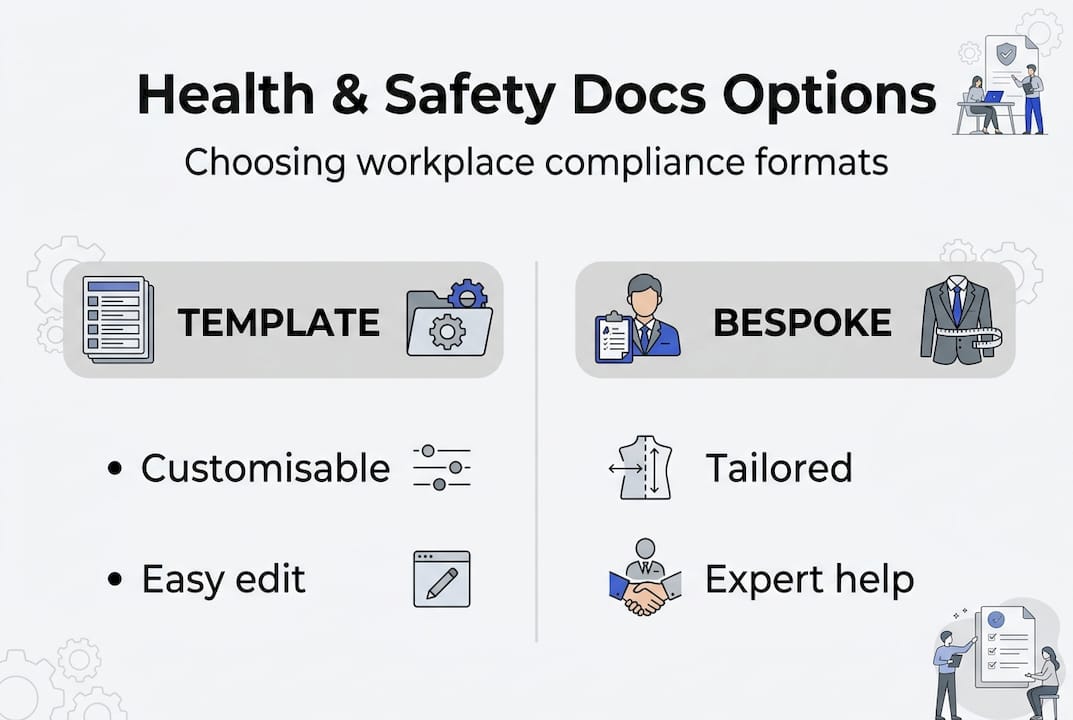
Bespoke documents offer full customisation but at greater cost and time, typically requiring safety consultants to conduct site visits and draft tailored documentation. Whilst this approach delivers perfectly matched policies and assessments, the investment often exceeds what small businesses can justify. Consultant fees for comprehensive documentation packages frequently reach thousands of pounds, with additional costs for updates and reviews.
Generic off-the-shelf forms are affordable but may miss specific compliance issues relevant to your industry or operations. A construction business needs different risk assessments than a retail shop or office environment. Generic documents often include irrelevant sections whilst omitting critical hazards specific to your work, creating gaps in your compliance.
Choosing the right documentation type balances cost, ease, and compliance effectiveness for your business circumstances. Templates often represent the sweet spot for small UK businesses, providing professional quality at accessible prices with sufficient flexibility for customisation.
| Option | Cost Range | Time to Implement | Customisation Level | Best For |
|---|---|---|---|---|
| Customisable templates | £20 to £200 | 2 to 8 hours | Medium to high | Most SMEs seeking balance of quality and affordability |
| Bespoke consultancy | £1,000 to £5,000+ | 2 to 6 weeks | Complete | Larger businesses or complex high-risk operations |
| Generic forms | Free to £50 | 1 to 3 hours | Minimal | Very small, low-risk businesses with simple operations |
| DIY from scratch | Free (time only) | 20 to 40+ hours | Complete but risky | Not recommended due to compliance risks |
Consider these factors when choosing your approach:
- Budget available for safety documentation
- Complexity and risk level of your operations
- Internal expertise and time available
- Regulatory scrutiny in your industry
- Number of different work activities requiring documentation
The customisable health and safety policy template approach delivers professional results without consultant costs, making compliance accessible to businesses of all sizes. Templates provide the structure and legal language whilst allowing you to insert specific details about your operations, responsible persons, and control measures. This combination ensures compliance whilst maintaining relevance to your actual workplace.
Most SMEs find that investing in quality templates for core documents, then customising them thoroughly, provides the best return. You gain professional quality documentation at a fraction of consultancy costs whilst maintaining the flexibility to update documents as your business evolves.
Explore health and safety documentation solutions at ACI Safety
Now that you understand why health and safety matters and how to implement effective procedures, the next step is accessing the right tools to simplify compliance. ACI Safety offers a comprehensive range of ready-to-use health and safety templates that save time and reduce the administrative burden on busy SME owners. Our templates are designed specifically for UK businesses, ensuring alignment with current HSE guidance and regulatory requirements.
Our customisable health and safety policy template provides the foundation document every business needs, available as an instant digital download in editable Word format. You can implement professional safety management systems without consultant fees or lengthy development processes. Each template includes clear instructions, relevant legal references, and structured formats that make customisation straightforward.
Whether you need risk assessments, method statements, or complete policy documents, our small business safety compliance guide 2026 helps you implement and maintain compliance efficiently. We focus on practical solutions that work for real businesses, not theoretical frameworks that gather dust on shelves.
Frequently asked questions
How often should small businesses review their health and safety policies?
Review policies at least annually or after significant changes to operations, legislation, or following serious incidents. Annual reviews ensure your documentation remains current with regulatory updates and reflects any changes in your business activities. You should also review immediately if new equipment, processes, or work locations are introduced, or if accident patterns suggest existing controls aren’t working effectively.
What are the most common workplace hazards for UK SMEs?
Slip and trip hazards, manual handling injuries, and electrical risks consistently rank among the most common causes of workplace accidents in SME environments. Falls from height, contact with moving machinery, and exposure to hazardous substances also feature prominently depending on your industry. Effective site safety guide UK businesses documentation and procedures help identify and mitigate these risks before incidents occur.
Can small businesses create their own health and safety documents without templates?
DIY documents are technically possible but often prove time consuming and risky without expert knowledge of current regulations and HSE expectations. The challenge isn’t just writing words but ensuring you’ve covered all legal requirements, used appropriate risk assessment methodologies, and created documents that would withstand regulatory scrutiny. Templates provide compliant, time saving, and editable solutions that eliminate guesswork whilst ensuring you meet benefits of standardising documents across your organisation.
What happens if my business doesn’t have health and safety documentation?
Operating without proper health and safety documentation leaves you exposed to prosecution, unlimited fines, and personal liability if incidents occur. HSE inspectors can issue immediate prohibition notices stopping work until you demonstrate adequate safety management. Beyond legal consequences, the lack of documentation makes it impossible to prove you’ve considered risks or trained staff appropriately, significantly weakening your position in any legal proceedings following accidents.