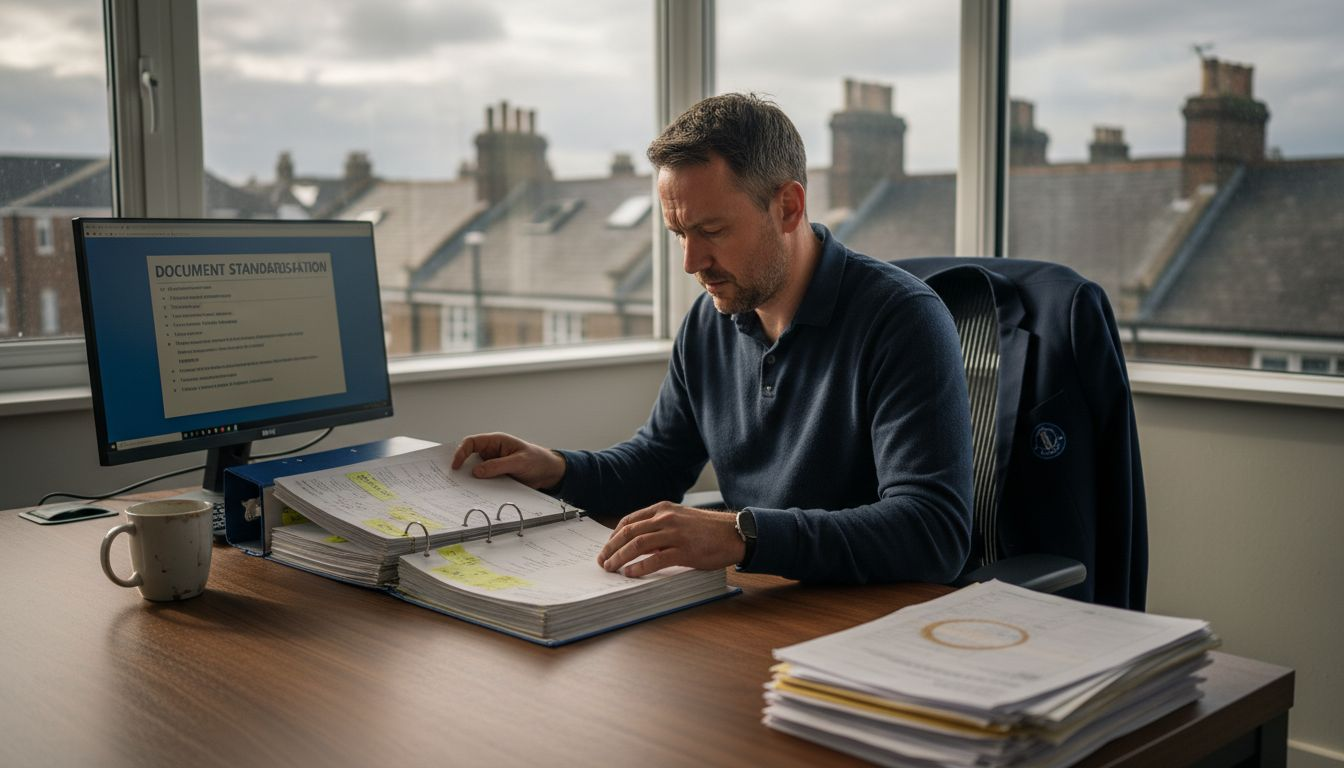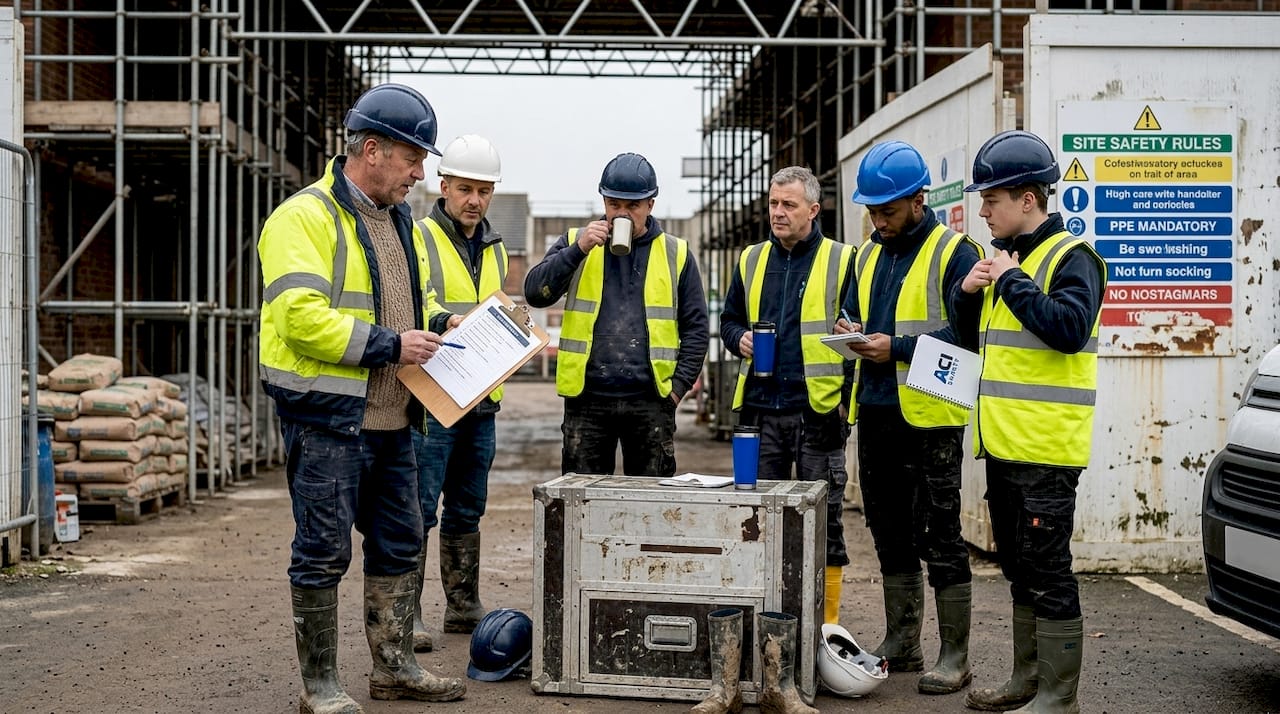
Selecting the right toolbox talk topics can feel overwhelming when you’re responsible for workplace safety in a busy UK SME. These brief, focused safety discussions before shifts are proven to reduce incidents and support Health and Safety Executive compliance, yet many officers struggle to choose topics that truly resonate with their teams. This article provides a practical framework for selecting impactful toolbox talk topics, explores essential criteria for effectiveness, and offers a curated list of ten high-value topics tailored to UK workplaces. You’ll also discover how frequency and delivery style affect safety outcomes, plus strategies to customise talks for diverse workforces.
Table of Contents
- Key takeaways
- How to choose effective toolbox talk topics
- Top 10 practical toolbox talk topics for UK workplaces
- Comparing toolbox talk frequency and engagement methods
- Customising toolbox talks for diverse UK SME workforces
- ACI Safety resources for toolbox talks and compliance
- Frequently asked questions
Key Takeaways
| Point | Details |
|---|---|
| Risk based topic selection | Select toolbox talk topics by reviewing risk assessments and incident reports to target real workplace hazards. |
| Adult learning principles | Incorporate interactive elements and practical examples to promote active learning and retention. |
| Time and format discipline | Keep talks five to fifteen minutes and schedule at regular times to foster routine rather than disruption. |
| Tracking and documentation | Document attendance and collect feedback to measure engagement and inform improvements. |
How to choose effective toolbox talk topics
The foundation of any successful toolbox talk programme lies in selecting topics that directly address the hazards your workforce encounters daily. Start by reviewing your risk assessments and recent incident reports to identify recurring themes or emerging concerns. This evidence-based approach ensures every conversation tackles genuine workplace risks rather than generic safety advice that fails to resonate.
Your workforce composition should heavily influence topic selection. Consider the experience levels present on site: newer workers need foundational guidance on PPE and basic procedures, whilst seasoned staff benefit from refreshers on complacency risks or updates to regulations. Language skills matter too. If your team includes workers with limited English, prioritise visual demonstrations and plain language over complex terminology. Toolbox talks support HSE compliance under the Health and Safety at Work Act 1974 and Management of Health and Safety at Work Regulations 1999, though they’re not mandatory.
Timing and format determine whether your talks actually change behaviour. Keep sessions between five and fifteen minutes to maintain attention without disrupting workflows. Schedule talks at consistent times so they become routine rather than an afterthought when production pressures mount. Interactive elements transform passive listening into active learning: ask workers to share near-miss experiences, demonstrate proper technique, or discuss solutions to hypothetical scenarios.
Pro Tip: Link each toolbox talk to your broader safety management system by referencing relevant policies or legal compliance requirements. This reinforces how daily conversations support your overall compliance framework.
Document every session with attendance records and topic summaries. This creates an audit trail demonstrating your commitment to worker consultation and continuous improvement. More importantly, tracking participation reveals which topics generate engagement and which need reworking. Use feedback forms or quick verbal check-ins to gauge understanding and gather suggestions for future discussions.
Top 10 practical toolbox talk topics for UK workplaces
These ten topics address the most common and serious hazards across UK SME workplaces, from construction sites to facilities management operations. Each offers immediate practical value and aligns with HSE priorities.
-
Manual handling and injury prevention: Discuss proper lifting techniques, team lifts for heavy loads, and how to assess whether mechanical aids are needed. Musculoskeletal disorders remain the leading cause of work-related ill health in the UK, making this topic universally relevant.
-
Working at height safety: Cover ladder inspections, scaffold checks, and fall prevention measures. Falls from height cause approximately 40% of construction fatalities in the UK, making this a critical priority for any business with elevated work.
-
Personal protective equipment use: Address proper selection, fitting, maintenance, and limitations of PPE. Emphasise that PPE is the last line of defence after eliminating or controlling hazards at source.
-
Hazardous substances awareness: Explain COSHH requirements, how to read safety data sheets, and proper storage and handling procedures. Tailor examples to substances actually present in your workplace.
-
Slips, trips and falls prevention: Discuss housekeeping standards, appropriate footwear, and how to identify hazards like trailing cables or uneven surfaces. These incidents account for over a third of major workplace injuries.
-
Machinery operation safety: Cover pre-use checks, emergency stops, and the dangers of bypassing guards. Include lockout/tagout procedures for maintenance work.
-
Fire safety procedures: Review evacuation routes, assembly points, and fire extinguisher locations. Discuss common ignition sources specific to your operations.
-
Electrical safety precautions: Address visual inspections of equipment, dangers of water near electricity, and when to report defects. Emphasise that only competent persons should attempt repairs.
-
Mental health and wellbeing: Normalise conversations about stress, workload pressure, and available support resources. This emerging priority helps create psychologically safe workplaces.
-
Emergency procedures and first aid: Ensure everyone knows first aider locations, how to summon help, and basic actions for common emergencies like cuts or burns.
Rotate through these topics systematically whilst remaining flexible to address immediate concerns. If a near-miss occurs or new equipment arrives, adjust your schedule to cover relevant safety points promptly. This responsiveness demonstrates that talks address real conditions rather than following a rigid checklist. For more comprehensive guidance, explore workplace safety tips for UK SMEs.
Comparing toolbox talk frequency and engagement methods
Research reveals striking differences in safety outcomes based on how often you conduct toolbox talks and which delivery methods you employ. Understanding these patterns helps you design a programme that maximises impact without overwhelming your team or consuming excessive time.
| Frequency | Incident reduction | Engagement level | Best for |
|---|---|---|---|
| Daily | 82% reduction in TRIR | High initially, requires variety | High-risk sites, changing conditions |
| Weekly | 45-60% reduction | Sustained with good content | Most SME operations |
| Monthly | Minimal impact | Low, feels disconnected | Not recommended |
Daily toolbox talks reduce total recordable incident rates by 82% compared to monthly sessions, according to industry safety data. This dramatic difference stems from continuous reinforcement of safe behaviours and immediate relevance to current work activities. However, daily talks demand significant content variety to prevent repetition and disengagement.
Weekly sessions offer an excellent middle ground for most UK SMEs. They maintain regular safety conversations without exhausting your topic library or requiring extensive preparation time. This frequency allows you to cover seasonal risks, respond to near-misses, and rotate through core topics several times annually whilst keeping content fresh.
Delivery style matters as much as frequency. Interactive formats consistently outperform one-way lectures for knowledge retention and attitude change. Workers remember stories about real incidents far better than abstract statistics. Demonstrations of proper technique create muscle memory that lectures cannot achieve. Questions and discussion reveal misunderstandings and allow experienced workers to share insights.
Pro Tip: Alternate between different engagement methods to maintain interest. One week might feature a video followed by discussion, the next a practical demonstration, then a case study analysis. This variety accommodates different learning preferences whilst covering the same essential safety messages.
Short duration proves more effective than comprehensive coverage. A focused fifteen-minute discussion on one specific hazard generates better retention than a thirty-minute session trying to cover multiple topics. Workers can immediately apply a single clear message, whereas information overload leads to confusion and inaction. Quality templates and structured content help maintain this focus. Discover qualities of good toolbox talk templates to streamline your preparation.
Customising toolbox talks for diverse UK SME workforces
UK workplaces increasingly comprise workers with varied experience levels, language skills, and cultural backgrounds. Generic toolbox talks fail to engage this diversity, whilst thoughtfully customised sessions create inclusive safety cultures where everyone understands their role in preventing incidents.
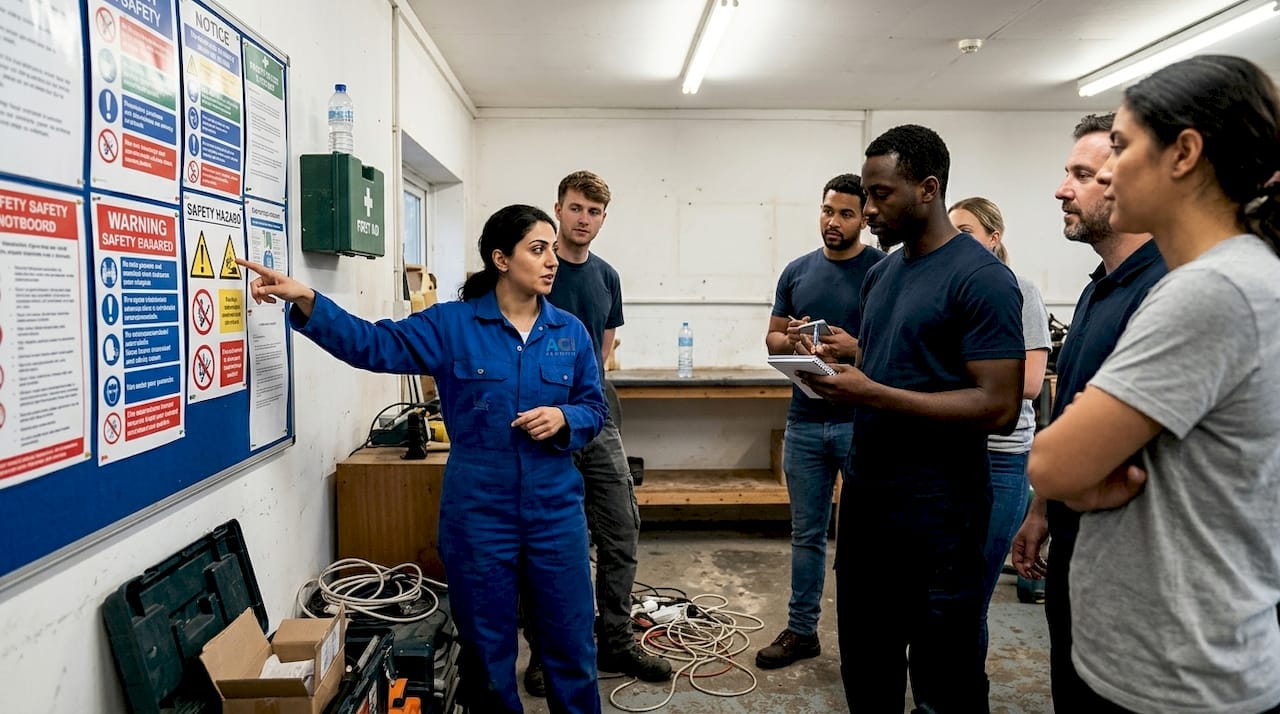
Language barriers present the most immediate challenge. Workers with limited English may nod along without truly understanding critical safety information. Address this by incorporating visual aids like diagrams, photos, or videos that communicate hazards and controls without relying on verbal explanation. Provide key safety terms in workers’ native languages and consider brief translations of critical points. Encourage questions in any language and use bilingual team members to clarify when needed.
Research highlights the need to address language and cultural barriers through visuals and translations whilst avoiding redundancy for experienced workers. Seasoned staff quickly disengage from basic content they’ve heard repeatedly. Keep them involved by soliciting their input: ask them to demonstrate proper technique, share lessons from past incidents, or suggest improvements to current procedures. This approach values their experience whilst ensuring newer workers benefit from peer learning.
Experience diversity also demands varied content depth. Structure talks with foundational information first, then add complexity for those ready to engage at a higher level. For example, a manual handling talk might start with basic lifting posture, then progress to load assessment calculations and mechanical aid selection for those interested in deeper understanding.
Production pressure frequently threatens toolbox talk quality and consistency. When deadlines loom, safety conversations get shortened or skipped entirely. Combat this by scheduling talks at fixed times and treating them as non-negotiable. Brief your supervisors that toolbox talks protect the business from incidents that would cause far greater delays than fifteen minutes of prevention. Demonstrate management commitment by occasionally attending talks yourself or asking for updates on topics covered.
Rotate topics strategically to maintain interest whilst ensuring comprehensive risk coverage. Create an annual schedule that addresses seasonal hazards, regulatory updates, and core safety topics multiple times with different angles. Winter might emphasise cold stress and driving safety, summer focuses on heat illness and ground conditions, whilst year-round topics like PPE and manual handling receive quarterly refreshers with new case studies or techniques. Leverage customisable health and safety templates to adapt content quickly for different audiences and situations.
ACI Safety resources for toolbox talks and compliance
Implementing an effective toolbox talk programme requires quality content, consistent documentation, and integration with your broader health and safety management system. ACI Safety provides the templates and guidance UK SMEs need to streamline these processes without extensive administrative burden.
Our professionally designed toolbox talk templates deliver structured, practical content you can customise for your specific workplace hazards and workforce needs. Each template includes discussion points, visual aids, and attendance tracking to ensure comprehensive coverage and compliance documentation. Beyond individual talks, understanding how toolbox talks fit within your complete safety documentation framework proves essential. Our essential health and safety documentation list outlines everything UK businesses need for full compliance, whilst the health and safety file guide explains how to maintain critical project records.
These resources work together to support your safety management efforts. Toolbox talks address immediate, practical hazards through daily conversations. Risk assessments and method statements provide the detailed analysis and controls that talks reinforce. Policy documents establish your organisation’s commitment and framework. When these elements align, you create a cohesive system where every component strengthens the others. Explore additional practical strategies in our workplace safety tips for UK SMEs to identify and address common compliance gaps before they become incidents.
Frequently asked questions
What are toolbox talks and why are they important?
Toolbox talks are brief group discussions on specific safety topics conducted before work shifts or during breaks. They increase hazard awareness, reinforce safe working practices, and demonstrate your commitment to worker consultation. These talks support HSE compliance by facilitating ongoing safety communication and helping workers apply formal training to daily tasks. Regular talks create opportunities to address emerging risks and gather frontline feedback about workplace conditions.
How often should toolbox talks be conducted for maximum impact?
Daily or weekly toolbox talks deliver the best safety outcomes, with daily sessions reducing incidents by 82% compared to monthly talks. However, weekly sessions offer an excellent balance for most UK SMEs, maintaining regular safety focus without exhausting content or preparation resources. Consistency matters more than perfection: a reliable weekly talk programme outperforms sporadic daily attempts. Schedule talks at fixed times and treat them as non-negotiable to prevent production pressure from undermining your safety culture.
What topics should be prioritised in toolbox talks?
Prioritise topics that address your highest risks identified through risk assessments and incident data. Working at height, manual handling, and PPE use consistently rank as critical areas across UK workplaces. Tailor content to your specific operations: a facilities management company needs different emphasis than a construction contractor. Balance recurring core topics with timely discussions of seasonal hazards, near-misses, or new equipment. Review your topic rotation quarterly to ensure comprehensive coverage whilst remaining responsive to changing conditions.
How can toolbox talks be made more engaging for diverse teams?
Incorporate visuals and simple language to overcome language barriers, and provide translations of key safety terms when needed. Use site-specific examples and real incident case studies to capture attention and demonstrate relevance. Interactive elements like demonstrations, questions, or small group discussions transform passive listening into active participation. Invite experienced workers to share insights or demonstrate techniques, valuing their knowledge whilst educating newer team members. Rotate delivery methods between videos, practical demos, and discussions to accommodate different learning preferences and maintain interest over time.