
Many small construction and trade business owners believe health and safety compliance is simply about ticking boxes and avoiding inspections. This misconception costs UK businesses thousands in fines and puts workers at serious risk every year. The Health and Safety Executive enforces strict legal duties that apply to every employer, regardless of company size. Understanding these responsibilities protects your workers, safeguards your business reputation, and ensures you meet your legal obligations. This guide clarifies the HSE’s role, explains essential compliance requirements, and shows you practical steps to manage workplace risks effectively in 2026.
Table of Contents
- Understanding The Health And Safety Executive’s Role In UK Businesses
- The Importance Of Risk Assessments And Hierarchy Of Control
- Critical Hazards In Construction And Public Protection Measures
- Complying With Reporting And Enforcement Responsibilities
- Find Health And Safety Resources To Support Your Compliance
Key takeaways
| Point | Details |
|---|---|
| HSE enforcement powers | The HSE conducts inspections, issues improvement notices, and prosecutes serious safety breaches under the Health and Safety at Work Act 1974. |
| Risk assessment duty | Employers must identify hazards, evaluate risks, and implement controls using the hierarchy of control framework. |
| RIDDOR reporting | Businesses must report fatal injuries, major injuries, diseases, and dangerous occurrences to the HSE by law. |
| Construction hazards | Falls from height and struck by vehicle incidents cause the majority of fatal injuries in UK construction work. |
| Compliance consequences | Non-compliance leads to fines, prosecutions, worker injuries, and lasting damage to business reputation and finances. |
Understanding the Health and Safety Executive’s role in UK businesses
The Health and Safety Executive serves as the primary regulatory body enforcing workplace health and safety laws across the United Kingdom. Small businesses in the UK, particularly in construction and trade, must comply with the Health and Safety at Work etc. Act 1974, which mandates employers to ensure, so far as is reasonably practicable, the health, safety, and welfare of their employees. This legal duty applies to every employer, from sole traders to large contractors.
The phrase ‘so far as is reasonably practicable’ requires you to balance the level of risk against the time, cost, and effort needed to control it. You cannot ignore serious risks simply because controls seem expensive. The HSE expects proportionate action based on the severity of potential harm.
The HSE holds extensive enforcement powers to ensure compliance. Inspectors can enter premises without notice, examine documents, interview workers, and take photographs or samples. When they identify failures, they can issue improvement notices requiring specific changes within set timeframes. For serious breaches, prohibition notices immediately halt dangerous work activities until you address the risks.
Prosecutions represent the HSE’s strongest enforcement tool. Recent cases demonstrate significant financial and personal consequences for directors and business owners who neglect their duties. Courts impose fines reaching hundreds of thousands of pounds for serious incidents. In cases involving death or severe injury, custodial sentences apply.
Many small construction and trade businesses underestimate their legal obligations, assuming health and safety rules only affect larger companies. This misunderstanding creates substantial risk. The HSE actively targets smaller firms through inspection programmes and responds to worker complaints. Understanding your responsibilities and implementing proper controls protects both your workers and your business from legal compliance failures.
Key employer duties under the Act include:
- Providing safe plant and equipment
- Ensuring safe handling and storage of substances
- Providing adequate information, instruction, training, and supervision
- Maintaining safe access and egress routes
- Providing a safe working environment with adequate welfare facilities
The importance of risk assessments and hierarchy of control
Risk assessments form the foundation of effective health and safety management in construction and trade businesses. Risk assessments are a fundamental requirement for health and safety compliance. Businesses must identify hazards, assess the risks, and implement control measures to mitigate those risks. This systematic approach prevents accidents by addressing dangers before they cause harm.
The risk assessment process follows five clear steps. First, identify hazards present in your workplace or activity. Second, determine who might be harmed and how. Third, evaluate the risks and decide on appropriate controls. Fourth, record your findings and implement the controls. Fifth, review and update the assessment regularly, especially after incidents or changes to work methods.
Data shows documented risk assessments reduce accidents by 30% compared to workplaces without formal risk management processes. This improvement stems from systematic hazard identification and worker involvement in control selection. When your team understands the risks and the reasons for controls, compliance improves naturally.
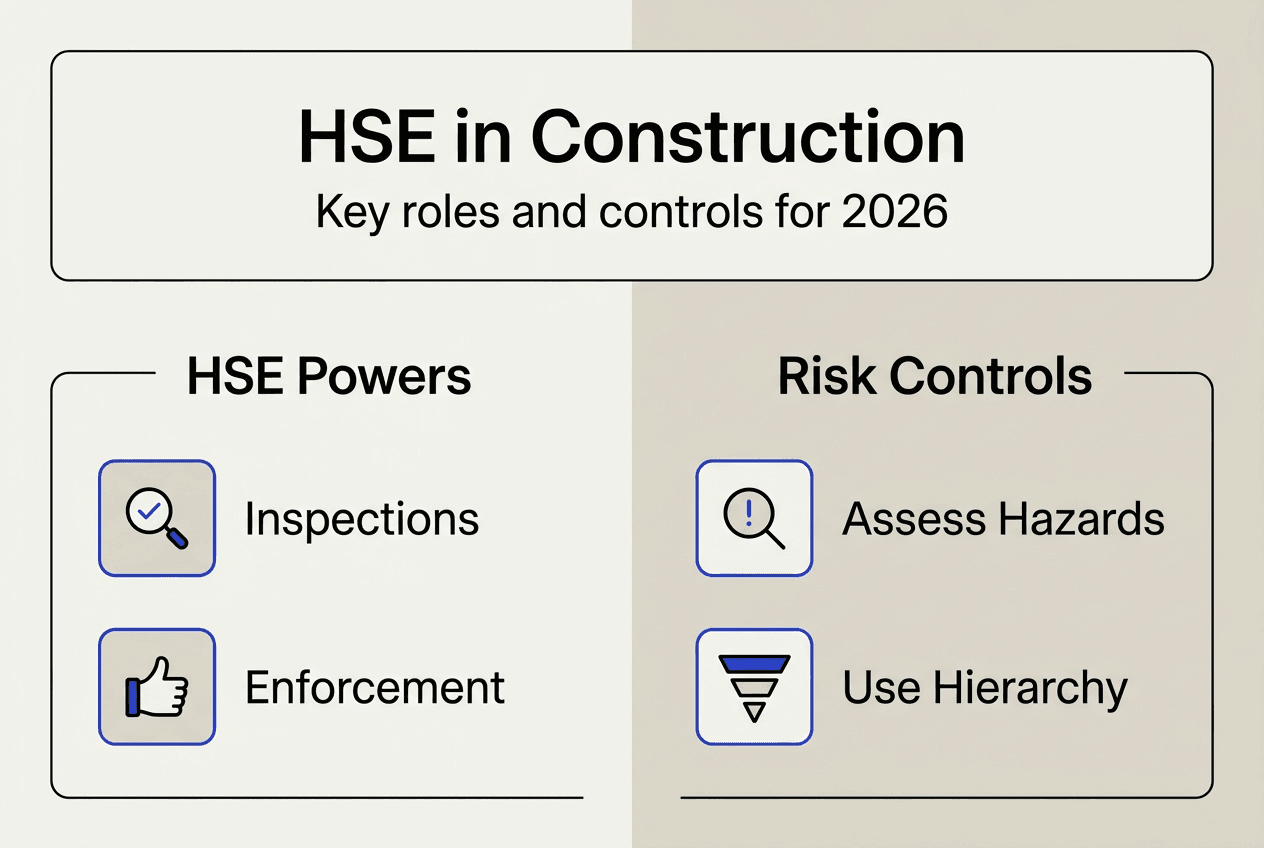
The hierarchy of control is a key methodology for managing risks. It prioritises elimination, substitution, engineering controls, administrative controls, and personal protective equipment in descending order of effectiveness. This framework guides you to select the most reliable and permanent controls first, rather than relying on less effective measures.
Here’s how the hierarchy works in practice:
- Elimination removes the hazard entirely, providing complete protection
- Substitution replaces dangerous materials or methods with safer alternatives
- Engineering controls isolate people from hazards through physical barriers or modifications
- Administrative controls reduce exposure through procedures, training, and work scheduling
- PPE provides the last line of defence when other controls cannot sufficiently reduce risk
Engineering controls deliver particularly strong results in construction. Guardrails can reduce falls by up to 80% in construction settings because they provide passive protection requiring no worker action. Scaffolding with properly installed edge protection prevents falls more reliably than harnesses, which depend on correct worker use.
Pro Tip: Involve your workers directly in risk assessments. They understand the practical challenges of tasks and can identify hazards supervisors might miss. This participation also increases buy in for control measures.
Regular review maintains risk assessment effectiveness. Schedule reviews annually as a minimum, but also trigger reviews after incidents, near misses, or changes to equipment, materials, or work methods. New workers or changing site conditions can introduce fresh hazards requiring updated controls.
| Control Type | Effectiveness | Construction Example |
|---|---|---|
| Elimination | Highest | Design out work at height requirements |
| Substitution | High | Use water-based instead of solvent-based products |
| Engineering | Medium-High | Install edge protection on scaffolding |
| Administrative | Medium | Implement permit to work systems |
| PPE | Lowest | Provide safety harnesses and hard hats |
Implementing this structured approach to risk management transforms health and safety from a compliance burden into a practical system protecting your workers and business.
Critical hazards in construction and public protection measures
Construction work exposes workers and the public to serious hazards requiring careful management. Working at height remains one of the leading causes of workplace injury and death in the construction industry. Falls from ladders, scaffolding, roofs, and other elevated positions cause devastating injuries and fatalities year after year.
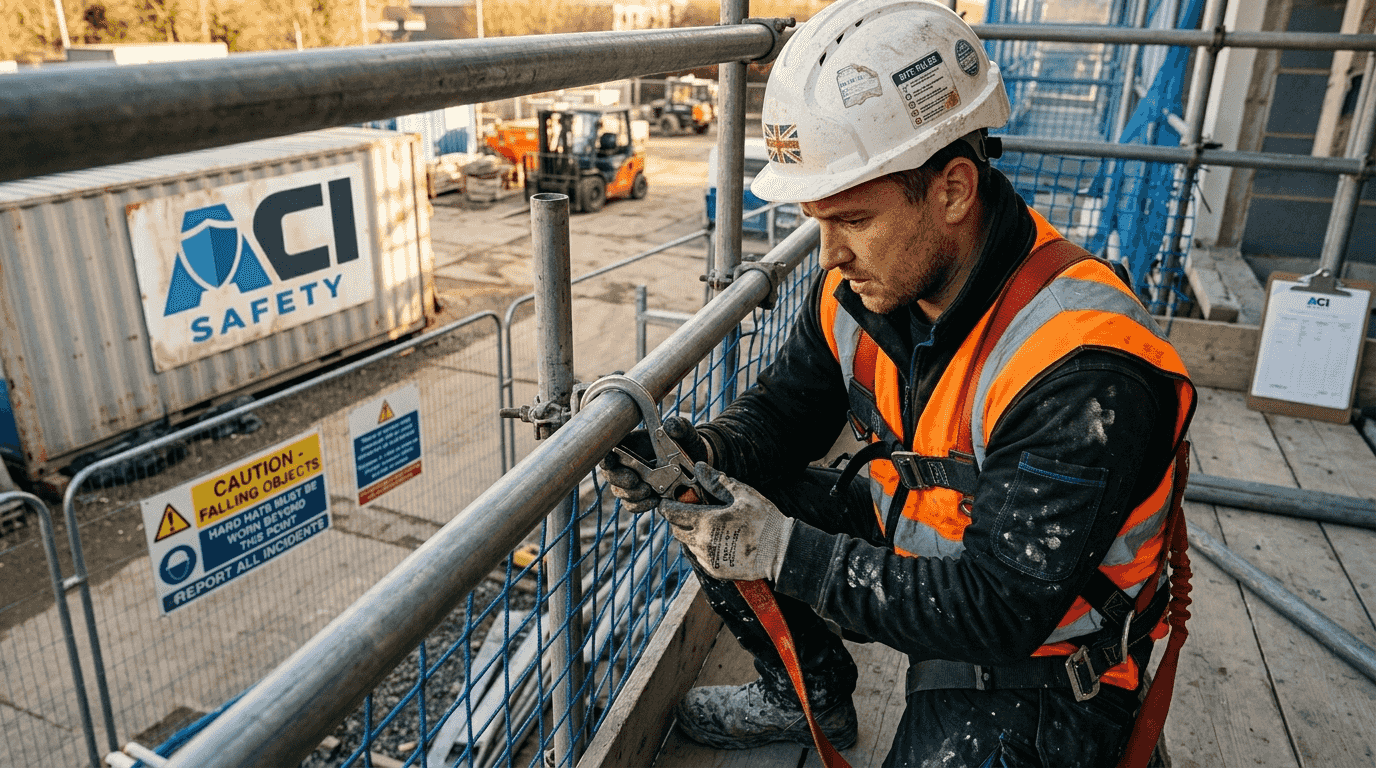
Construction accounts for around a quarter of fatal workplace injuries in recent years. This disproportionate share reflects the inherent risks in construction activities. Beyond falls, workers face hazards from being struck by moving vehicles, falling objects, and contact with electricity or buried services.
Recent enforcement cases illustrate the serious consequences of inadequate height safety controls. In January 2026, sole trader Daniel Jenner received a fine and suspended sentence after a worker suffered life changing injuries in a fall from height. The HSE investigation found Jenner failed to plan the work properly, assess risks adequately, or provide suitable equipment for working at height. The worker fell approximately four metres through a fragile roof light, sustaining severe injuries.
“This incident could easily have been fatal and has had a significant and lasting impact on the injured person. It serves as a reminder to all duty holders of the importance of properly planning work at height and ensuring workers have the information, instruction and equipment they need to work safely.” HSE inspector statement, January 2026.
This case demonstrates that size offers no protection from enforcement. Sole traders and small firms face the same legal duties and potential penalties as larger contractors. Proper planning, risk assessment, and provision of suitable equipment represent non-negotiable requirements.
Public protection adds another critical dimension to construction site safety. Construction sites must implement measures to manage access and exclude unauthorised people to protect the public. Children particularly face attraction to construction sites, viewing them as exciting play areas despite the serious dangers present.
Effective site boundary management includes:
- Robust fencing appropriate to site risks and location
- Secure gates with controlled access
- Clear warning signage visible to the public
- Regular boundary inspections to identify and repair damage
- Consideration of overhead risks to adjacent properties and pavements
Site inductions and supervision prevent unauthorised access by workers and visitors. Every person entering the site must receive appropriate information about hazards and control measures. Visitor management systems track who enters and exits, ensuring accountability.
Managing vehicle movements protects both workers and the public. Segregate pedestrians from vehicles wherever possible. Use banksmen to guide vehicle movements in confined areas. Ensure drivers have clear visibility and adequate training for site conditions.
Falling objects present serious risks beyond site boundaries. Scaffold debris, tools, or materials dropping from height can injure or kill pedestrians below. Implement toe boards, brick guards, debris netting, and covered walkways to contain materials. Never store materials near unprotected edges.
Proper construction health and safety management requires vigilance across all these hazard areas. Regular inspections, worker engagement, and swift correction of deficiencies maintain protective standards throughout project duration.
Complying with reporting and enforcement responsibilities
Legal reporting duties form an essential component of workplace health and safety management. Reporting of injuries, diseases, and dangerous occurrences is a legal requirement. Businesses must report specific incidents to the HSE. RIDDOR establishes clear thresholds triggering reporting obligations.
You must report deaths and specified serious injuries immediately, followed by written notification within 15 days. Specified injuries include fractures other than to fingers or toes, amputations, serious burns, crushing injuries, and loss of consciousness from head injury or asphyxiation. Injuries causing incapacitation for normal work for more than seven consecutive days require reporting within 15 days.
Occupational diseases and dangerous occurrences also trigger reporting duties. Dangerous occurrences include events with serious potential consequences even if no injury occurred, such as scaffold collapse, lifting equipment failure, or accidental release of biological agents.
Timely and accurate reporting serves multiple purposes beyond legal compliance. National statistics derived from RIDDOR reports identify trends, target enforcement resources, and inform injury prevention campaigns. Your reports contribute to understanding industry risks and developing effective interventions.
Follow these steps for effective incident reporting:
- Provide immediate first aid and emergency care to injured persons
- Secure the incident scene to preserve evidence and prevent further harm
- Gather information from witnesses while memories remain fresh
- Determine whether the incident meets RIDDOR reporting criteria
- Submit the report through the HSE’s online system within required timeframes
- Conduct a thorough investigation to identify root causes
- Implement corrective actions to prevent recurrence
- Review and update risk assessments based on investigation findings
The HSE’s annual statistics show a consistent number of prosecutions and enforcement actions against businesses failing to meet health and safety standards. Enforcement activity ranges from informal advice through improvement and prohibition notices to formal prosecutions. The HSE reserves prosecution for serious breaches, persistent non-compliance, or incidents causing death or serious injury.
Penalties reflect the seriousness of failures and their consequences. Fines commonly reach tens or hundreds of thousands of pounds. Courts consider factors including the seriousness of the offence, the defendant’s culpability, previous convictions, and financial circumstances. Sentencing guidelines ensure consistency while allowing judges to reflect individual case circumstances.
Beyond financial penalties, directors and business owners face potential imprisonment for serious breaches. Suspended sentences, community service orders, and disqualification from company directorship represent additional sanctions available to courts.
Ignoring reporting duties or safety obligations severely damages business reputation and financial standing. Clients increasingly require evidence of health and safety competence before awarding contracts. Insurance premiums rise following incidents and enforcement action. Worker morale and retention suffer when employees perceive safety as unimportant.
Pro Tip: Maintain a central incident log recording all workplace accidents, injuries, and near misses regardless of RIDDOR thresholds. This log supports trend analysis, demonstrates due diligence, and provides evidence of systematic safety management.
Maintaining clear records and training staff on reporting protocols mitigates enforcement risks. Ensure supervisors understand RIDDOR criteria and reporting procedures. Establish clear internal reporting channels so incidents reach decision makers promptly. Regular workplace safety reviews identify compliance gaps before they result in incidents or enforcement action.
Find health and safety resources to support your compliance
Managing health and safety compliance requires proper documentation and systematic processes. Many small construction and trade businesses struggle with creating compliant policies and risk assessments from scratch. Ready-made templates provide structured frameworks meeting legal requirements whilst allowing customisation to your specific operations.
Access editable health and safety policy templates tailored for UK businesses in construction and trade sectors. These professionally designed documents cover essential policy areas and adapt easily to your company size and activities. Utilise RAMS templates to document and manage site risks effectively, ensuring systematic hazard identification and control implementation. Visit the ACI Safety homepage for a full range of compliance resources and expert guidance supporting your health and safety management journey.
Frequently asked questions
What is the role of the HSE in UK workplaces?
The HSE regulates and enforces health and safety law across UK workplaces. It conducts inspections, issues improvement and prohibition notices, and prosecutes serious breaches. The HSE aims to protect workers and ensure employers provide safe working environments meeting legal standards.
What must small construction businesses do to comply with health and safety laws?
Small construction businesses must carry out risk assessments, implement appropriate control measures, and train workers on hazards and safe systems of work. They must report specified incidents via RIDDOR and manage site safety including public protection through proper boundaries and access control. Maintaining documented policies and regular reviews demonstrates legal compliance.
How does the hierarchy of control help manage workplace risks?
The hierarchy ranks control methods from most to least effective: elimination, substitution, engineering controls, administrative controls, then PPE. This framework guides businesses to select the most reliable risk controls first. Following the hierarchy produces more effective protection because higher-level controls provide passive protection requiring less reliance on worker behaviour.
What are the consequences of failing to report workplace incidents?
Failing to report incidents under RIDDOR can lead to enforcement actions including fines and prosecutions. Non-compliance increases risks of repeated incidents by preventing proper investigation and corrective action. It also damages business reputation, affects insurance premiums, and demonstrates poor safety management to clients and workers.