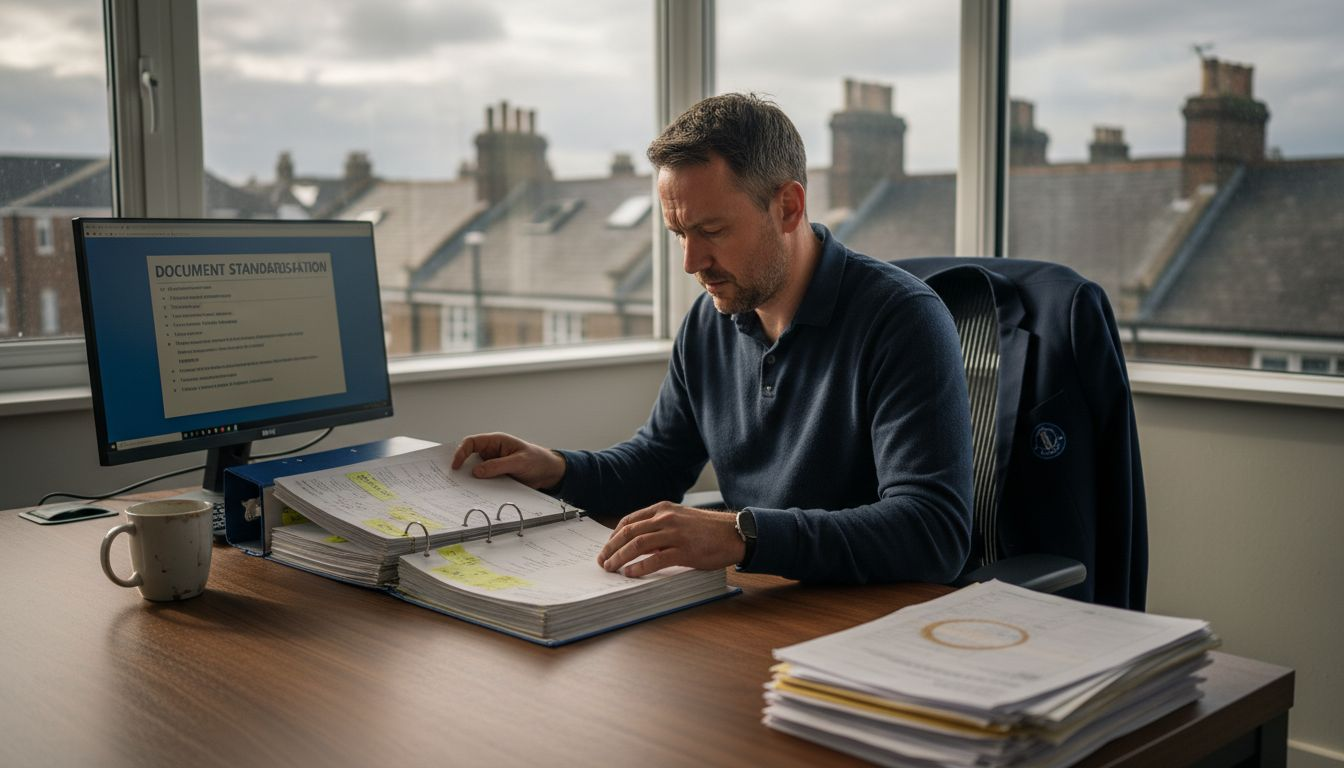
A method statement template saves time only if it helps you produce a document that people can actually use on site. That is the point many businesses miss. A generic file packed with vague wording might look complete, but if it does not reflect the job, the sequence of work and the controls in place, it will not do much for compliance or day-to-day safety.
For small and medium-sized businesses, the real value of a good template is speed with structure. You are not starting from a blank page, and you are not paying for bespoke consultancy every time a routine activity needs documenting. But the template still needs to be editable, practical and written in a way that supports real operations.
What a method statement template is for
A method statement template gives you a framework for describing how a task will be carried out safely. In most cases, it sits alongside a risk assessment as part of your RAMS documentation. The risk assessment identifies hazards and control measures. The method statement explains the work method itself – who is doing what, in what order, using which equipment, under which controls.
That distinction matters. If your method statement simply repeats the risk assessment line by line, it may not add much value. A useful document translates safety planning into an actual working process. It should help supervisors brief teams, support consistency across jobs and give clients or principal contractors confidence that the work has been thought through properly.
What should be in a method statement template?
The right content depends on the activity, but most method statements need a core structure. If that structure is missing, users usually end up adding rushed notes around the edges or creating their own version from scratch.
Basic project and contractor details
Start with the practical identifiers. That normally includes the company name, site or location, description of works, reference numbers, issue date and revision details. You may also need space for client information, principal contractor details and the names of those preparing, reviewing or approving the document.
This is straightforward admin, but it matters. Version control is one of the first things that slips when documents are reused under time pressure.
Scope of works
This section should explain what the document covers and, just as importantly, what it does not. A brief, clear description keeps the method statement focused. If the work includes several distinct activities with different hazards or sequences, it is often better to split them rather than forcing everything into one overloaded document.
Responsibilities
A good template should allow you to name who is responsible for supervision, carrying out the work, checking equipment and monitoring controls. That does not need to read like a legal textbook. It just needs to make roles clear enough that there is no confusion on site.
Plant, tools, equipment and materials
This section should cover what will be used to complete the task, including access equipment, powered tools, lifting equipment, PPE and any significant materials. If inspections, certifications or pre-use checks are needed, the template should prompt you to capture that.
A common weakness in poor templates is that they mention equipment in broad terms but do not leave room for the specifics that matter in practice.
Sequence of work
This is usually the most important part of the document. The method statement should break the task into a logical sequence from arrival on site through to completion and clear-down. If the wording is too vague, the document becomes generic. If it is too detailed, it can become clumsy and difficult to review.
The balance is simple. Include enough detail to explain how the task will be done safely and consistently. Leave out anything that adds length without adding control.
Hazards, controls and linked risk information
Even where risk assessments are attached separately, the method statement should still reference the key controls that apply to each stage of the work. This is especially useful for tasks involving working at height, hot works, lifting operations, electrical systems, traffic movement, dust, noise or public interface.
Where permits are required, such as hot work permits or confined space controls, the template should give you space to note that clearly.
Emergency arrangements
This section is often underwritten, yet it is one of the first things clients look for. The document should explain what happens if something goes wrong. That may include first aid arrangements, fire precautions, emergency contacts, rescue planning for work at height and procedures for stopping work if conditions change.
For higher-risk activities, a single line saying “follow site emergency procedures” is rarely enough on its own.
Sign-off and briefing records
A practical template should allow for review, approval and evidence that the workforce has been briefed. A method statement has limited value if it is saved in a folder but never communicated to the people doing the job.
Why off-the-shelf templates vary so much
Not all templates are built for the same purpose. Some are little more than blank forms. Others are over-engineered and full of compliance language that slows users down. Neither extreme is ideal for a busy business that needs documents prepared efficiently.
The best option is usually a professionally structured document that gives you a solid starting point without pretending to know your job better than you do. It should reduce admin time, not create more of it.
That is why editable format matters. If you cannot tailor the wording, remove irrelevant sections or add project-specific controls, the template becomes a limitation rather than a help.
How to use a method statement template properly
The fastest way to get value from a template is to treat it as a framework, not a finished product. Start by matching the document to the specific task. Review the scope, the site conditions, the equipment and the people involved. Then adjust the sequence of work so it reflects how the activity will actually happen.
Next, check whether the controls in the method statement align with your risk assessment. If they do not match, you create confusion. Supervisors need one clear version of the safe system of work, not two documents saying slightly different things.
After that, review the language. If a sentence would not make sense to the person carrying out the task, rewrite it. Clear wording is usually better than formal wording. The document should support a briefing, not make one harder.
Finally, make sure the method statement is issued, reviewed and updated when circumstances change. A template saves time at the drafting stage, but control is lost quickly if revisions are not managed properly.
When a template is enough and when it is not
For many routine activities, a well-designed template is exactly what a smaller business needs. It gives you a consistent format, helps standardise documentation and cuts down the time spent creating repeat paperwork. That is especially useful for contractors and service businesses carrying out similar work across multiple sites.
There are limits, though. If the project is unusual, high risk or heavily constrained by site-specific conditions, a standard template may need substantial editing. In some cases, separate specialist input may still be appropriate. The point is not that every job should be treated the same. It is that many jobs do not need a bespoke document created from nothing every time.
What to look for in a downloadable method statement template
If you are buying rather than building your own, look for a template that is professionally drafted, fully editable and clearly structured. It should be easy to adapt in Word or Excel, depending on format, and it should not be cluttered with filler text that has to be stripped out before use.
It also helps if the template fits naturally with the rest of your documentation set. If you already use standard risk assessments, toolbox talks or RAMS formats, consistency makes administration easier and improves presentation when documents are sent to clients.
For businesses in the UK and Channel Islands, that usually means choosing documentation designed around familiar compliance expectations and working practices, rather than generic forms written for a different market. Providers such as ACI Safety are geared towards that practical need – instant download, fully editable documents and a straightforward way to get usable paperwork in place quickly.
The real benefit is not the document itself
A method statement template is useful because it shortens the distance between knowing what you need and having it ready to issue. That saves time, reduces friction and helps you keep documentation standards consistent across jobs.
Used properly, it also improves communication. Supervisors can brief from it, managers can review it and clients can see that the work has been planned. That is far more useful than a polished document that looks professional but says very little.
If your current paperwork takes too long to prepare, varies from one job to the next or relies on copying old documents and hoping they still fit, a better template is often the simplest fix. The aim is not paperwork for its own sake. It is clear, workable documentation that helps the job run safely and with less admin standing in the way.
A good template should make that easier from the first edit, not after an hour of rewriting.