If you are preparing site paperwork and still weighing up method statement vs risk assessment, you are not alone. These two documents are often mentioned together, sometimes bundled into RAMS, and regularly confused. The problem is that they do different jobs. If you use one when the other is needed, your paperwork may look complete while still leaving gaps in how work is controlled.
For busy businesses, that matters. Whether you are managing contractors, planning maintenance, or setting up a new task on site, you need documents that are clear, relevant and easy for your team to follow. The aim is not paperwork for its own sake. The aim is safer work, fewer misunderstandings and a sensible record of how risks have been considered and managed.
What is the difference between a method statement and a risk assessment?
A risk assessment identifies the hazards connected with a task, considers who might be harmed, evaluates the level of risk and sets out the control measures needed to reduce that risk. It is focused on what could go wrong and what needs to be done about it.
A method statement explains how the work will actually be carried out. It sets out the sequence of the job, the equipment being used, the people involved, and the precautions that must be followed while the task is underway. It is focused on how the work will be done safely and consistently.
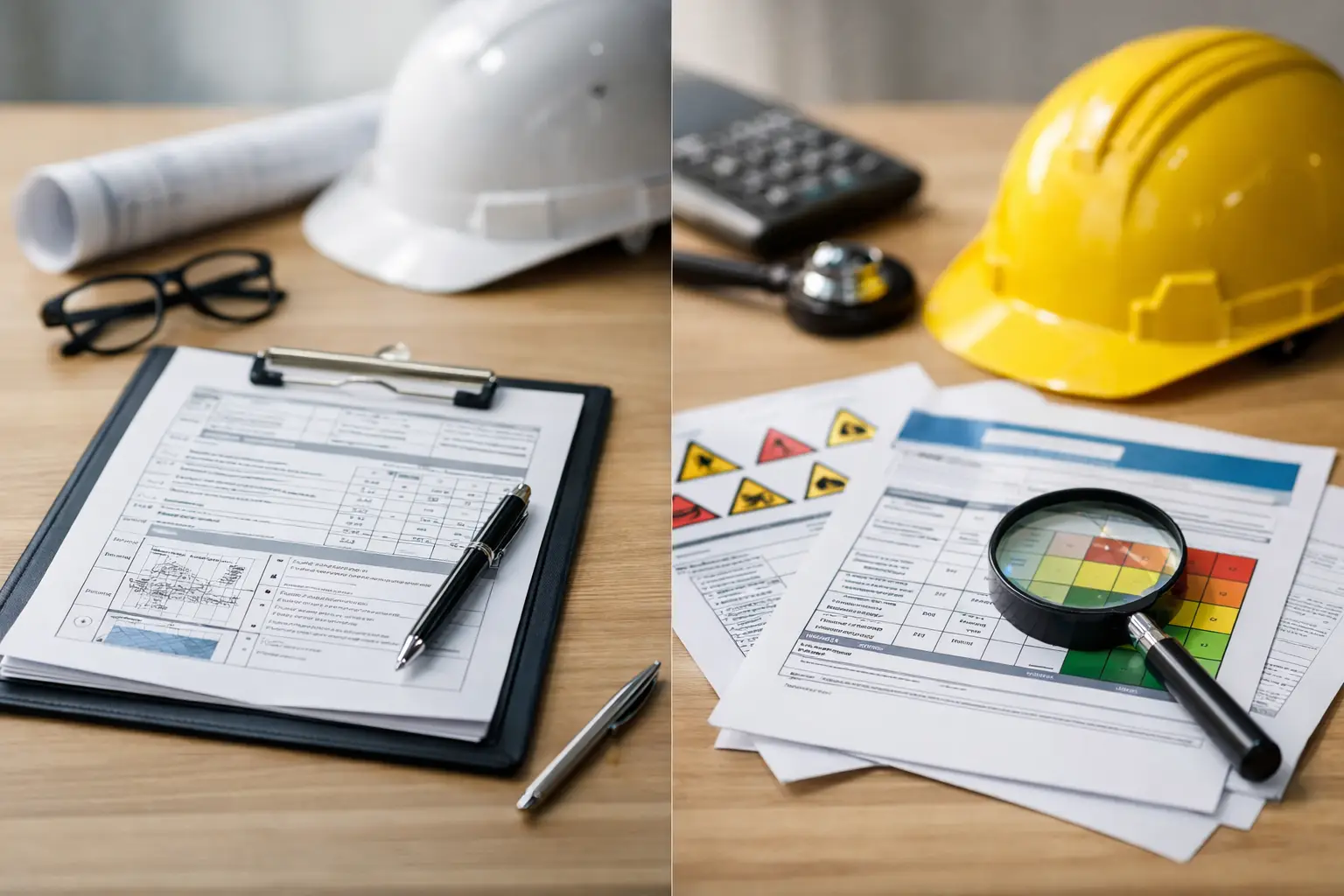
Put simply, the risk assessment tells you what the risks are. The method statement tells you how the job will be done with those risks in mind.
That is why the two are so often used together. One provides the reasoning behind the controls, while the other turns those controls into a practical system of work.
Method statement vs risk assessment in practice
Imagine a contractor replacing lighting in a commercial unit. The risk assessment would identify hazards such as work at height, electrical contact, falling tools, access issues and the presence of other people in the area. It would then state suitable controls, such as isolating power, using the correct access equipment, restricting the work area and checking competence.
The method statement would then set out the job step by step. It might explain who isolates the power supply, how the area is cordoned off, which access equipment is used, how fittings are removed and replaced, and what checks are carried out before the area is reopened.
Without the risk assessment, the hazards may not be properly thought through. Without the method statement, the team may know the risks but still lack a clear plan for carrying out the work. That is the practical difference.
When do you need a risk assessment?
In many workplaces, risk assessments are a basic part of health and safety management. If a work activity could cause harm, there should be some form of assessment in place. For small businesses, this is often where documentation starts.
A risk assessment is particularly useful when you need to show that hazards have been identified and considered before work begins. It helps managers decide whether a task can go ahead as planned, whether controls are adequate, and whether extra training, equipment or supervision is needed.
Some activities need only a straightforward assessment. Routine office tasks, light cleaning or low-risk stock handling may not require a detailed method statement. The work is familiar, the steps are simple and the controls are already understood.
That said, simple does not mean optional. If there is a foreseeable risk, the assessment still needs to exist in a form that is proportionate to the task.
When do you need a method statement?
A method statement is most useful where the job involves several stages, coordination between workers, higher-risk activities or site-specific controls that need to be followed in a particular order.
This often applies to construction, maintenance, installation, demolition, roofing, electrical work, mechanical work and contractor activities. In these settings, a method statement helps everyone understand the safe system of work before the job starts.
It is also helpful where more than one contractor or team is involved. A risk assessment might identify vehicle movement, lifting operations or restricted access as hazards. The method statement then explains exactly how those issues will be managed on the day.
In other words, if people need more than a list of hazards and controls, a method statement is usually the right next step.
Why they are often combined into RAMS
Many businesses use RAMS, which stands for Risk Assessments and Method Statements. This combined approach makes sense because the two documents support each other.
The risk assessment identifies the hazards and required controls. The method statement then reflects those controls in the working procedure. When prepared properly, the documents are aligned rather than duplicated.
This is where some businesses come unstuck. They download a generic method statement, attach an unrelated risk assessment, and assume the paperwork is done. On paper, there are two documents. In practice, they do not match. If the risk assessment says edge protection is required but the method statement says ladders will be used without further detail, the paperwork creates confusion rather than clarity.
Good RAMS are consistent, task-specific and easy to follow. They do not need to be complicated, but they do need to reflect the actual work being done.
Common mistakes with method statements and risk assessments
The most common mistake is treating the documents as interchangeable. They are linked, but they are not the same thing.
Another issue is relying on paperwork that is too generic. Templates are useful because they save time and give you a professional structure, but they still need editing to suit the task, the site and the people involved. A document that could apply to any job is often too vague to be useful.
Some businesses also overload the paperwork with detail that nobody on site will read. There is a balance to strike. A good document should be thorough enough to manage risk and clear enough to be used in real working conditions.
There is also the question of timing. Documents prepared after the job has started are much less valuable. The purpose is to plan the work before it happens, not to create a file after the event.
Which is more important?
It depends on the task, but asking which is more important is usually the wrong question. If the work is low risk and straightforward, a risk assessment on its own may be enough. If the work is more complex or higher risk, a method statement may be essential as well.
For many site activities, the real value comes from using both. The risk assessment helps you decide what controls are necessary. The method statement helps your team apply those controls in the right way.
If you only complete a risk assessment, workers may know the hazards but not the process. If you only complete a method statement, the process may be set out without clearly showing how the risks were assessed. Both gaps can cause problems.
How to choose the right document for the job
Start with the nature of the task. If you are dealing with a routine activity with limited risk and no complicated sequence, a risk assessment may be all you need. If the work involves multiple steps, specialist equipment, coordination with others or a higher chance of serious harm, add a method statement.
Then look at who needs to use the document. Managers may need the risk assessment to review controls and sign off the activity. Operatives on site are more likely to rely on the method statement to understand what happens first, what happens next and what must not be missed.
Finally, think about evidence. If a client, principal contractor or internal manager expects RAMS before work starts, sending only one document may not be enough. In many sectors, especially across the UK construction and contractor environment, combined documentation is part of normal pre-start planning.
Keeping documentation practical, not overcomplicated
The best paperwork is usable. It should be easy to edit, easy to brief and easy to update when the job changes. That is why many smaller businesses prefer professionally structured templates in Word or Excel rather than starting from a blank page every time.
A solid template saves time, but it should never replace judgement. You still need to tailor the content to your own operation. Site conditions, access arrangements, equipment, competence levels and emergency procedures can all vary from one job to the next.
For businesses that need to produce documents regularly, consistency matters as much as compliance. Using a clear format across your risk assessments, method statements and RAMS makes it easier to brief staff, review documents and keep records organised.
If your current paperwork leaves people asking what they are meant to do, it needs work. A risk assessment should explain the hazards and controls. A method statement should explain the system of work. Once those two documents do their own jobs properly, compliance becomes much more manageable.
The useful question is not whether you need a method statement or a risk assessment. It is whether the people doing the work have a clear, credible plan they can actually follow.