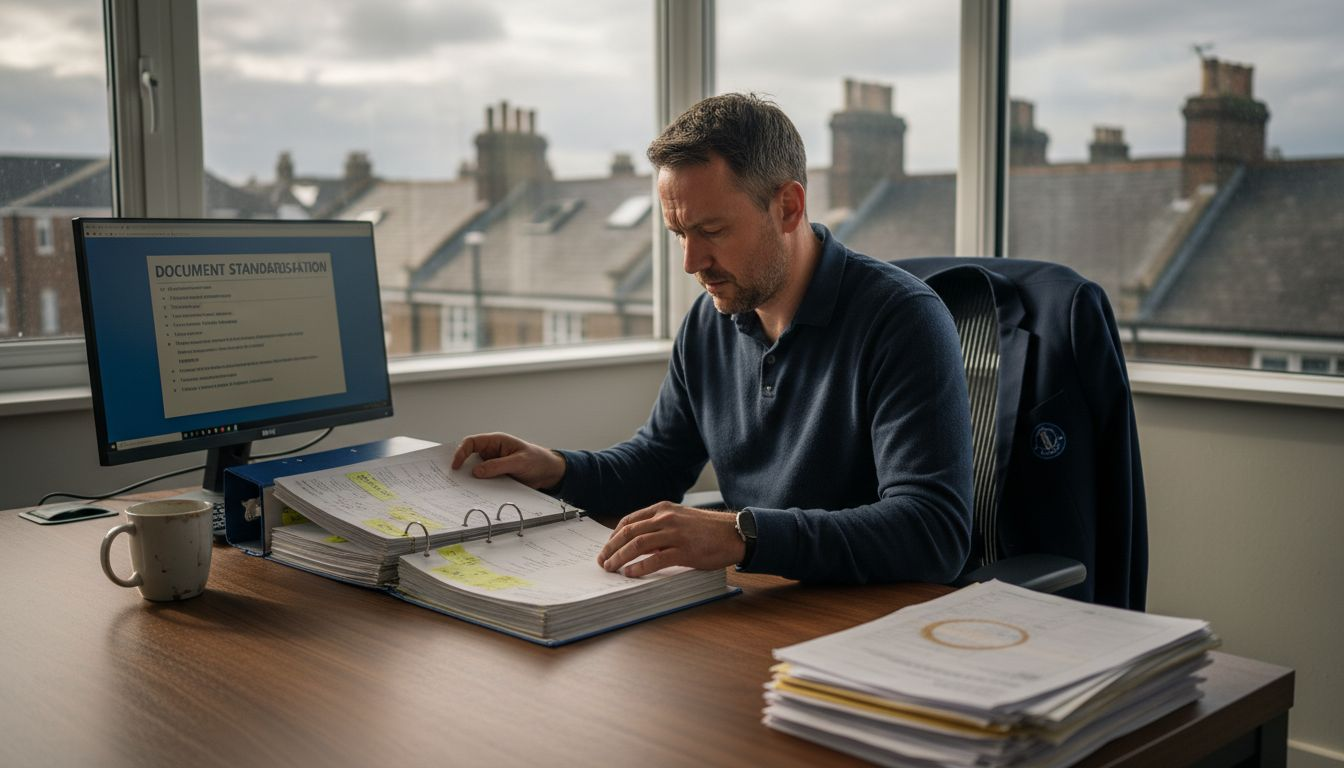
When a job needs to start quickly, the last thing most businesses want is to build safety paperwork from a blank page. An editable method statement template gives you a practical starting point – one that can be tailored to the task, the site and the way your business actually works.
That matters because method statements are rarely useful as generic documents. If the wording is too broad, copied from an old file or not matched to the job in hand, it creates extra risk rather than reducing it. A good template helps you move faster, but it still needs proper editing, sensible detail and clear ownership before it is issued.
What an editable method statement template should do
At its simplest, a method statement explains how a task will be carried out safely. It sets out the sequence of work, the hazards involved, the control measures in place, the equipment being used and the responsibilities of the people carrying out the work.
An editable version is useful because no two jobs are exactly the same. You may be working at a different site, using different access equipment, managing a new subcontractor or dealing with a client-specific rule that did not apply last time. A fixed PDF might be fine for reference, but it will not help much if you need to amend names, dates, work steps or emergency arrangements.
For most small and medium-sized businesses, the value is straightforward. You save time, you avoid inconsistent formatting, and you do not have to reinvent routine documents each time a job comes in. More importantly, you can keep your paperwork aligned with how work is actually being done.
Why businesses use editable templates instead of starting from scratch
Writing a method statement from the ground up takes longer than many people expect. Even if you know the task well, you still need to structure the document properly, cover the key control measures and make sure nothing obvious has been missed. That is difficult when you are also trying to price work, manage staff, order materials and keep jobs moving.
This is where an editable method statement template earns its place. It gives you a professional framework with the core sections already laid out, so the job becomes one of reviewing and tailoring rather than writing from zero. For busy site managers, administrators and business owners, that is often the difference between paperwork being completed properly and paperwork being rushed at the last minute.
There is also a consistency benefit. If different people in the business prepare documents in different formats, important details can get buried or left out. A standard template helps keep your approach organised across projects, especially if several contracts are running at the same time.
What to include in an editable method statement template
The exact layout will vary depending on the type of work, but the best templates cover the same core ground. They identify the project or task, the location, the people involved and the date of issue or review. They also set out the scope of works, so anyone reading the document understands what is included and what is not.
The heart of the method statement is the step-by-step sequence of work. This should be clear enough for someone to follow, but not padded with vague wording. If the work involves deliveries, unloading, isolation procedures, manual handling, access equipment, plant, chemicals or waste removal, those points need to appear where they are relevant in the work sequence.
A strong template will also include sections for plant and equipment, personal protective equipment, training or competence requirements, emergency procedures and supervision arrangements. Depending on the job, it may need to reference permits, welfare arrangements, traffic management or environmental controls as well.
Many businesses use method statements alongside risk assessments as part of a RAMS pack. In those cases, the documents need to make sense together. The risk assessment identifies the hazards and control measures, while the method statement explains how the task will be carried out in practice. If those two documents do not match, clients and contractors will notice.
The difference between useful editing and superficial editing
There is a common mistake with templates: changing the company name and date, then issuing the document as if the job-specific review has been done. That is not proper editing. It is just rebranding old paperwork.
A useful edit means checking whether the sequence of work still reflects the task, whether the control measures are suitable for the location, whether the named people are current and whether the emergency information is correct for the site. It also means removing sections that do not apply. Irrelevant wording makes a document look less credible and can confuse the people meant to follow it.
This is why editable Word formats are often preferred. They are easier to amend properly, easier to save under project-specific file names and easier to share internally for review. If a supervisor spots an issue, the document can be updated quickly without starting over.
How to customise a method statement without overcomplicating it
The best method statements are specific, but they are not over-written. If the document runs to pages of generic text, workers are less likely to read it properly and clients are more likely to question whether it has been prepared for the actual job.
Start with the task itself. What work is being done, where, by whom and using what equipment? Then look at the site conditions. A simple maintenance job in an empty unit does not need the same level of detail as external works on a live site with pedestrians, deliveries and shared access.
Next, check the work sequence line by line. If the template says tower scaffold but the team will use a podium, change it. If it refers to waste skips on site but the client requires all waste to be removed daily, update that too. The document should describe the planned method, not an idealised version copied from a previous contract.
Finally, make sure responsibilities are clear. If there is a site supervisor, name the role. If only trained operatives may use certain equipment, say so. If isolation must be confirmed before works start, include that as a defined step rather than a passing note.
When a template is enough – and when it is not
Templates are practical tools, but they are not a substitute for judgement. For routine, low to medium risk tasks, a professionally prepared editable template can save a significant amount of time and still support a good standard of documentation. That is exactly why many businesses use them.
There are, however, cases where more input is needed. High-risk works, unusual environments, complex contractor interfaces or client-specific requirements may call for more detailed drafting and review. The template is still useful as a base, but it may need substantial amendment rather than light editing.
That trade-off matters. A template should reduce effort, not create false confidence. If a job is genuinely complex, treating it as routine because the paperwork looked ready-made can cause problems later.
What to look for before you buy or use one
Not all templates are equal. Some are little more than blank headings, which means you still end up doing most of the work yourself. Others are overfilled with generic text that takes longer to strip out than to replace.
A better option is a professionally designed document that is clearly structured, fully editable and written with real operational use in mind. You want a format that can be adapted quickly, but still gives enough substance to support sensible completion. Clean layout matters too, especially if the document will be sent to clients, principal contractors or internal reviewers.
It is also worth checking that the template suits UK business use. Terminology, working practices and document expectations can vary, so a method statement prepared for another market may not fit comfortably into your existing compliance process.
For businesses that need practical, ready-to-edit documents without the cost of bespoke consultancy, this is where specialist providers such as ACI Safety fit well. The aim is not to make compliance complicated. It is to give you a credible document you can adapt and put to work quickly.
Editable method statement template mistakes to avoid
The main risks are usually simple ones. Leaving old project details in place, failing to update equipment lists, using generic emergency arrangements or describing a work method that the team will not actually follow can all undermine the document.
Another common issue is treating the method statement as a file for the office rather than a working document for the people on site. If operatives cannot understand it easily, or if supervisors have not reviewed the final version, the paperwork may look complete while adding very little control in practice.
Version control is worth watching too. Once a document has been edited for a specific job, save it clearly, date it properly and make sure the right version is being used. This sounds basic, but it prevents a lot of avoidable confusion.
A good editable template gives you a head start, not a finished answer. Used properly, it shortens the admin, improves consistency and helps you issue method statements with more confidence. The real value comes from what happens next – taking that framework, editing it carefully and making sure the final document reflects the job as it will actually be done.