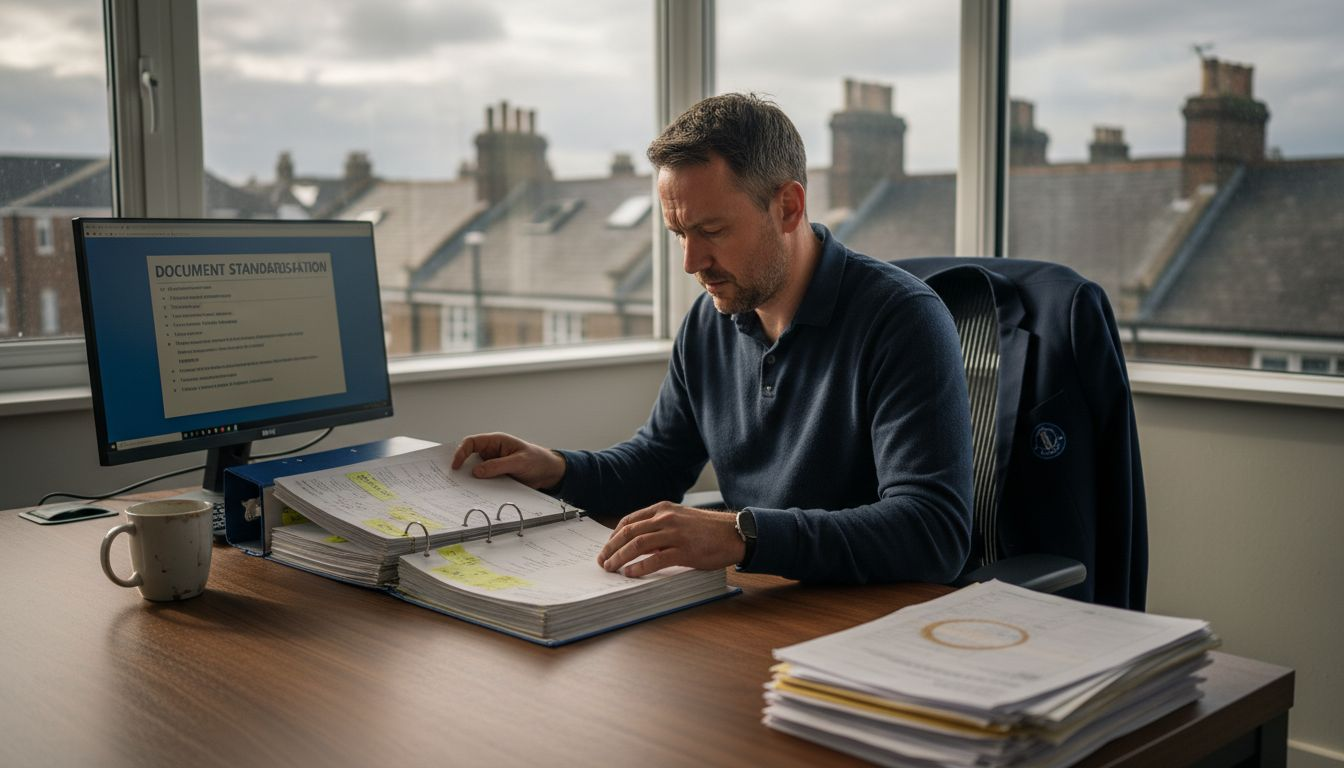
A risk assessment that still refers to the wrong site, the wrong equipment, or controls you do not actually use is not saving time – it is creating exposure. That is why knowing how to customise risk assessment documents properly matters. A template can give you a strong starting point, but it only becomes useful when it reflects the real job, the real hazards, and the way your business actually works.
Why customisation matters
Many businesses use templates because they are practical. That makes sense. Starting from a blank page every time is slow, inconsistent, and usually unnecessary. But a generic document is only half the job. If the assessment does not match your operation, it can quickly look like paperwork for paperwork’s sake.
A customised risk assessment is easier for managers to review, easier for staff to follow, and more defensible if someone asks how you identified and controlled risk. It also helps avoid a common problem in smaller businesses – documents being copied forward for months or years without anyone checking whether the task, environment, or workforce has changed.
The point is not to rewrite everything. The point is to make the document specific enough to be credible and useful.
How to customise risk assessment documents without overcomplicating it
The best approach is to treat the template as a framework, not a finished answer. Most of the work is in refining what is already there rather than building new sections from scratch.
Start with the basic details. This sounds obvious, but it is where many weak documents fall down. Check the company name, site name, activity description, assessor details, review date, and version control. If you work across multiple locations, make sure the assessment clearly shows which site or project it applies to. A risk that is manageable in a warehouse may look very different in a customer-facing premises, a construction setting, or a shared building.
Then review the task itself. Ask whether the activity described in the document is actually the one being carried out. A template may refer to manual handling in broad terms, but your team might be lifting boxed stock, moving petrol cylinders, carrying tools up stairs, or unloading vehicles at a roadside location. Those differences affect the hazards and the controls.
That is where customisation becomes valuable. It turns a broad statement into something your team can recognise.
Match the assessment to the real task
A useful risk assessment should describe the work clearly enough that someone reading it understands what is happening. If the task description is vague, the rest of the assessment usually becomes vague as well.
Keep the wording plain. Describe what people are doing, what they are using, and where the work happens. Include the equipment, substances, access issues, environmental conditions, and any interaction with members of the public, contractors, or other staff. If the task changes depending on the site, note that. If only certain staff carry it out, say so.
This is also the point to remove anything irrelevant. Leaving hazards in the document that do not apply to your task makes it look generic and can distract from the issues that do matter. A shorter assessment that is accurate is usually more effective than a longer one padded with generic content.
Review hazards and controls line by line
This is the part that cannot be rushed. Read each listed hazard and ask two questions. Does this apply to our work, and if it does, are these the controls we actually use?
Sometimes the hazard is right but the control measure is too broad. For example, “staff to wear PPE” is rarely enough on its own. What PPE, when, and why? Is it gloves for handling rough materials, eye protection for cutting operations, or respiratory protection for dusty work? If the control says there must be training, induction, supervision, maintenance checks, permits, segregation, signage, or safe systems of work, make sure those measures exist in practice.
If they do not, you have two choices. Either change the document so it reflects reality, or improve the actual controls so the document is true. The second option is often the right one, but the key is that the paperwork and the operation need to match.
Common areas people forget when they customise risk assessments
The biggest omissions are usually not dramatic hazards. They are routine details that affect how work is carried out day to day.
People often forget who might be harmed beyond their own staff. Visitors, contractors, cleaners, delivery drivers, members of the public, and young or expectant workers may need to be considered depending on the setting. A task that seems low risk internally may carry different implications if it takes place in a shared access route or public area.
Another missed point is competence. A control that relies on “trained staff only” is only meaningful if you can identify who those trained staff are and what training they have received. The same applies to equipment inspections, maintenance intervals, emergency arrangements, and supervision levels.
Review frequency matters as well. A risk assessment should not sit untouched just because it was completed once. If the task changes, the site layout changes, new equipment is introduced, or an incident occurs, the document may need updating. Customisation is not a one-off exercise. It is part of keeping your records aligned with the way the business operates.
Use your existing procedures to strengthen the document
One of the easiest ways to improve a risk assessment is to cross-check it against the procedures you already use internally. If you have induction arrangements, equipment checklists, accident reporting processes, COSHH records, training logs, or method statements, use them to confirm the control measures are realistic.
This is especially helpful for small and medium-sized businesses where one person often handles compliance alongside several other responsibilities. You do not need a document that reads like legal commentary. You need one that reflects actual working practice and can be reviewed without wasting time.
That is why editable templates are useful. They let you keep the professional structure while adapting the content to your site, staff, and activities. For many businesses, that is a more efficient route than commissioning bespoke documents for every routine task.
How detailed should a customised risk assessment be?
This depends on the nature of the work. Office-based activities, low-risk retail tasks, and straightforward workplace routines may only need concise, clear wording. Higher-risk work, non-routine tasks, shared sites, or activities involving machinery, work at height, electricity, hazardous substances, or public interface usually need more detail.
More detail is not always better. If the document becomes too long, people stop using it properly. The aim is to include enough information to identify the hazards, explain the controls, and support safe working. That means clear specifics where they matter and no filler where they do not.
A good test is this: could a manager use the document to brief staff, and could a member of staff read it and understand what is expected? If not, it probably needs tightening up.
A practical process for customising efficiently
If you need to update documents regularly, consistency matters. Use the same review process each time so nothing gets missed.
Start by reading the full template before editing. Then update the business and site details, rewrite the task description so it matches the actual work, remove hazards that do not apply, and refine the controls so they reflect real measures in place. After that, check whether anyone else could be affected, confirm training and supervision arrangements, and set a sensible review date.
It also helps to have the right person review the draft. In some businesses that will be the site manager, operations lead, or the person who actually carries out the task. They will often spot practical issues that a purely admin-based review misses.
Where the work is more complex, the risk assessment may need supporting documents such as a method statement or RAMS pack. That is not duplication. It is simply making sure the level of documentation fits the level of risk and the expectations of the client, principal contractor, or internal process.
When a template is enough and when it is not
There is a sensible middle ground here. For many routine activities, a professionally prepared template that you can edit properly is enough. It saves time, gives structure, and helps maintain consistency across sites and departments.
But there are cases where a basic template should not be treated as the final word. Complex high-risk work, unusual environments, specialist equipment, or activities with significant legal and technical requirements may need a more detailed assessment by a competent person. Customisation is still part of that process, but the starting point may need more input.
That does not reduce the value of templates. It just means using them for what they are best at – creating a reliable foundation that can be adapted efficiently and reviewed intelligently.
For businesses that need compliance documents to be practical rather than theoretical, that balance matters. ACI Safety’s editable templates are designed for exactly that kind of use: a faster way to produce documents that look professional and can be tailored to the work actually being done.
A good risk assessment should feel like it belongs to your business. If it reads like a copy-and-paste exercise, it probably needs another pass before anyone signs it off.